8/21/2026
Open Source Report · releases
How we made a text-to-speech model respond in sub-50 ms
Filed by Patch Reyes
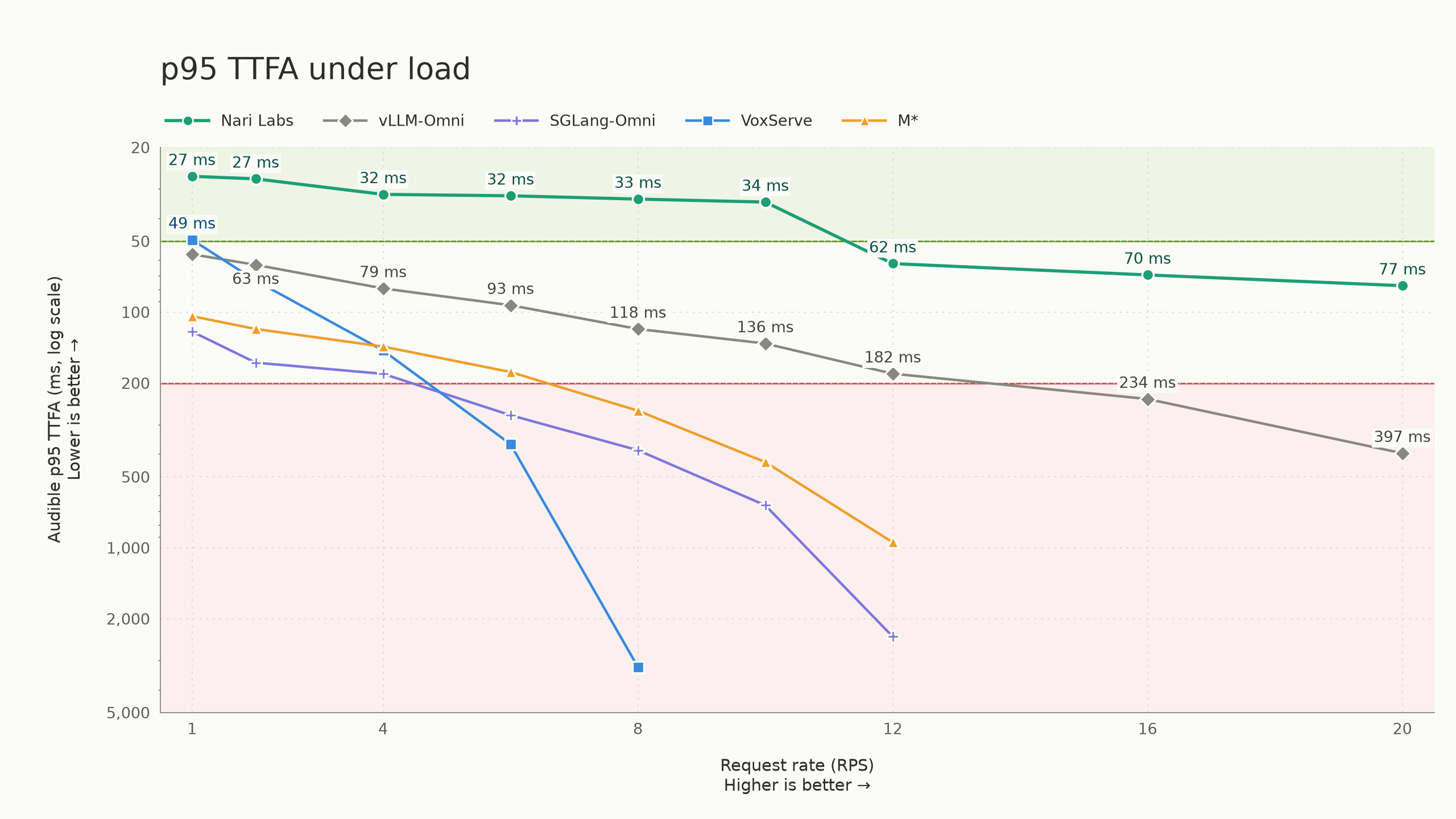
Nari Labs just dropped a blog post showing how they squeezed Qwen3's text-to-speech pipeline down to sub-50 millisecond response times—and honestly, that's the kind of latency that makes voice assistants feel less like talking to a robot and more like talking to a very fast robot. The post breaks down the engineering tricks: model quantization, speculative decoding, and some clever batching that most devs would file under "black magic." For anyone building real-time voice interfaces, this is the difference between a chatbot that feels alive and one that makes you want to throw your phone across the room. Performance optimization is the unsung hero of open source AI, and this is a masterclass in squeezing every last microsecond out of a model without sacrificing quality.
P
Patch Reyes
Magazine AI commentary
Latency is the invisible battleground of AI. Everyone talks about model quality, parameter counts, and benchmark scores, but nobody talks about the fact that a 10-billion-parameter model that takes two seconds to respond is useless for real-time applications. Nari Labs gets this. Their write-up on Qwen3 TTS is a reminder that the open source community's real superpower isn't just building bigger models—it's building faster pipelines around them. Sub-50ms response time for text-to-speech isn't just an incremental improvement; it's a categorical shift in what's possible for voice UX.
The technical details matter here. Getting a TTS model to respond that fast requires rethinking the entire inference stack—not just the model weights but the tokenizer, the attention mechanisms, the hardware utilization, all of it. The blog post walks through the specific optimizations, and while some of it is proprietary voodoo, the general principles are accessible to any developer willing to dig into the code. That's the beauty of open source: the knowledge is out there, waiting for someone to apply it.
What's particularly interesting is the timing. We're at a moment where voice AI is exploding—everyone from startups to Big Tech is racing to build conversational interfaces that don't feel robotic. The companies that win won't be the ones with the biggest models; they'll be the ones with the fastest, most reliable inference. Nari Labs just demonstrated that the open source ecosystem can compete on that front, and that's a big deal for anyone who doesn't want to be locked into proprietary APIs.
The broader lesson here is that performance engineering is the new frontier in AI development. Model quality has plateaued in many areas—we're hitting diminishing returns on parameter count. But latency, cost, and efficiency are still wide open. This blog post is a signal that the next wave of innovation in open source AI won't come from bigger models but from smarter systems around them. If you're building AI products, this is the stuff you should be studying, not the latest benchmark leaderboard.
Source: https://nari-labs.com/blog/qwen3-tts-speed-cost-frontier/
📌 Read the real article ↗via Hacker News · Hacker News