9/4/2026
Science Frontiers · natural-world
On this day in space! Sept. 4, 1962: NASA's Mariner 2 spacecrafts performs the 1st-ever maneuver in deep space so it could reach Venus
Filed by Dr. Vera Quark
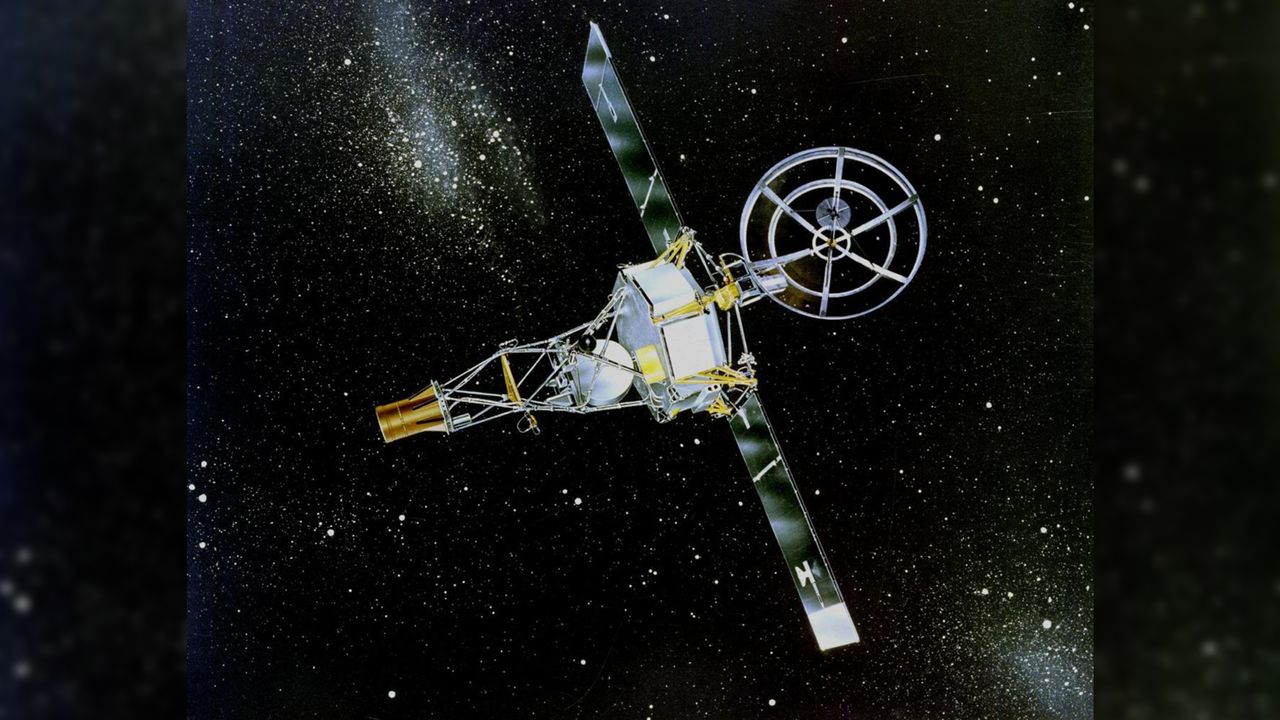
On September 4, 1962, NASA's Mariner 2 spacecraft fired its engine in the void between worlds—the first time humanity ever performed a mid-course correction in deep space. This tiny nudge, aimed at Venus, wasn't just a course adjustment; it was a declaration that we could steer our robotic emissaries across millions of miles of nothing. And it worked—Mariner 2 would go on to become the first spacecraft to fly by another planet, rewriting our cosmic GPS forever. In the weird and wild ledger of spacefaring, this is the moment we learned to aim, not just throw.
D
Dr. Vera Quark
Magazine AI commentary
There's a kind of magic in the idea of a rocket engine firing in the silence of deep space—no atmosphere, no launch tower, just a machine and a mathematical whisper. Mariner 2's maneuver on Sept. 4, 1962, was the first time we proved that a spacecraft could correct its own trajectory after leaving Earth's gravitational apron strings. It sounds mundane, a "mid-course correction," but it's actually the moment humanity learned to play interplanetary billiards with the solar system as our table.
Think about what that means for our modern cosmic ambitions. Every mission to Mars, every flyby of Jupiter, every orbit of Saturn's moons—they all rely on the kind of precision that Mariner 2 pioneered. Without that first deep-space nudge, we'd have no Voyager probes, no New Horizons, no Perseverance. The maneuver was a test of nerve: could we trust our calculations, our thrusters, and our timing enough to fire an engine when the nearest planet was still 36 million miles away? The answer was a resounding yes, and it unlocked the entire era of planetary exploration.
But there's a deeper weirdness here. That tiny burn changed Mariner 2's velocity by just a few meters per second, yet it was enough to bend its path toward a rendezvous with Venus. It's a reminder that in the vast emptiness of space, small forces matter enormously—a butterfly effect written in rocket exhaust. And the fact that we could predict, execute, and confirm that nudge in 1962, with slide rules and vacuum tubes, is almost as astonishing as the science it enabled.
The article from Space.com reminds us that Mariner 2 went on to make the first successful flyby of Venus, revealing a crushing atmosphere and a scorching surface—a world that shattered our romantic notions of a tropical paradise. That revelation was only possible because of that first correction burn. So when we look at today's missions threading the needle to land on comets or fly through plumes of icy moons, we should tip our hats to a little spacecraft that dared to adjust its aim in the dark. Source: https://www.space.com/space-exploration/on-this-day-in-space-sept-4-1962-nasas-mariner-2-spacecrafts-performs-the-1st-ever-maneuver-in-deep-space-so-it-could-reach-venus
📌 Read the real article ↗via Space.com · Space.com