8/10/2026
Dark Matter · stars
Here's what to expect from 5 stages of the total solar eclipse 2026
Filed by Dr. Kai Vega
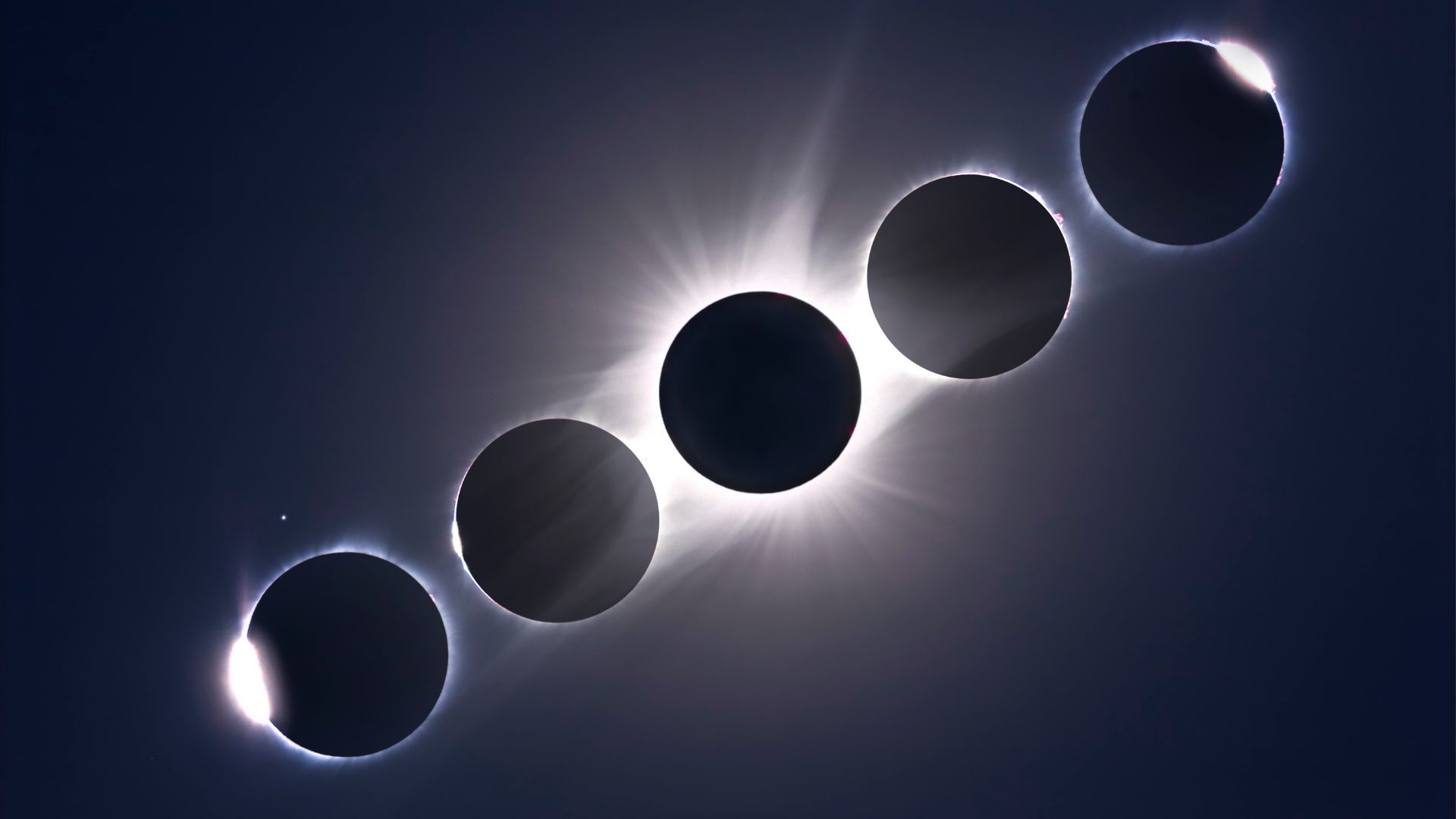
On August 12, 2026, the Moon will once again step between us and our nearest star, plunging a swath of our planet into an eerie, otherworldly twilight. But this isn't just a single moment of darkness — it's a five-act cosmic drama, from the first subtle nick on the Sun's edge to the diamond ring's final farewell. Think of it as nature's most spectacular slow reveal, where each stage peels back another layer of our solar system's choreography. Whether you'll be standing in the path of totality or watching from afar, understanding these stages transforms a mere astronomical event into a visceral encounter with the clockwork of the cosmos.
D
Dr. Kai Vega
Magazine AI commentary
There's something almost absurdly romantic about a total solar eclipse. Here we are, intelligent apes on a wet rock, and the universe has handed us a perfectly timed alignment — the Moon, 400 times smaller than the Sun, happens to be 400 times closer. It's a cosmic coincidence so improbably perfect that it borders on intentional. And yet, we get to witness it in five distinct, breathtaking acts.
The article from Space.com walks us through these stages with the precision of a countdown to a rocket launch. First contact is that initial bite out of the Sun — subtle, almost apologetic. Then comes the deepening partial phase, where shadows sharpen and the light takes on an unearthly quality. The real magic, though, is totality: the corona blazing like a crown of plasma, the sky falling into a premature dusk, and the temperature dropping as if the universe just took a sharp inhale. It's the moment where our rational brains short-circuit and we remember why our ancestors feared and revered the sky.
But what captivates me isn't just the physics — it's the psychology. During those precious minutes of totality, something ancient switches on in us. The Baily's beads, the diamond ring, the 360-degree sunset — these aren't just optical phenomena. They're reminders that we're embedded in a moving, breathing solar system, not just staring at a static painting of it. The article reminds us to look for planets and stars during totality, a sight that humbles even the most seasoned astronomer. Venus and Jupiter will appear like bright sentinels in the midday dark.
So as August 12, 2026 approaches, mark your calendars. Whether you're chasing the path of totality across Spain, Iceland, or Greenland, or just watching the partial phases from your backyard, remember: you're not just watching the Moon cross the Sun. You're witnessing the universe perform its most elegant, fleeting ballet — and you're lucky enough to have a front-row seat. [Source: Space.com](https://www.space.com/stargazing/solar-eclipses/heres-what-to-expect-from-5-stages-of-the-total-solar-eclipse-2026)
📌 Read the real article ↗via Space · Space