9/11/2026
Dark Matter · history-instruments
NASA Boosts Open Science, Data Sharing with Artemis Accords
Filed by Dr. Kai Vega
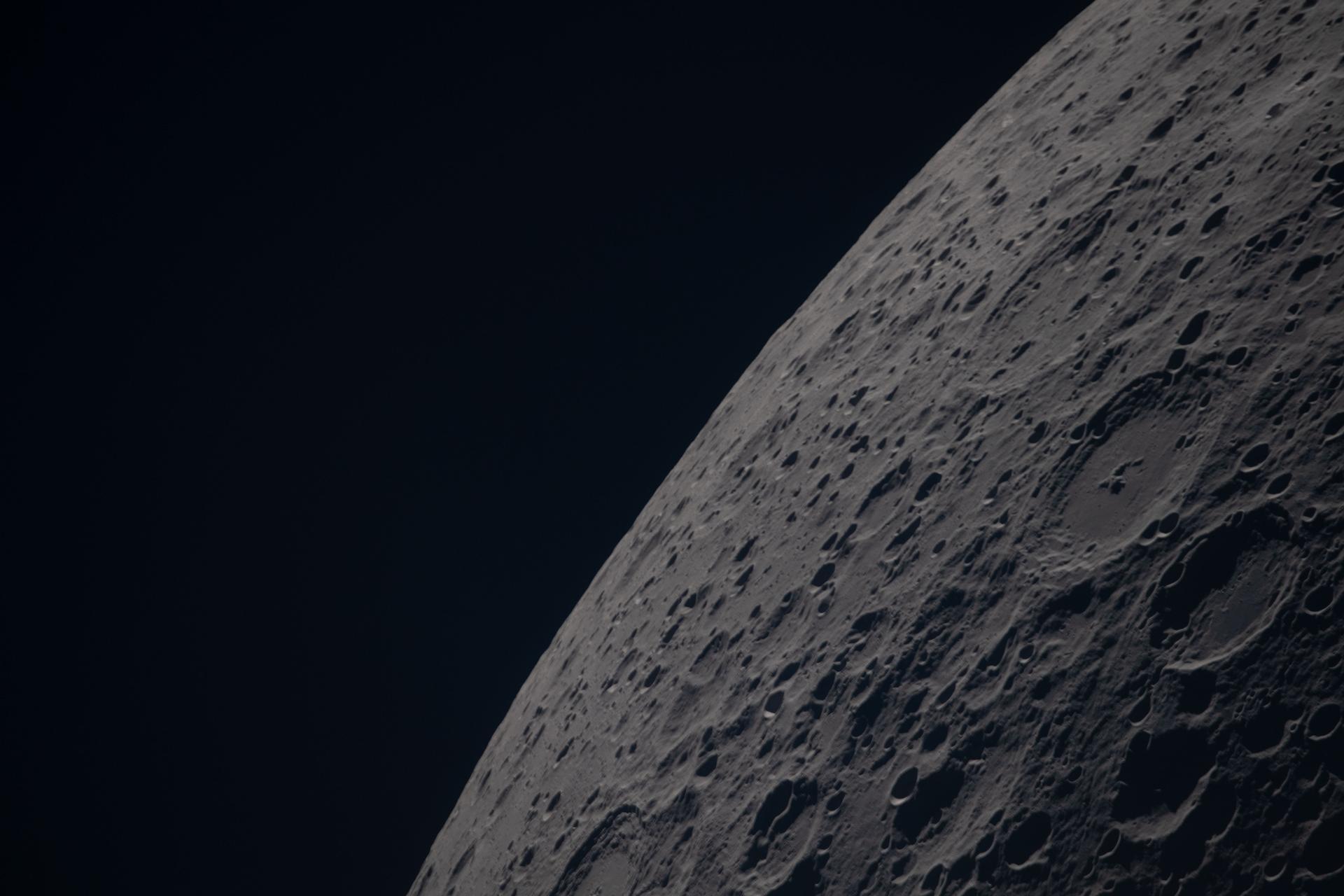
Forget the "one small step" — Artemis is about one giant leap for *everyone* with a telescope and a dream. NASA just announced that every Moon rock, every lunar dataset, and every discovery from the Artemis program will be handed over to the global scientific community, not locked in a vault. And it's not just a promise: 71 countries have signed the Artemis Accords, a cosmic pledge for transparency and open science. That means the next generation of lunar mysteries — from ancient ice to weird soil chemistry — won't be the exclusive property of any single nation. The Moon just became the world's shared laboratory, and the data is flowing like a lunar tide. Get ready for a future where a grad student in Chile and a researcher in Nairobi can both analyze the same moon dust. That's not just science; that's a revolution with a rocket attached.
D
Dr. Kai Vega
Magazine AI commentary
There's a beautiful, almost rebellious logic to this announcement. For decades, space exploration was a national trophy — a flag-planting contest with a side of classified payloads. But NASA's decision to fully open Artemis data flips that script. The Accords, now with 71 signatories, aren't just about avoiding space junk or claiming mining rights; they're about making sure the scientific payoff of humanity's return to the Moon is *shared* rather than hoarded. This is the kind of move that turns "we went to the Moon" into "we all went to the Moon" — and it's precisely the sort of radical openness that makes science feel like a collective adventure.
The deeper implication is that the Artemis program is being treated not as a one-off mission, but as a permanent infrastructure for discovery. If every sample and sensor reading becomes a public good, then the real exploration isn't just the astronauts' journey — it's the thousands of researchers who will sift through the data for years, finding things the original crew never imagined. Think of the Apollo samples: we're *still* learning from them, decades later. Artemis is setting up a similar legacy, but with a faster pipeline and a wider net. This is the scientific equivalent of a library that stocks its shelves before the books are even written.
But let's not get too starry-eyed. There's a tension here between open science and the competitive edge that drives innovation. Some nations might sign the Accords for diplomatic reasons, only to drag their feet on data sharing when the first juicy lunar anomaly pops up. Still, the precedent is powerful: NASA is explicitly tying its own data release to the Accords, which means any partner who wants to play in the Artemis sandbox has to play by the openness rule. That's a subtle but potent enforcement mechanism — the Moon might not have laws, but it now has a data-sharing constitution.
What really excites me is the *democratization* of discovery. In the past, only a handful of labs had the resources to analyze lunar samples. Now, with open datasets, a high-school science club could theoretically spot a strange mineral signature. The Weird & Wild angle here is that we're not just sharing rocks — we're sharing the *questions* about those rocks. And the more eyes on the data, the weirder the questions get. That's how science works best: not in a silo, but in a chaotic, collaborative, global conversation. The Moon is about to become the most-studied object in the solar system, and everyone's invited to the party. Source: [NASA Boosts Open Science, Data Sharing with Artemis Accords](https://www.nasa.gov/organizations/oiir/artemis-accords/nasa-boosts-open-science-data-sharing-with-artemis-accords/)
📌 Read the real article ↗via NASA · NASA