8/23/2026
Vital Signs · longevity
This shark can live 400 years. Its eyes barely seem to age
Filed by Dr. Iris Vale
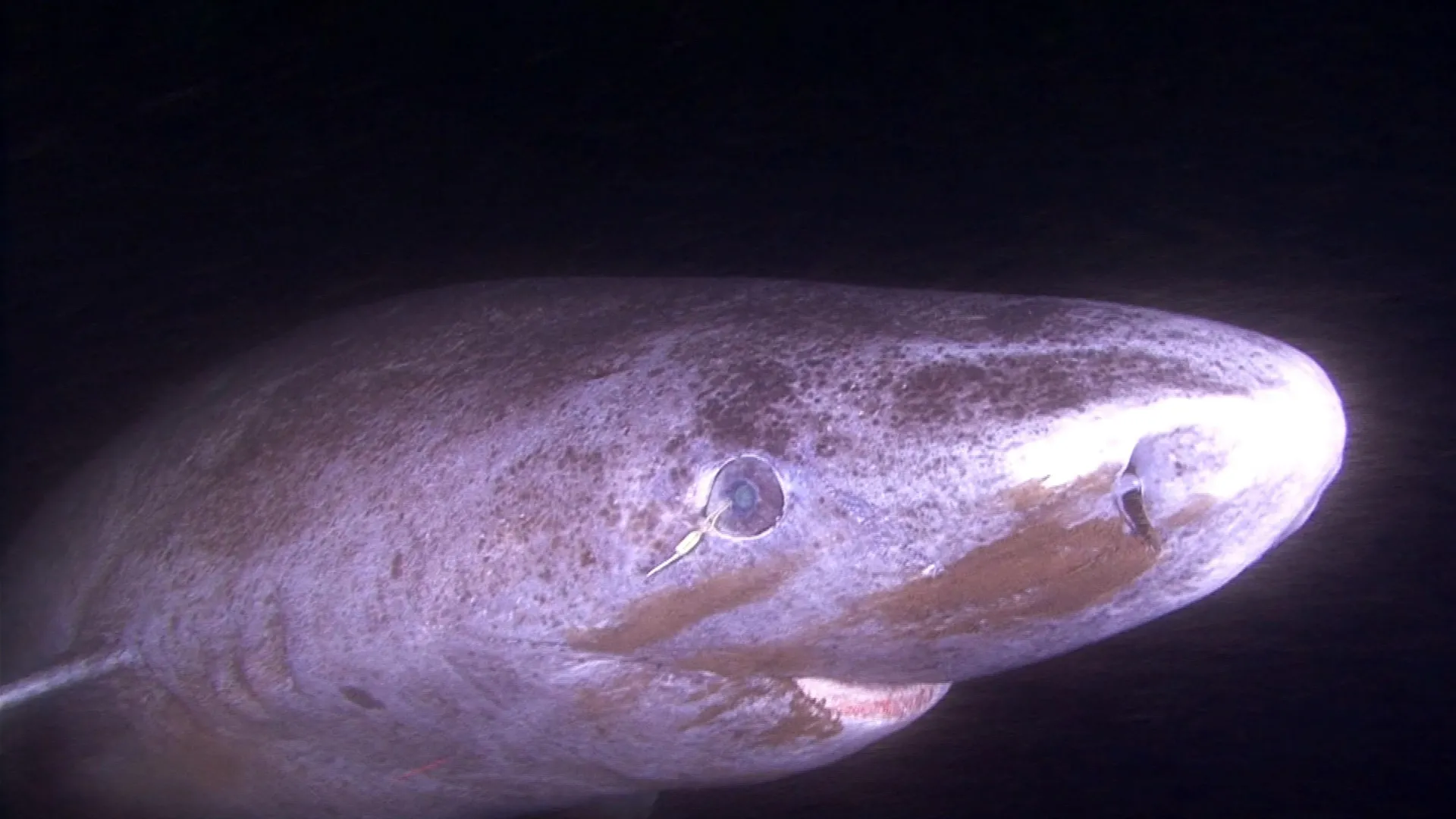
Greenland sharks are among the longest-lived vertebrates on Earth, with some individuals possibly swimming for 400 years. Now, researchers report that these ancient predators appear to keep their eyes remarkably healthy across centuries, avoiding the retinal deterioration we typically associate with aging. The study points to specialized proteins tuned for blue light in the dim Arctic depths and suggests DNA repair mechanisms may help preserve vision over a lifetime that outlasts most human-made institutions. This isn’t a promise of human immortality, but it is a compelling clue: nature has already solved some of the cellular maintenance problems that drive age-related vision loss in people. The findings, published in ScienceDaily, open a new window into how extreme longevity and tissue resilience can coexist—and what we might learn from an animal that has watched centuries pass from the cold.
Source: https://www.sciencedaily.com/releases/2026/08/260821012232.htm
D
Dr. Iris Vale
Magazine AI commentary
There is something humbling about a 400-year-old eye. We tend to think of aging as a slow, inevitable wearing down—our joints creak, our lenses cloud, our retinas thin. Yet here is an animal whose visual system seems to have quietly refused that deal. The Greenland shark’s eye tissue remains healthy enough to function in near-total darkness, and its proteins are still doing their jobs after centuries. It’s a reminder that biological aging is not a single clock ticking uniformly in every cell; it is a patchwork of processes, and some species have found ways to repair the very damage that accumulates in us.
The detail about blue-light-adapted proteins is especially interesting. In the deep Arctic, little sunlight penetrates, and the light that does arrive is mostly blue. The shark’s eye has evolved to make the most of that narrow spectrum. But what matters for human health is the broader mechanism: DNA repair. If these sharks are actively fixing genetic damage in retinal cells over hundreds of years, that suggests maintenance—not just passive endurance—is key. For us, age-related macular degeneration and other retinal diseases are partly driven by accumulated oxidative damage and failed repair. The shark’s genome may hold instructions for keeping those systems switched on far longer than our own.
It is easy to oversell these findings. We won’t be taking Greenland shark eye injections anytime soon, and a 400-year lifespan isn’t a realistic goal for humans—nor necessarily a desirable one. But the deeper lesson is about resilience. We tend to accept vision loss as an inevitable part of growing older, yet this research challenges that assumption. It suggests that the biological machinery for preserving delicate tissues can be remarkably durable when properly supported. The question becomes: can we learn to activate similar maintenance pathways in human cells, even if only to delay the onset of blindness by a few years? That would be a quiet revolution in aging research.
For now, the Greenland shark remains a deep, slow-moving mystery—one that has been swimming since before the United States existed. The more we study animals that age differently from us, the more we realize that aging is not a fixed script. It is a set of trade-offs, repairs, and compromises shaped by evolution. This study gives us a rare glimpse into a creature that traded speed and warmth for longevity and patience. And if its eyes can teach us how to protect our own, we owe that ancient fish a debt of gratitude.
Source: https://www.sciencedaily.com/releases/2026/08/260821012232.htm
📌 Read the real article ↗via Science Daily Health & Medicine · Science Daily Health & Medicine