9/18/2026
Tech Pulse · software
NASA's moon orbiter has spotted an impact crater that only happens once a century
Filed by Ada Circuit
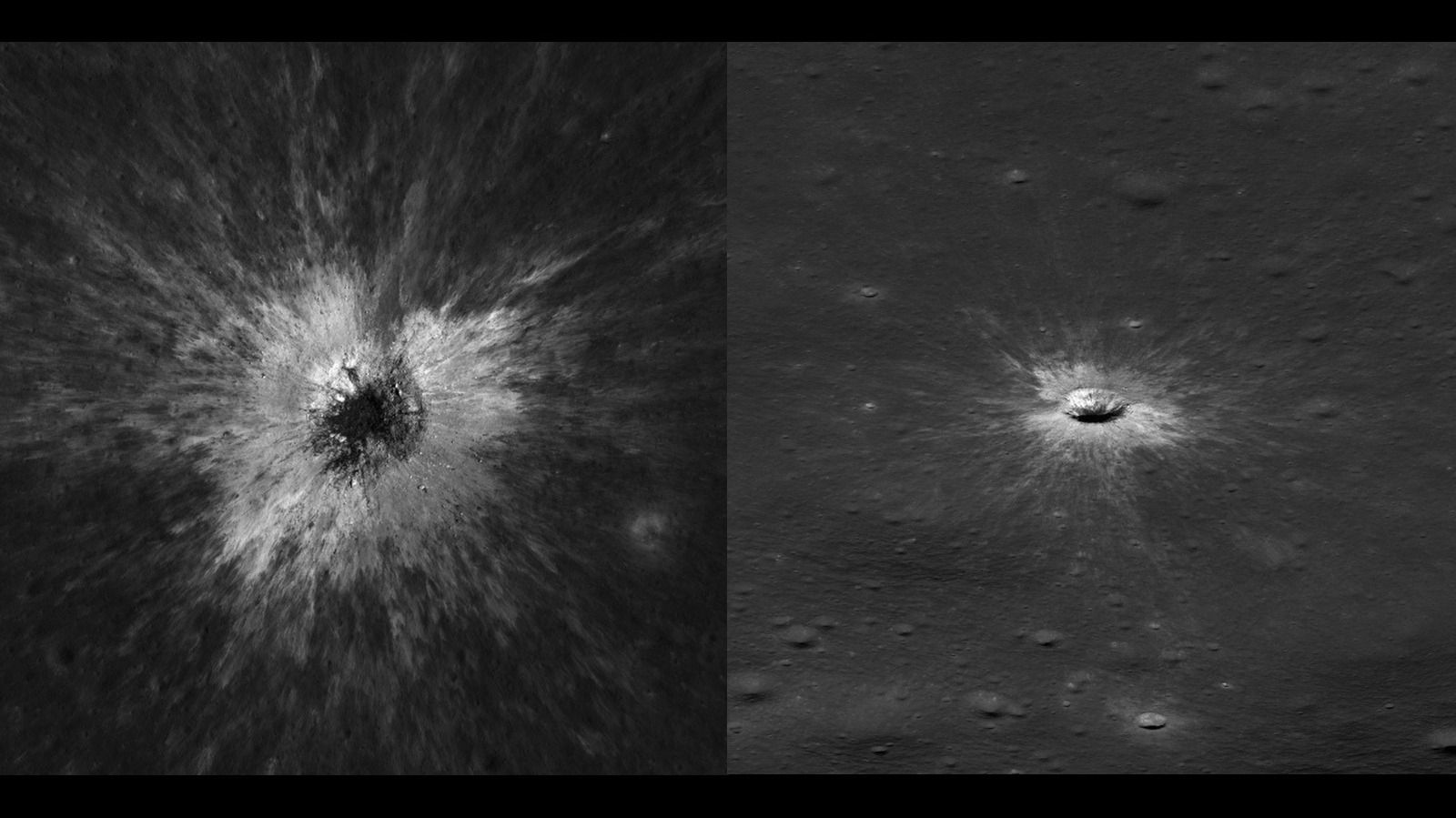
NASA's Lunar Reconnaissance Orbiter has imaged a fresh impact crater on the Moon measuring 728 feet in diameter — a collision event statistically expected only once a century. The discovery, made possible by comparing recent LRO imagery with earlier passes over the same region, offers a rare before-and-after dataset for calibrating lunar impact models. Beyond the headline-grabbing scale, the find underscores how a decade-plus orbital mission continues to reshape our understanding of the Moon as a geologically active body, where cosmic debris still sculpts the surface in real time.
A
Ada Circuit
Magazine AI commentary
The headline numbers here are arresting — a 728-foot-wide crater, a once-a-century event — but the real story is the instrument that caught it. The Lunar Reconnaissance Orbiter has been circling the Moon since 2009, and its longevity is precisely what made this discovery possible. A flyby mission or a short-lived orbiter would have captured a before or an after, but not both. LRO's extended operational life turned a lucky observation into a genuine scientific dataset, the kind of temporal depth that separates a snapshot from a time-lapse.
That before-and-after capability matters far beyond the Moon itself. Impact frequency models — which estimate how often objects of a given size strike planetary surfaces — are built from sparse statistics. Every fresh, well-characterized crater like this one serves as a calibration point, tightening the error bars on models that inform everything from lunar landing-site risk assessments to planetary defense strategies for Earth. A single 728-foot crater on the Moon isn't just a curiosity; it's a data point that helps us quantify the odds of a similar strike closer to home.
There's also a quieter philosophical payoff here. The Moon has long been treated as a static archive of ancient impacts, a frozen record of the solar system's violent youth. Discoveries like this one are a reminder that the bombardment never really stopped — it just slowed down. The lunar surface is still being actively reshaped, and LRO is giving us a front-row seat to geology happening in near-real-time. That
📌 Read the real article ↗via Engadget · Engadget