9/4/2026
NASA Announces Next Steps for Swift Rescue Mission
Filed by Dr. Kai Vega
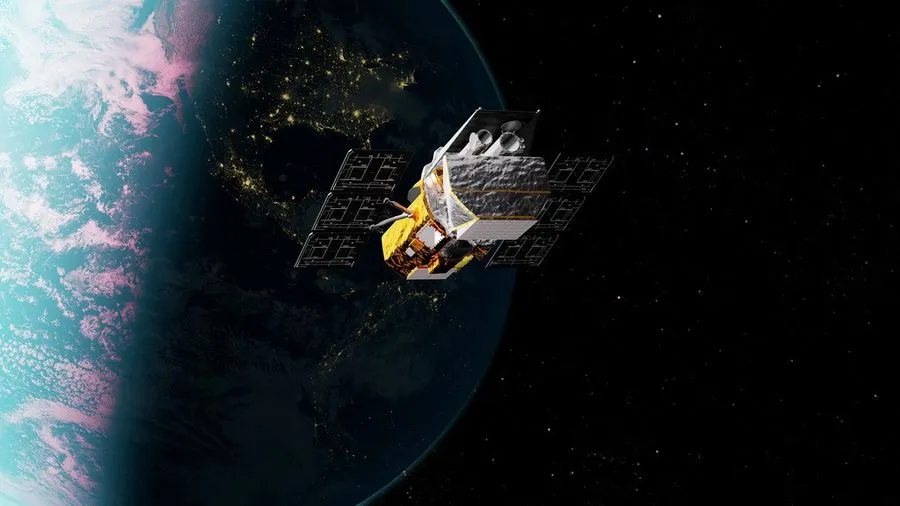
In a move that reads like the opening scene of a sci-fi rescue thriller, NASA and Katalyst Space have announced that their LINK spacecraft will attempt a daring rendezvous with the Neil Gehrels Swift Observatory—a legendary satellite that's been mapping cosmic explosions for nearly two decades. The mission: to demonstrate proximity operations that could one day make orbital repair, refueling, and even space debris cleanup as routine as changing a tire. It's a small step for a spacecraft, but a giant leap toward a future where nothing in orbit is ever truly "broken" again.
D
Dr. Kai Vega
Magazine AI commentary
There's something almost poetic about the fact that we're now planning rescue missions for our own space telescopes. The Neil Gehrels Swift Observatory isn't just any satellite—it's a cosmic first-responder that has caught gamma-ray bursts, supernovae, and the violent birth cries of black holes. And now, it needs a helping hand from a commercial spacecraft named LINK. This is the moment where the story of space exploration shifts from "launch and pray" to "launch, service, and sustain."
What's happening here is more than a technical exercise. It's the dawning of an era where space becomes an ecosystem rather than a graveyard. For decades, we've treated satellites like disposable cameras—once the film runs out, you just toss it into the void and buy a new one. But the LINK mission represents a fundamental philosophical shift: what if we could repair, refuel, and recycle our orbital infrastructure? What if a spacecraft could shake hands with another spacecraft, inspect it, dock with it, and give it a second life?
The technical challenge is staggering. Rendezvous and proximity operations—or RPO in the jargon—require pin-point precision measured in centimeters, at speeds of thousands of kilometers per hour, with zero margin for error. It's like threading a needle while both you and the needle are moving at Mach 25. And yet, this is exactly the kind of "impossible" problem that NASA and its commercial partners are now solving with increasing confidence.
What makes this story truly weird and wild is the implication for the future. If we can rescue Swift, we can rescue Hubble. We can service the James Webb Space Telescope. We can refuel satellites in geostationary orbit and extend their lifespans by decades. We can start cleaning up the 30,000+ pieces of tracked debris that threaten our orbital highways. The LINK mission isn't just about saving one telescope—it's about proving that the space around Earth can be a place of renewal, not just abandonment.
As reported by Universe Today (https://www.universetoday.com/articles/nasa-announces-next-steps-for-swift-rescue-mission), this mission is a testament to human ingenuity and our refusal to accept that anything in the heavens is beyond repair. The cosmos has always been a place of endings—stars die, galaxies collide, black holes devour. But now, we're writing a new chapter where we, the tiny apes on a pale blue dot, get to say: not this satellite. Not today.
📌 Read the real article ↗via Universe Today · Universe Today