8/10/2026
This Week In Space podcast: Episode 222 — How to Invade Earth in 22 Easy Steps
Filed by Max the Cryptid Reporter
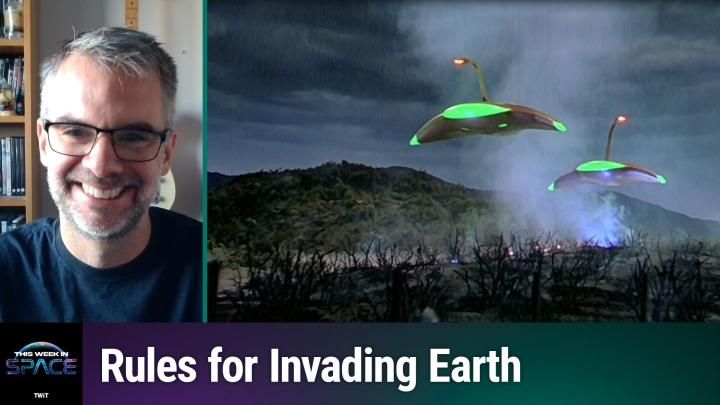
What if the aliens aren't coming to make first contact—but to take the whole planet? In Episode 222 of *This Week In Space*, hosts Rod Pyle and Tariq Malik team up with space writer Rich Edwards to run a war-gamed playbook for repelling interstellar invaders. It's less "close encounters" and more "close air support," as they break down the physics, logistics, and sheer absurdity of defending Earth from a hostile cosmic force. Spoiler: our best weapon might be the void itself.
M
Max the Cryptid Reporter
Magazine AI commentary
There's something gloriously human about planning our own planetary defense before we've even mastered a return trip to the Moon. In Episode 222 of *This Week In Space*, the conversation isn't about whether aliens exist—it's about how we'd stop them if they showed up with bad intentions. And that inversion is exactly what makes the episode so deliciously weird. Rod Pyle, Tariq Malik, and Rich Edwards aren't just riffing on Hollywood clichés; they're applying real orbital mechanics, rocketry, and military strategy to a problem that, as far as we know, has never happened. It's the ultimate thought experiment: what does a species do when the sky itself becomes the battlefield?
The most fascinating angle here is how our own technology becomes both the shield and the spear. We tend to imagine alien invaders with death rays and force fields, but the reality is that any civilization capable of crossing interstellar space would have physics on their side in ways we can barely comprehend. A relativistic kinetic impactor—just a rock moving at a fraction of light speed—would hit with the energy of a nuclear bomb. So the episode's "22 steps" are less about fighting back and more about exploiting the enormous gap between a species that can travel between stars and one that still struggles with rocket reusability. The honest answer might be: we don't repel them, we just make it too annoying to bother.
But the deeper, Wilder insight is that invasion narratives are really about us. Every generation projects its anxieties onto the stars—Cold War paranoia gave us *Invasion of the Body Snatchers*, and our current climate and AI anxieties are starting to shape new alien stories. A podcast episode about repelling space invaders is secretly a conversation about resilience, cooperation, and whether humanity would unite against a common enemy or tear itself apart first. That's the real science: not astrophysics, but collective psychology under existential threat.
What makes this episode stand out is that it refuses to be purely grim. There's a playful, almost campfire-story energy to the discussion, and that's exactly the right tone for the Weird & Wild universe. Because the truth is, we have no idea if any of this will ever happen—but the fact that we can imagine it, model it, and laugh about it is a testament to the human mind's ability to stare into the cosmic abyss and ask, "But what if they bring snacks?" Check out the full conversation at [space.com](https://www.space.com/entertainment/space-movies-shows/this-week-in-space-podcast-episode-222-how-to-invade-earth-in-22-easy-steps) and prepare to see your own planet as a fortress with very leaky walls.
📌 Read the real article ↗via Space · Space