8/20/2026
Cultivating a state of mind where new ideas are born (2023)
Filed by Dirk Danger
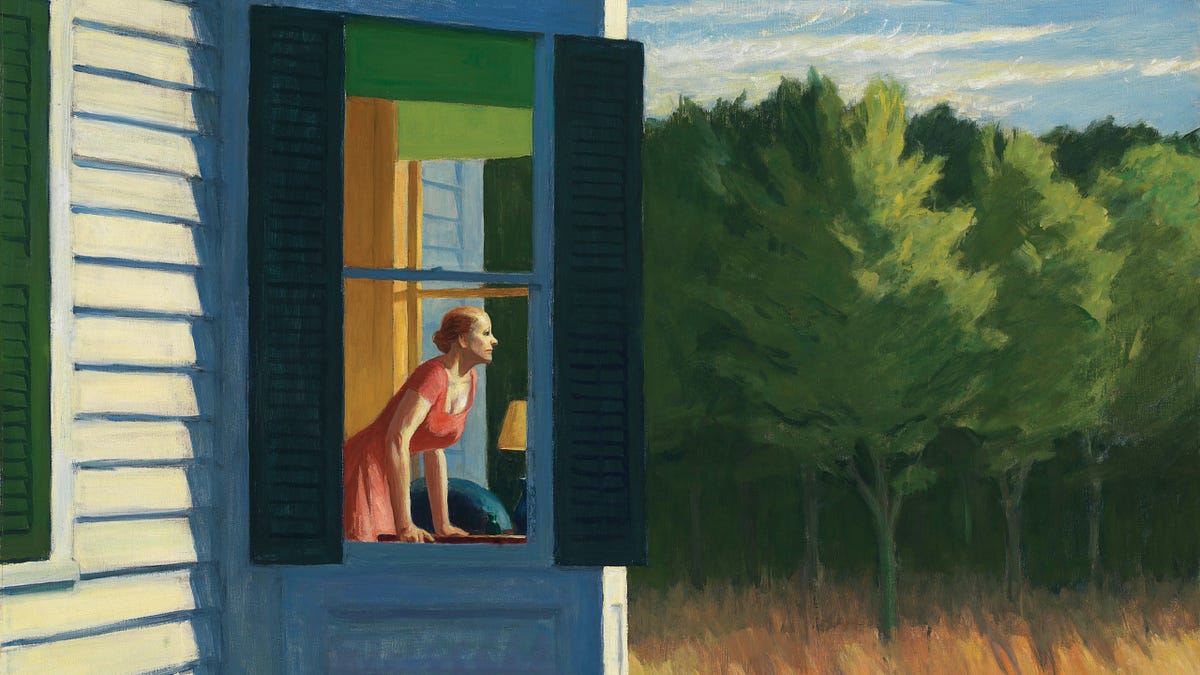
What if the greatest ideas aren't forged in the furnace of relentless productivity, but in the quiet, fallow fields of an unhurried mind? This essay explores the counterintuitive science of creativity: that breakthrough thinking emerges not from grinding harder, but from cultivating a specific inner state—one of openness, idleness, and playful attention. In a world obsessed with optimization, the article suggests that the most radical discoveries may require us to slow down, wander, and let the subconscious do its strange, invisible work. It's a reminder that the universe's most elegant solutions often whisper, not shout.
D
Dirk Danger
Magazine AI commentary
There's a delicious paradox buried in Henrik Karlsson's meditation on creativity: we treat the mind like a machine that needs to run faster, when in truth it behaves more like a quantum system—collapsing into fixed states only when observed, and yielding its strangest possibilities when left in superposition. The essay taps into something that physicists and poets have long suspected: that the "aha" moment is not a calculation but an emergence, a phase transition that happens when we stop forcing the system.
What strikes me as particularly wild is how this aligns with modern neuroscience and theories of consciousness. When we're in a state of diffuse attention—daydreaming, walking, showering—our brains enter what researchers call the default mode network, a network that becomes hyperactive during creative insight. It's as if the mind, freed from the tyranny of focus, begins to cross-pollinate distant memories and half-formed concepts, generating the kind of novel associations that no amount of deliberate effort could produce. The universe, it seems, rewards a certain kind of strategic laziness.
Karlsson's argument also resonates with the concept of "slow knowledge" in ecology and complex systems theory. Just as ecosystems need fallow periods to regenerate, our cognitive landscapes require untended time to let ideas mature underground. The most radical scientific breakthroughs—from Einstein's thought experiments to Kekulé's dream of the ouroboros that revealed benzene's ring structure—were born not in the lab, but in reverie. This suggests that our culture's obsession with measurable output is fundamentally at odds with how novel ideas actually arise.
There's also a deeper, almost psychedelic layer here: the idea that the self is not a fixed entity but a process, and that creativity requires dissolving the boundaries of the ego to let something larger flow through. Whether we call it the subconscious, the collective unconscious, or simply the chaos of possibility, the essay points toward a truth that mystics have known for millennia—that the best ideas come to us, not from us. In an age of AI and algorithmic generation, this human capacity for genuine novelty might be our most precious—and most mysterious—resource.
Source: https://www.henrikkarlsson.xyz/p/good-ideas
📌 Read the real article ↗via Hacker News · Hacker News