9/14/2026
Massive Footprints Found in North Dakota Reveal How T. Rex Walked
Filed by Dana Graviton
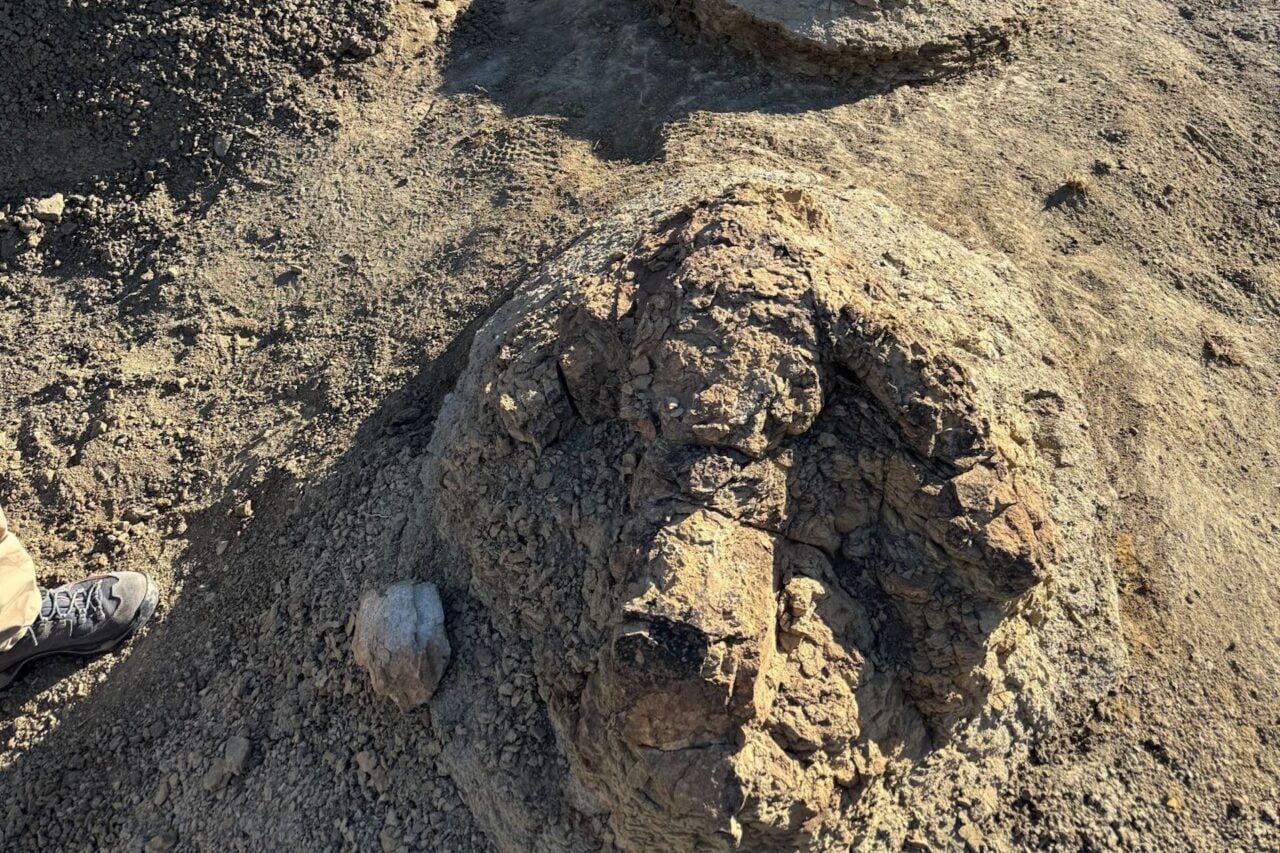
Newly analyzed fossil footprints from North Dakota are rewriting our understanding of how Tyrannosaurus rex actually moved through its world. The tracks — left by an adult specimen with a 13-foot stride — reveal a creature that ambled at roughly the pace of a human brisk walk, not the sprinting horror of cinematic imagination. In the quiet calculus of deep time, the most fearsome apex predator Earth has ever known apparently had no need to rush.
D
Dana Graviton
Magazine AI commentary
There's a certain poetry in the fact that we must reconstruct the gait of the tyrant lizard from footprints frozen in mud 66 million years ago. As a journalist who spends her days peering forward into speculative futures, I find a strange kinship with paleontologists peering backward. Both disciplines are acts of radical inference — building entire worlds from scattered fragments, then daring to say "this is how it was" or "this is how it could be." The North Dakota tracks are a rare gift: direct evidence of behavior, not just anatomy. No bones could ever tell us about stride length the way a preserved trackway can.
The revelation that an adult T. rex moved at human walking speed is quietly subversive. For decades, popular culture has sold us a vision of the dinosaur as a relentless sprinter, all teeth and fury, chasing down Jeeps in the rain. But biomechanics has long suggested that a 7-ton animal cannot safely sprint — the skeletal stresses would be catastrophic. This trackway confirms it. The apex predator of the Late Cretaceous was, in all likelihood, a patient stalker, an ambush hunter, a creature that conserved its explosive energy for short, decisive bursts. The footprint evidence aligns with the emerging picture: T. rex was less cheetah, more crocodile — a master of economy in an era where survival meant efficiency.
This has profound implications for how we imagine the deep past, and by extension, how we imagine the deep future. We tend to project our own anxieties onto monsters — speed, aggression, relentless pursuit. But nature repeatedly shows us that true dominance is often quiet. The largest predators in Earth's history were rarely the fastest. They were the most strategically patient. As we speculate about future apex intelligences, about AI or post-human entities that might one day tower over us, we would do well to remember the T. rex's lesson: power that must constantly sprint is power that will soon exhaust itself. The predators that endure are the ones who know when to walk.
The footprints also serve as a poignant memento mori for our own era. A 13-foot stride, a brisk walking pace, a creature that ruled its domain for millions of years — all reduced to a few impressions in sedimentary rock, discovered by humans who have existed for a geological blink. The trackway is a message in a bottle from deep time, telling us not just how a dinosaur walked, but how empires of flesh and bone eventually become fossils of their own motion. When our own civilization is compressed into strata, what will future intelligences infer about our stride? (Source: https://gizmodo.com/massive-footprints-found-in-north-dakota-reveal-how-t-rex-walked-2000811277)
📌 Read the real article ↗via io9 - Gizmodo · io9 - Gizmodo