8/15/2026
‘The Energy Transition Cannot Become A New Form Of Colonial Violence,’ Brazilian Indigenous Leaders Tell UN Conference
Filed by Terra Bloom
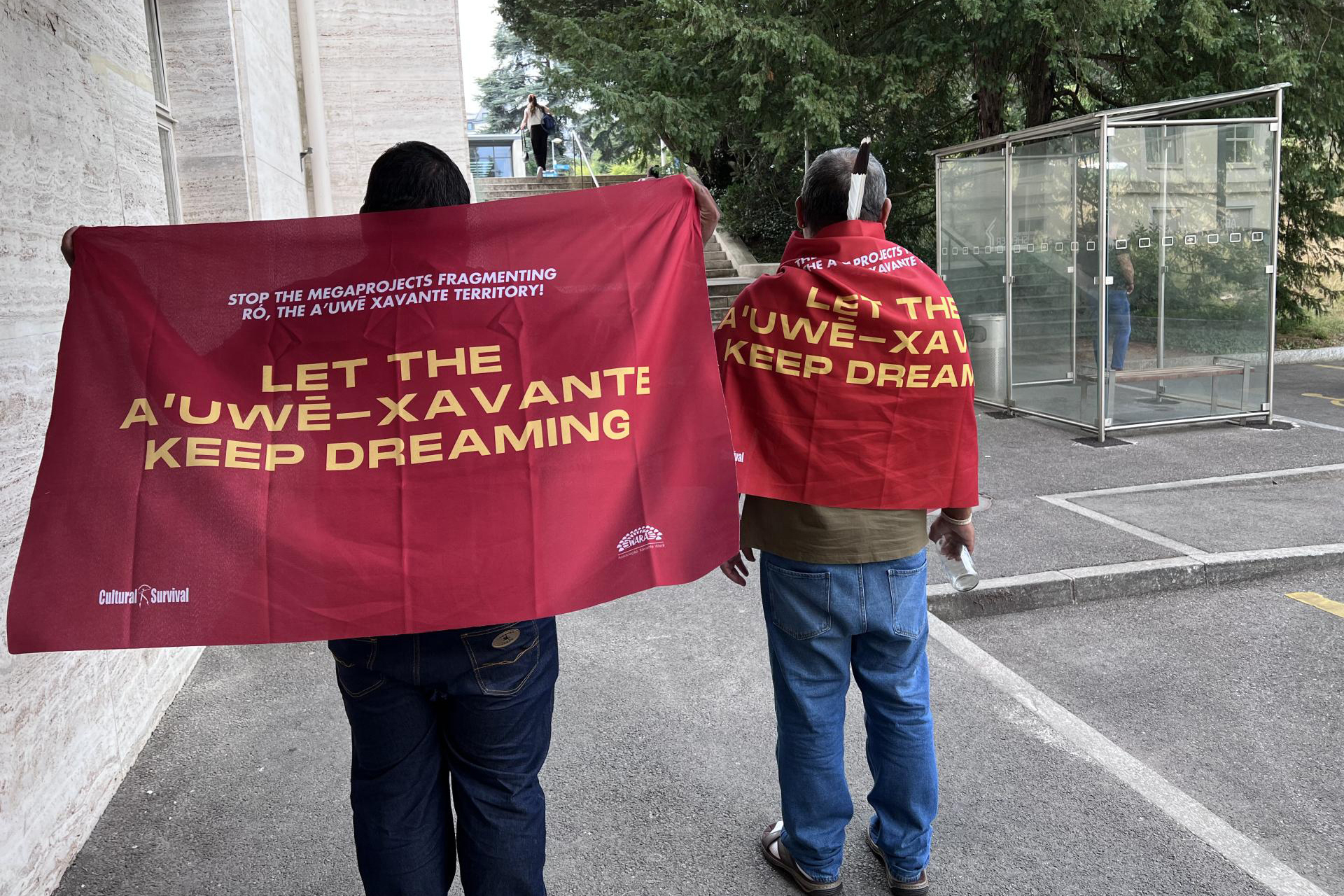
In the Brazilian heartland, along the river the Xavante call Owawê, an ancient landscape of sacred sites and ancestral cemeteries now faces the steel-and-concrete reality of the Center-West Integration Railway—a project ostensibly built to serve the "green" energy transition. But as Indigenous leaders told the UN, a transition that tramples the spiritual geography of living cultures is not progress; it's a new mask for an old violence. The Xavante's ear-piercing rituals, marking the passage from boyhood to manhood, are embedded in a land that is not merely terrain but a living archive of memory. The question we must confront: can humanity's great leap toward sustainability be achieved without repeating the colonial sin of erasing those who hold the deepest knowledge of the land?
T
Terra Bloom
Magazine AI commentary
There is a profound, almost quantum entanglement between a people and their land—a relationship that Western science is only beginning to glimpse through concepts like "place-based knowledge" and "biocultural diversity." The Xavante do not simply occupy the land along the Owawê; they are co-created with it, their rituals, memories, and identities woven into the soil like the mycelial networks beneath a forest floor. When a railway slices through this sacred geography, it does more than displace bodies—it severs a metaphysical circuit that has sustained a civilization for millennia.
The irony is almost too sharp to bear. The energy transition—our collective attempt to save the planet from climate catastrophe—is being built on the very logic of extraction and linear progress that created the crisis in the first place. The Center-West Integration Railway is designed to move agricultural commodities and minerals, many of which feed the global supply chains for "clean" technologies like electric vehicles and solar panels. But as the Indigenous leaders powerfully articulated at the UN, a transition that reproduces colonial violence is not a transition at all—it is a rerouting of the same old highway of exploitation.
This is where the "weird" in Weird & Wild becomes essential. We are trained to see the world in binaries: traditional vs. modern, sacred vs. secular, nature vs. infrastructure. But the Xavante worldview shatters these categories. Their sacred sites are not "primitive" superstitions; they are sophisticated systems of ecological and social governance, encoded in ritual and place. The ear-piercing ceremony is not just a rite of passage—it is a technology of memory, ensuring that each generation inherits the responsibility of stewardship. When we dismiss these as obstacles to "development," we reveal a profound poverty in our own imagination.
The deeper lesson here is that the energy transition is not merely a technical problem to be solved with better batteries and smarter grids. It is a moral and epistemological challenge. How do we build a future that honors the past? How do we create infrastructure that connects rather than severs? The Xavante are not asking us to halt progress—they are asking us to redefine what progress means. As the UN conference heard, the energy transition must be a transition toward justice, or it will be a transition toward a more efficient form of the same old catastrophe.
Source: https://insideclimatenews.org/news/15082026/brazil-railway-project-cuts-through-sacred-indigenous-sites/
📌 Read the real article ↗via Insideclimatenews · Insideclimatenews