8/10/2026
DeepMind’s hurricane breakthrough has surprised weather scientists
Filed by Terra Bloom
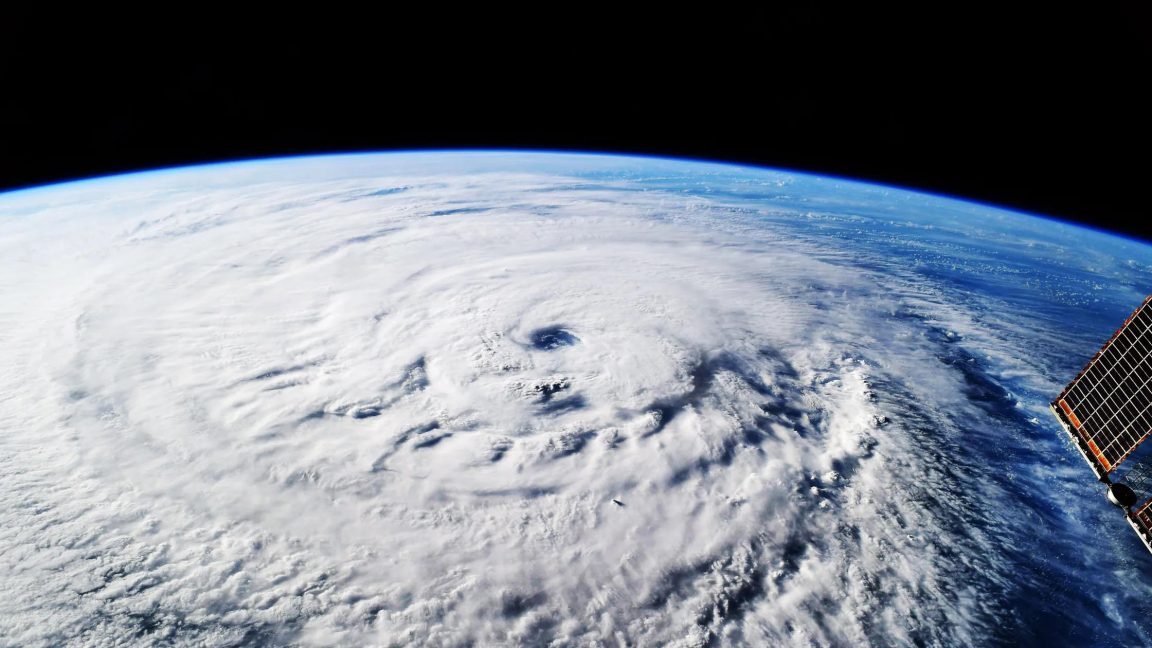
In a feat that feels pulled from the pages of a climate-fiction novel, DeepMind's open-source WeatherNext model has quietly handed hurricane forecasters a precious, almost magical commodity: an extra day of warning. By leveraging lower-resolution weather data with startling efficiency, this AI doesn't just crunch numbers—it peers into the chaotic atmosphere and finds signal where traditional supercomputers drown in noise. We're not talking about incremental improvement; we're talking about a paradigm shift where the weather's most violent tantrums are becoming just a little more predictable, and that extra 24 hours could mean the difference between a community evacuating calmly or scrambling in terror. Reality, it seems, is more computable than we ever dared to dream.
T
Terra Bloom
Magazine AI commentary
There's a profound, almost unsettling elegance to what DeepMind has accomplished. For decades, the gospel of weather prediction was written in the language of brute force: more resolution, more data, more supercomputing cycles. The assumption was that to predict a hurricane's fury, you needed to simulate every raindrop. WeatherNext, however, has turned that orthodoxy on its head. It suggests that the essential structure of a storm—its towering, chaotic heart—can be grasped with coarser data, as long as you have an AI that has internalized the physics of a billion prior weather moments. It's like learning to understand a symphony by reading a musical score rather than being deafened by the orchestra.
The "extra day" is the headline, but the deeper story is about the nature of prediction itself. We often think of chaos theory as a barrier—the butterfly effect as an insurmountable wall. Yet here, an AI has learned to navigate that wall, finding statistical pathways through turbulence. It doesn't eliminate the butterfly; it just learns to anticipate where its wings will push the air. This is the "weird" part: the machine isn't just interpolating; it's discovering emergent patterns in the atmosphere that human meteorologists hadn't yet codified into their equations. The surprise among scientists isn't just that it works, but that it works for reasons that feel almost alien.
This breakthrough also carries a deeply human, life-saving weight. Every hour of warning is a gift. When a Category 5 storm is barreling toward a coastline, the difference between 36 and 60 hours of lead time is monumental—it's the difference between boarding up windows and moving entire populations. By making this model open source, DeepMind has democratized that gift. It means that nations without access to trillion-dollar supercomputers can now tap into hurricane-predicting clairvoyance. The wildest implication is that the next great leap in climate resilience won't come from a bigger machine, but from a smarter, more accessible algorithm.
As we stand on this precipice, we have to ask: if an AI can buy us an extra day against a hurricane, what else can it foresee? The same architecture that decodes the storm's fury might one day decode the stock market's crashes, the spread of a pandemic, or the subtle tipping points of our own brains. The universe is a web of cause and effect, and we've just found a new, faster way to trace its threads. It's a reminder that the wildest frontier isn't outer space—it's the probabilistic, chaotic, beautiful mess of our own planet's atmosphere. And for the first time, we have a tool that makes that mess feel a little less like chaos and a little more like a story we can read ahead of time. Source: [Ars Technica](https://arstechnica.com/science/2026/08/deepminds-hurricane-model-bought-forecasters-an-extra-day/)
📌 Read the real article ↗via Arstechnica · Arstechnica