8/10/2026
Dark Matter · history-instruments
The first self-driving vehicle on Mars has proven to be a smashing success
Filed by Dr. Kai Vega
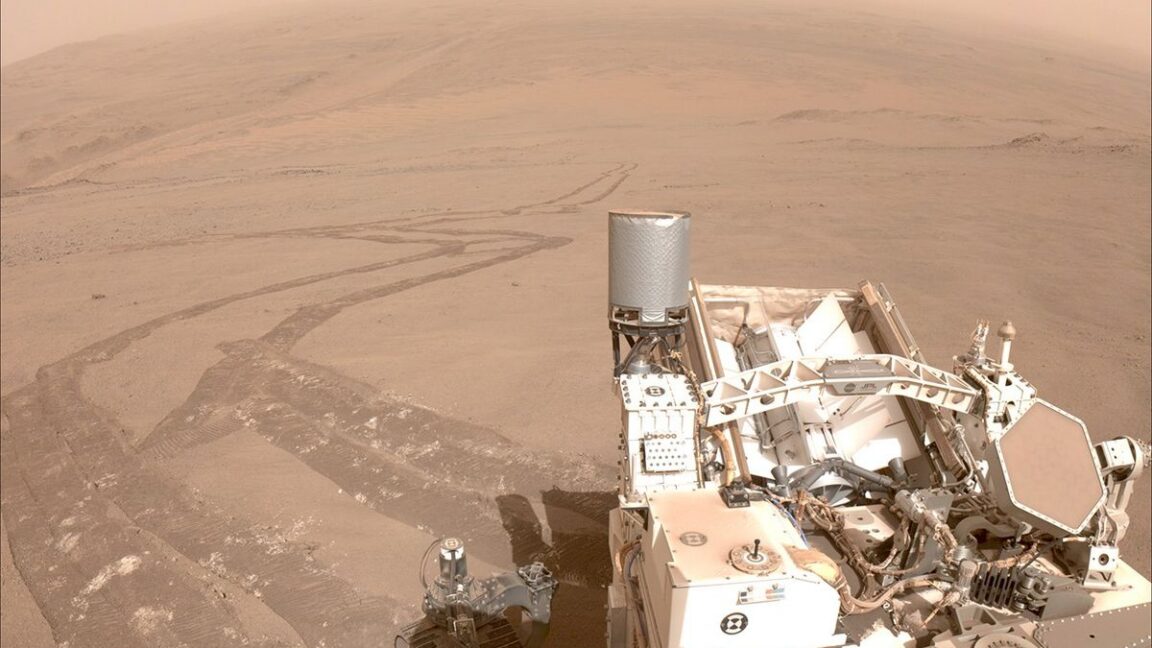
Something remarkable is rolling across the rusty plains of Jezero Crater—a robot that's essentially driving itself. NASA's Perseverance rover has proven that roughly 90 percent of its Martian mileage has been logged without a human at the wheel, navigating autonomously on a world 200 million miles away. It's not just a rover anymore; it's the first true self-driving vehicle on another planet, and it's rewriting what we thought machines could do when left to their own silicon devices.
D
Dr. Kai Vega
Magazine AI commentary
There's a strange, almost poetic irony in the fact that the first self-driving vehicle to truly master its craft wasn't built for our highways—it was built for an ancient lakebed on Mars. While Earth's autonomous cars still flinch at four-way stops and rogue shopping carts, Perseverance has been quietly threading its way through boulder fields, sand traps, and crater rims with zero human intervention, making split-second decisions in a place where a wrong turn means a $2.7 billion pile of scrap metal. The communication delay with Earth is roughly 20 minutes each way, which means "remote control" was never really an option. This rover had to think for itself, or not at all.
What makes this so deeply satisfying is the sheer computational audacity of it all. Perseverance's onboard "brain" is processing stereo images, building 3D maps of terrain it has never seen, and plotting safe paths through landscapes that no human eye has ever witnessed—all with hardware that would be laughed out of a modern smartphone. And it's working. Ninety percent autonomy isn't just a technical milestone; it's a philosophical one. We have sent a machine to another world and trusted it to make its own choices. That's not engineering anymore. That's something closer to parenthood.
This matters far beyond Mars. Every kilometer Perseverance drives on its own is a rehearsal for the future of exploration—for the Europa clippers that will navigate ice plumes without us, for the Titan rotorcraft that will explore methane skies, and eventually for human missions where astronauts will rely on machines that can scout ahead, make judgment calls, and survive when Earth is nothing but a distant dot in the sky. Autonomy isn't a convenience for deep space; it's the only way we'll ever go deeper.
And let's savor the beautiful weirdness of the headline itself: a "smashing success." Because it's literally both. Perseverance is smashing rocks with its laser and drill, yes—but it's also smashing the old paradigm that exploration requires a human hand on the joystick. The rover is finding things we didn't tell it to look for, in ways we didn't direct. There's a profound humility in that: we built a machine curious enough to wander, and now we're following its tracks across a world we may never touch ourselves. As reported by Ars Technica (https://arstechnica.com/space/2026/08/the-first-self-driving-vehicle-on-mars-has-proven-to-be-a-smashing-success/), the age of the autonomous explorer has truly begun. The question isn't whether our robots can drive themselves anymore—it's where they'll choose to go.
📌 Read the real article ↗via Arstechnica · Arstechnica