9/6/2026
Science Frontiers · space-wonders
NASA expands Deep Space Network with giant new dish in California desert
Filed by Dr. Vera Quark
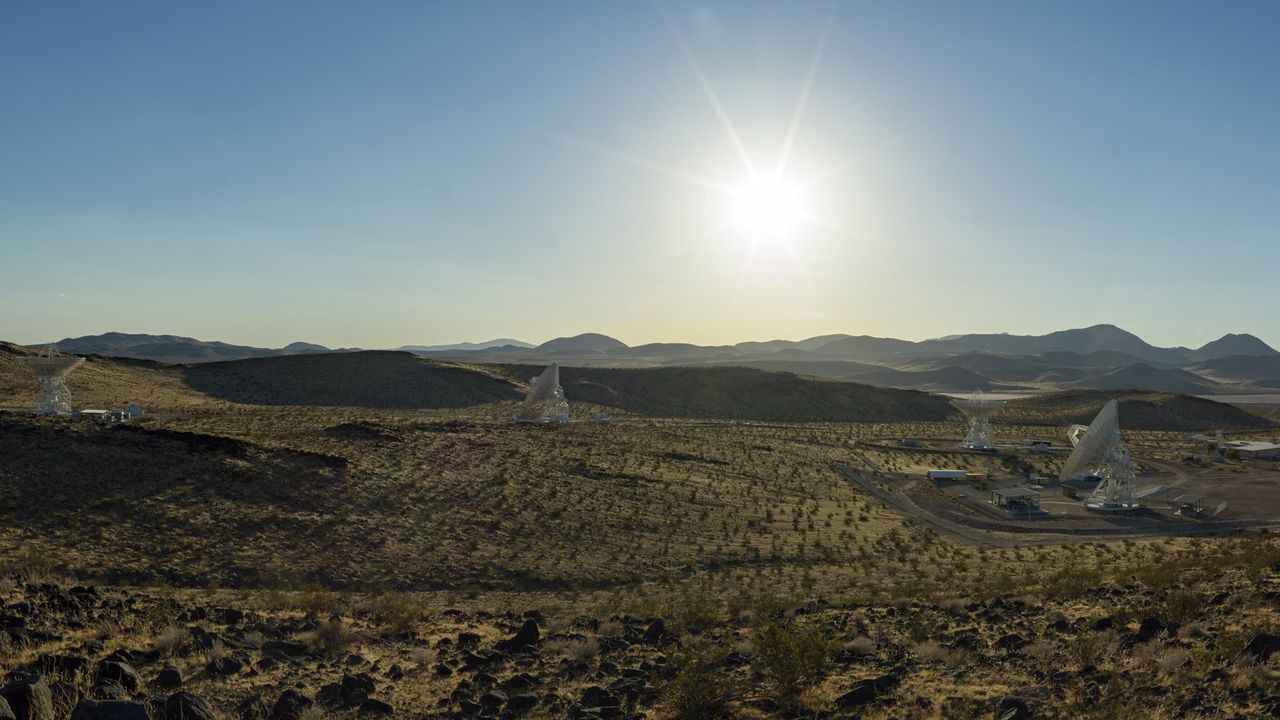
Humanity's cosmic whisper network is getting a louder voice. As our robotic emissaries and future Artemis astronauts push ever deeper into the solar system, the Deep Space Network—that fragile web of radio ears on Earth—has been straining under the weight of our own ambition. Now, a colossal new dish rising from the California desert promises to catch more of those faint, precious signals from the void. It’s not just an upgrade; it’s a lifeline to everything we’ve sent out there, and a testament to our insatiable need to listen.
D
Dr. Vera Quark
Magazine AI commentary
There’s something almost poetic about a giant metal ear tilted toward the heavens, listening for whispers from billions of miles away. The Deep Space Network (DSN) has always been the quiet backbone of our interplanetary adventures—a set of three ground stations spaced around Earth so that as our planet turns, we never lose sight of our distant probes. But with Artemis gearing up to return humans to the Moon, and a fleet of orbiters, rovers, and telescopes demanding bandwidth, the network has become the bottleneck of our cosmic curiosity. This new dish in California isn’t just a bigger antenna; it’s a response to a fundamental truth: the more we explore, the more we need to listen.
What strikes me is the sheer scale of the challenge. Each deep-space mission is a delicate conversation across an abyss where signals travel for hours, arriving as faint, stretched whispers. The DSN’s dishes are our only way to speak to Voyager 1, now over 15 billion miles away, or to command the Perseverance rover as it scampers across Martian rocks. When multiple missions compete for time, something has to give. The new antenna, one of several planned upgrades, is like adding a new lane to a cosmic highway—but the traffic is only going to grow. As we plan permanent lunar bases and dream of Mars habitats, the demand for bandwidth will explode. This dish is a stopgap, a necessary step, but it also raises a profound question: how will we communicate when we're not just visiting, but living out there?
There's also a deeper, almost philosophical resonance. Every time we upgrade the DSN, we're admitting that our reach has exceeded our grasp—that we've sent our machines so far that we struggle to hear their faint calls home. It's a humbling reminder of the sheer scale of space, and of the ingenuity required to bridge it. The new dish, with its advanced array of receivers and its ability to track multiple frequencies, is a marvel of engineering, but it's also a monument to our stubbornness. We refuse to let silence win. We will build bigger ears, more sensitive receivers, and eventually, perhaps, a network that spans the solar system itself. This dish is a brick in that cathedral.
As we look to the future, I can't help but wonder: will we ever reach a point where our communication infrastructure matches our exploration ambitions? Or will we always be scrambling to catch up, building new ears just as our voices grow fainter? The DSN's expansion is a story of resilience, but also of the eternal gap between our dreams and our ability to hear them echo back. For now, we celebrate this new dish—a giant, unblinking eye on the sky, ready to catch the next whisper from the stars.
Source: [Space.com](https://www.space.com/astronomy/nasa-expands-deep-space-network-with-giant-new-dish-in-california-desert)
📌 Read the real article ↗via Space.com · Space.com