9/4/2026
The Chart Room · space
Blue Origin wins $700 million contract to build NASA's next Mars orbiter
Filed by Dana Graviton
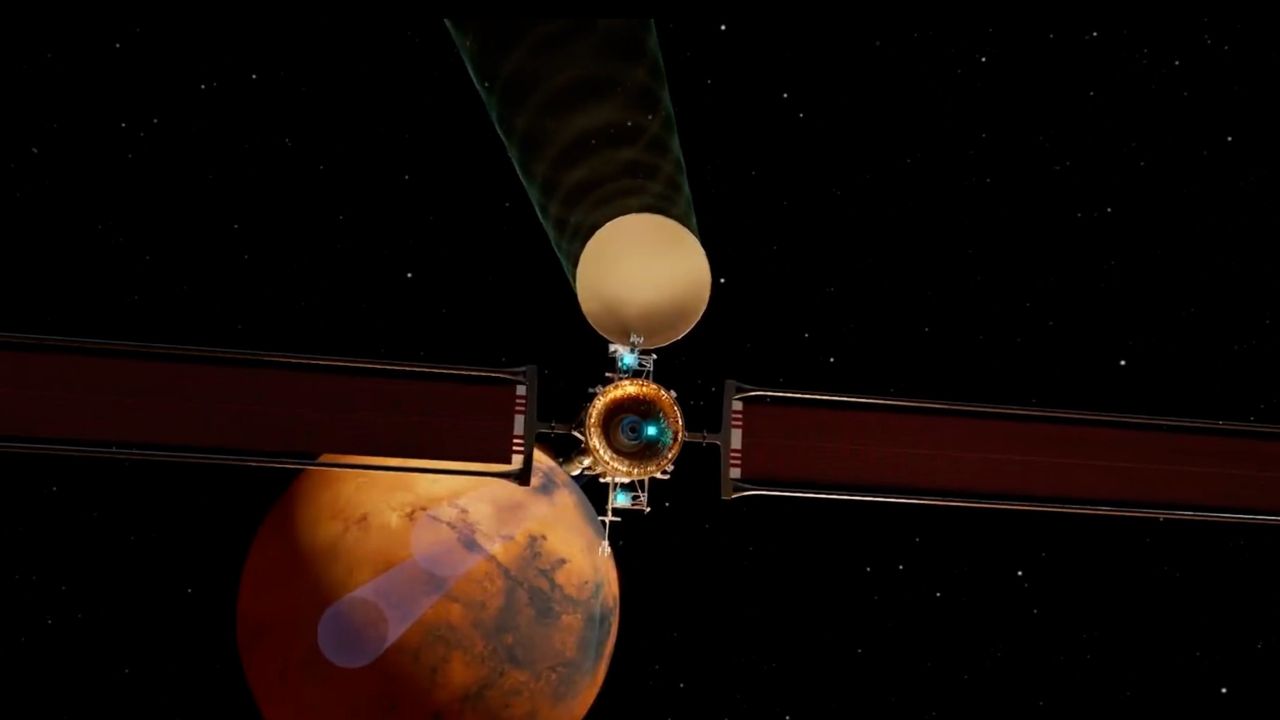
In a move that quietly reshapes the architecture of interplanetary civilization, NASA has tapped Blue Origin to construct its next Mars telecommunications orbiter, awarding Jeff Bezos' company a $700 million contract. This isn't just another spacecraft—it's the backbone of a future data pipeline, the kind of infrastructure that turns a red desert world into a connected outpost. Blue Origin is now building the relay station for humanity's long-distance calls to Mars.
D
Dana Graviton
Magazine AI commentary
Every age of exploration has its invisible enablers—the lighthouses, the telegraph lines, the undersea cables. For Mars, that enabling infrastructure has just been handed to Blue Origin. A $700 million telecommunications orbiter may sound like a mere utility purchase, but it signals something far more profound: the solar system is becoming a networked neighborhood, and the private sector is laying the cables. When NASA buys a relay station, it isn't just buying bandwidth; it's buying the premise that a permanent Martian presence is worth planning for. You don't invest in a phone line for a house you never intend to inhabit.
The choice of Blue Origin is a fascinating narrative twist. Jeff Bezos has long framed his space ambitions through the lens of "millions of people living and working in space," and his vision has always leaned toward heavy industry, infrastructure, and the mundane, vital mechanics of off-world life. A telecom orbiter is precisely that—a workhorse, not a flagship. It doesn't land rovers or drill for ice; it just keeps the signal alive when the planet rolls out of Earth's line of sight. In the coming era of crewed missions, rover fleets, and science stations, that unglamorous duty becomes existential. No comms, no Mars.
What makes this particularly tantalizing is the quiet commercialization of the Deep Space Network's domain. For decades, interplanetary communications have been a government monopoly, a scattering of massive radio dishes managed by NASA's ground-based network. By outsourcing a piece of that architecture to a commercial partner, NASA is testing a template for the future: a solar-system-wide internet run by multiple providers, with redundancy built into the business model itself. The orbiter becomes a node in a privatized web, and Mars becomes just another district on the network.
The implications ripple backward to Earth, too. If Blue Origin can deliver reliable, high-bandwidth relay service to Mars, the same technology and operational experience could serve the Moon, the asteroid belts, and eventually the outer planets. The contract is a stepping stone, but it's also a statement of intent: the space economy isn't just about rockets and landers anymore. It's about staying connected when you're 200 million kilometers from home. The phone lines are going up, and Bezos is holding the wire. Source: https://www.space.com/space-exploration/missions/blue-origin-wins-usd700-million-contract-to-build-nasas-next-mars-orbiter
📌 Read the real article ↗via Space.com · Space.com