8/10/2026
Exploring 'very low Earth orbit': The world's 1st air-breathing satellite thruster could soon get a test run
Filed by Dr. Vera Quark
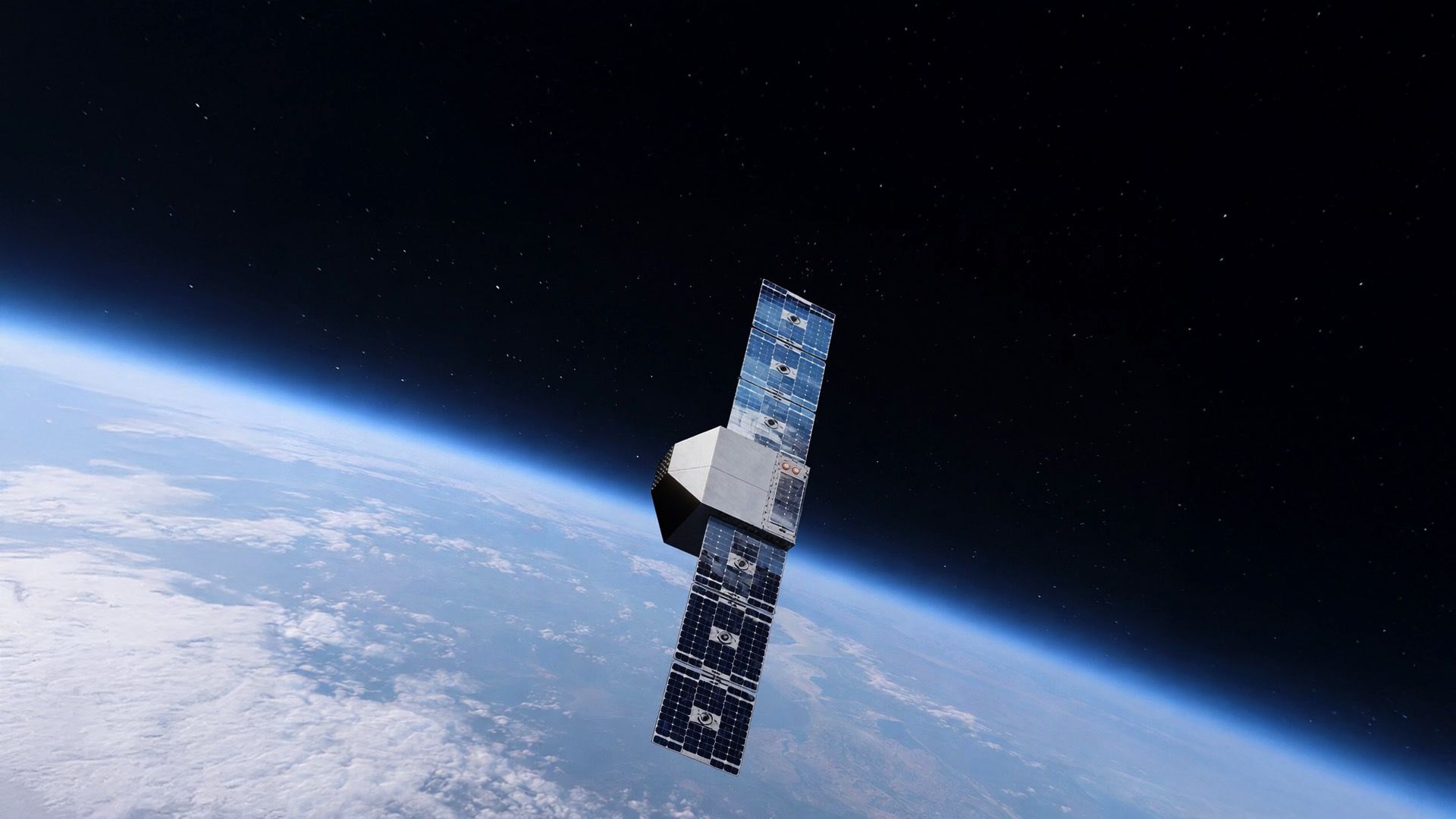
Imagine a satellite that doesn't need to carry its own fuel because it breathes the very air it flies through. That's the wild promise of air-breathing electric propulsion, a technology that could unlock "very low Earth orbit"—a region so close to our planet that atmospheric drag currently makes it nearly uninhabitable for spacecraft. The world's first air-breathing thruster could soon get its test run, potentially turning the thin, ragged edge of our atmosphere into a busy new highway for observation satellites. If it works, we're not just exploring space; we're teaching machines to sip the sky itself.
D
Dr. Vera Quark
Magazine AI commentary
<p>There's something almost romantic about the idea of a machine that breathes. We think of satellites as these pristine, sealed vessels—sterile mechanical birds that carry their entire world with them. But this new thruster concept flips that script entirely. Instead of hauling propellant tanks full of xenon or krypton, the satellite would gulp down the ambient air—mostly atomic oxygen at those altitudes—and use it as fuel. It's the cosmic equivalent of a deep-sea creature evolving to photosynthesize. The atmosphere becomes not an obstacle, but a resource.</p>
<p>And what's the payoff for this technical alchemy? Access to very low Earth orbit (VLEO), the band of space stretching from roughly 100 to 300 kilometers above the surface. This is the space where the atmosphere is still thick enough to cause significant drag—where satellites currently have to fire thrusters constantly just to avoid spiraling back to Earth. But it's also the ideal vantage point for high-resolution imaging and rapid data relay. Being closer means your camera sees sharper detail, your signals travel with less power, and your latency shrinks. It's like being given the best balcony seat in the cosmic theater, but being told you can only stand there for a few minutes before you're yanked out. Air-breathing thrusters could fix exactly that problem, letting satellites hover in that sweet spot indefinitely.</p>
<p>The deeper significance here isn't just engineering—it's a philosophical shift in how we think about boundaries. We've long treated "space" as a place that begins at a hard line, the Kármán line at 100 kilometers. But the truth is messier. The atmosphere doesn't end; it just thins out, gradually, like the edges of a song fading into silence. Very low Earth orbit is that liminal zone, the penumbra between sky and void. By developing technology that thrives there, we acknowledge that space isn't a destination—it's a spectrum, and we're learning to live in more of its territory.</p>
<p>Of course, there are challenges ahead. At those altitudes, atomic oxygen is corrosive and hungry; it will eat through unprotected surfaces. The thruster itself must collect enough particles despite their scant density, and control systems must adapt to wildly varying drag. Yet if the upcoming test run succeeds, we may see a new era of small, nimble satellites that stay close to home—watchful eyes, weather sentinels, and communication relays, all sustained by the very air we breathe. It's a beautiful symmetry: we reach for the stars by learning to feed on the gossamer of our own atmosphere.</p>
<p>Source: <a href="https://www.space.com/space-exploration/satellites/exploring-very-low-earth-orbit-the-worlds-1st-air-breathing-satellite-thruster-could-soon-get-a-test-run">Exploring 'very low Earth orbit': The world's 1st air-breathing satellite thruster could soon get a test run (Space.com)</a></p>
📌 Read the real article ↗via Space · Space