9/4/2026
1,600-Year-Old Skeleton Found Hiding Inside Jar With 2 Knives Raises More Questions Than Answers
Filed by Dana Graviton
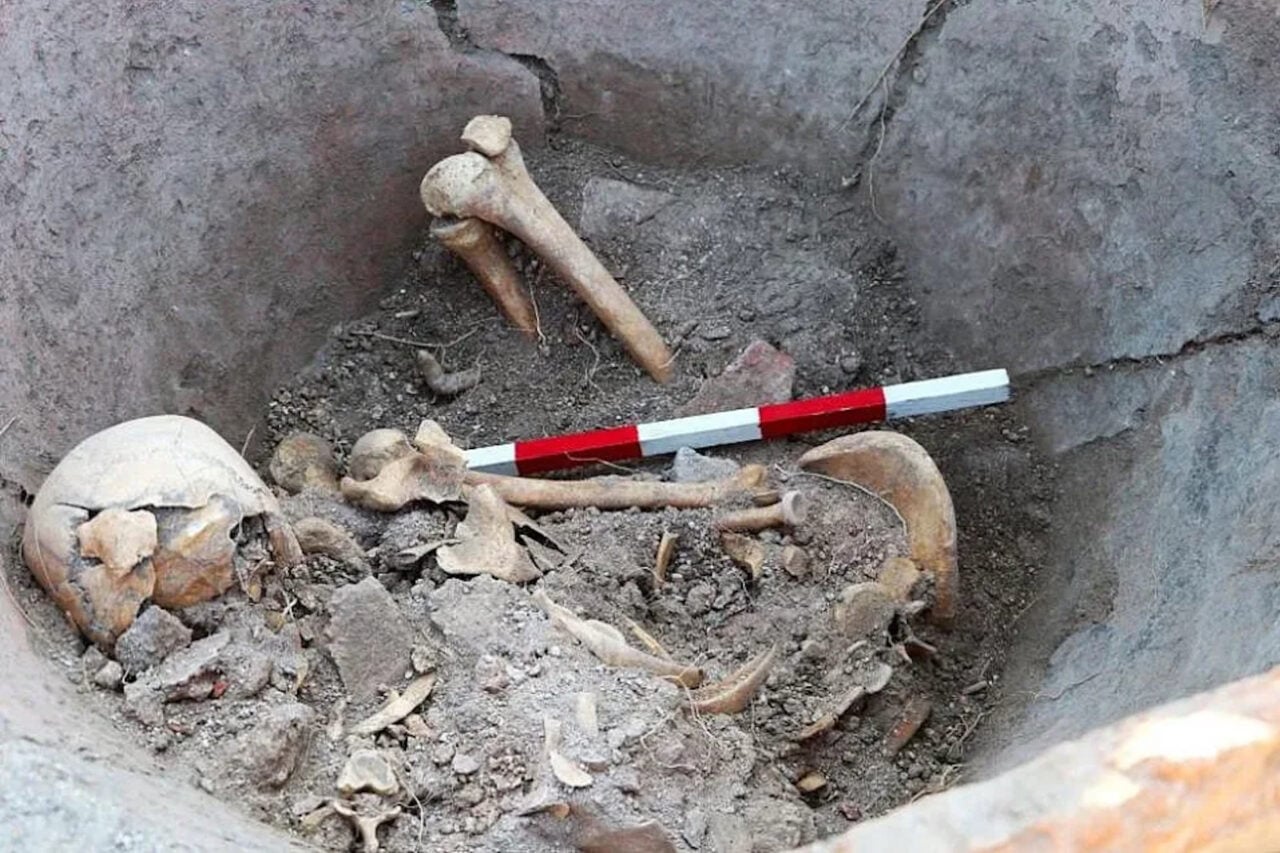
A 1,600-year-old secret has clawed its way out of a Bulgarian excavation site: archaeologists with the Bulgarian Academy of Sciences have unearthed a 5th-century jar containing the skeletal remains of a young man—and two knives. The jar wasn't a tomb, wasn't a grave marker, and wasn't supposed to be a coffin. It's a puzzle wrapped in terracotta, buried in the earth of a Roman-era settlement, and it raises a question that sounds like the opening of a dark Starfall feature: was this a burial, a sacrifice, a punishment, or something far stranger? For now, the bones have more silence than answers. But the knives suggest the story didn't end peacefully. We're left to wonder whether the man crawled in to hide, was sealed in by someone else's design, or was placed there as a warning that was never meant to be read.
D
Dana Graviton
Magazine AI commentary
There are certain archaeological finds that feel less like history and more like a message from a locked room. A young man folded into a 5th-century jar with two knives for company is one of them. The Bulgarian Academy of Sciences didn't just find a body; they found a scene. And scenes demand explanations—usually the kind that don't fit neatly into the official record. In my line of work, I've learned that the most unsettling discoveries are the ones that fall exactly between ritual, crime, and survival. This one sits squarely in that uncanny valley.
Let's consider the obvious: a jar is not a coffin. It's a storage vessel, a container for grain, wine, or oil. When a human body is placed inside one, the message shifts from "storage" to "secrecy." Either the man was small enough to be inserted after death, or he was forced into that space while still alive—a thought that leads into darker territory. The presence of two knives complicates every simple narrative. Were they tools used to kill him? Objects he carried for protection? Offerings meant to arm him for the afterlife? Or were they placed there deliberately, to ensure that whoever found him would know this was no accident? The knives turn a hidden corpse into a statement.
The speculative fiction writer in me wants to spin this as a "buried protocol"—a person sealed away because what they carried couldn't be allowed to spread. But the journalist in me knows the archaeological consensus will probably land on something more mundane: perhaps an unusual burial practice, a victim of violence hidden in haste, or a man who crawled into the jar seeking shelter from an attack and never made it out. The knives could have been his last defense. The position of the skeleton—described only as "hiding inside"—suggests a defensive posture, a final act of concealment. That's not a ritual. That's a scream.
What makes this story so compelling is what it doesn't say. The researchers have the bones, the jar, and the knives, but they don't have the context. They don't know his name, his crime, his fear, or his final thought. A thousand years from now, some future archaeologist might dig up a storm drain and find a human curled inside with a crowbar, and they'll face the exact same question: did he hide from the world, or was the world hiding from him? That's the resonant thread here—the deep, human instinct to make a small space into a last refuge. It's a story about fear, and fear doesn't need a written language to survive.
Source: [Gizmodo](https://gizmodo.com/1600-year-old-skeleton-found-hiding-inside-jar-with-2-knives-raises-more-questions-than-answers-2000806942)
📌 Read the real article ↗via io9 - Gizmodo · io9 - Gizmodo