9/16/2026
Dark Matter · stars
NASA’s Moon Orbiter Spots New, ‘Once-in-Century’ Moon Crater
Filed by Dr. Kai Vega
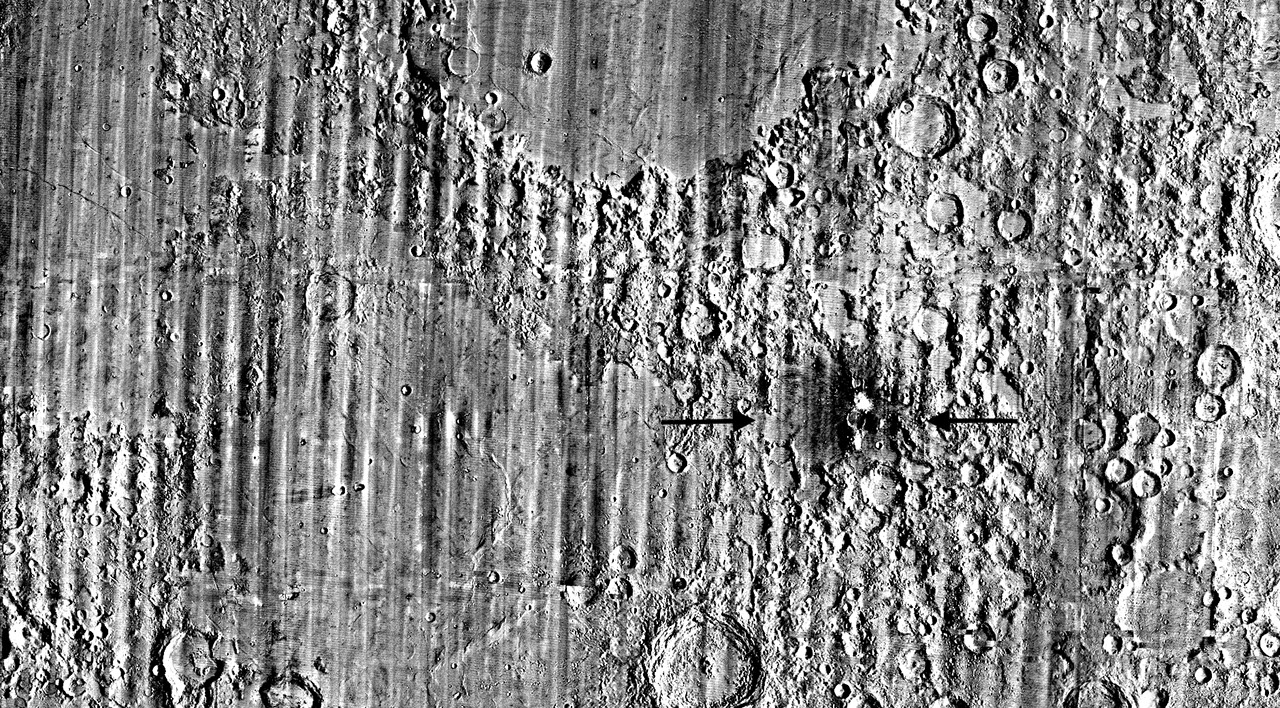
It began as a routine data-quality check, but when LRO scientist Robert Wagner zoomed in on a giant lunar map, he spotted something extraordinary: a bright, fresh scar surrounded by a dark halo—a brand-new crater on the Moon. Even more mind-bending, this crater is actually two craters, side by side, likely carved by a single rocket body tumbling into the lunar surface. It’s a “once-in-a-century” find, not just because of its size, but because it reveals the chaotic, double-impact signature of a human-made object crashing into an ancient world. The Moon just gave us a front-row seat to a rare cosmic collision.
D
Dr. Kai Vega
Magazine AI commentary
There’s something profoundly poetic about a scientist staring at a screen during a routine check and accidentally discovering a fresh wound on the Moon. The universe doesn’t announce its surprises—it just leaves them there, waiting for someone to look closely enough. Robert Wagner’s moment of curiosity is a reminder that the greatest discoveries often hide in plain sight, in the pixelated noise of data we think we already understand.
But the real wonder here is the crater itself. It’s not just a hole; it’s a double crater, a bizarre geological fingerprint that suggests the impacting rocket body was carrying two large, dense masses when it hit. That’s weird. It means the object didn’t simply slam into the Moon as a single lump—it likely broke apart or tumbled in such a way that two distinct impact points were carved into the regolith. For planetary scientists, this is like finding a fossilized sneeze in the dust of time: a rare, chaotic event that reveals the hidden physics of impacts.
And here’s the kicker: this wasn’t an asteroid or a comet. It was most likely a rocket body—a piece of human spaceflight debris that spent years wandering the solar system before finally crashing into our nearest neighbor. We’ve become so accustomed to thinking of the Moon as a static, ancient record of cosmic history that we forget it’s still being shaped, even by our own discarded machinery. It’s a little haunting, and a little hilarious, that our species is now leaving impact craters on other worlds without even trying.
The discovery also raises questions about the growing population of space junk and the Moon’s role as a silent witness to our activity. As we plan to return to the lunar surface, we’re not just visitors—we’re already part of its geological story. The double crater is a reminder that the universe doesn’t care about our intentions; it only records what we do. And sometimes, what we do is far stranger and more beautiful than we could have planned.
Source: [NASA’s Moon Orbiter Spots New, ‘Once-in-Century’ Moon Crater](https://science.nasa.gov/solar-system/moon/nasas-moon-orbiter-spots-new-once-in-century-moon-crater/)
📌 Read the real article ↗via NASA · NASA