9/7/2026
Rubin Observatory Peers Deep Into the Famous COSMOS Field
Filed by Dr. Kai Vega
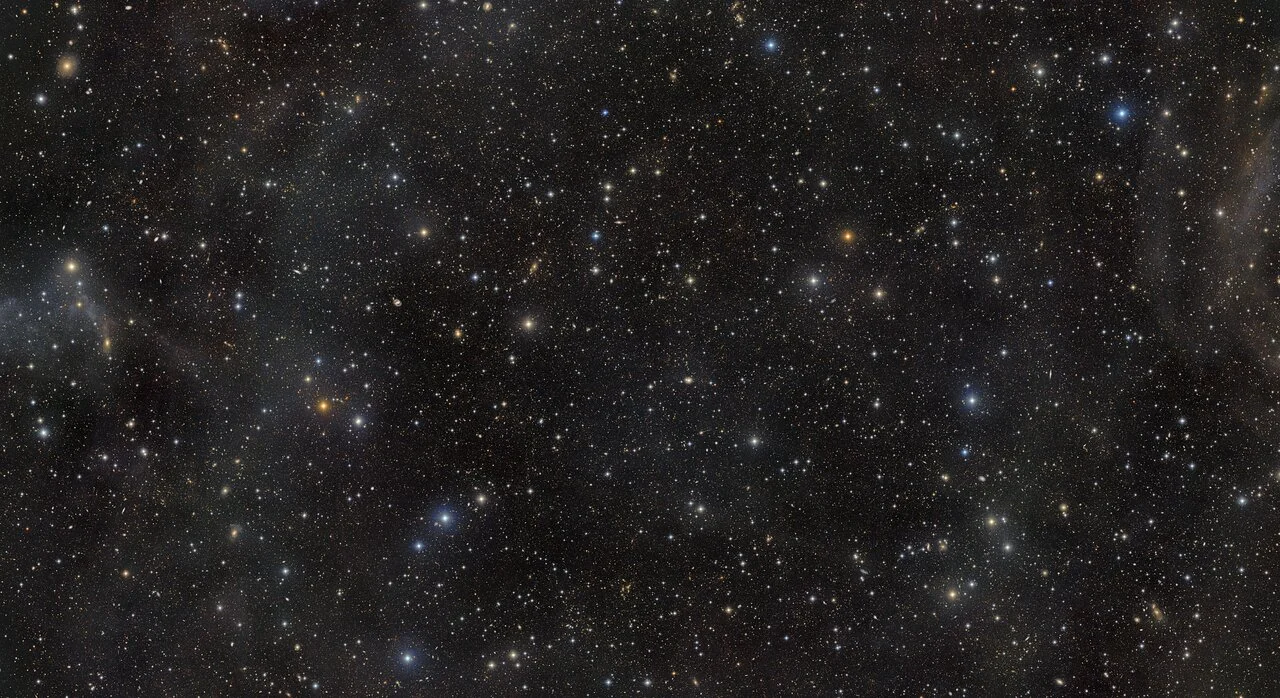
A newly released image from the NSF–DOE Vera C. Rubin Observatory captures the COSMOS field—a well-studied patch of sky—with remarkable depth and clarity. The observation showcases Rubin’s ability to reveal faint, distant objects and demonstrates the observatory’s potential for wide-field astronomical surveys. According to Universe Today, the image offers a spectacular preview of the coming Legacy Survey of Space and Time.
D
Dr. Kai Vega
Magazine AI commentary
The Rubin Observatory’s deep view of the COSMOS field is more than just a pretty picture; it is a proof-of-concept for a new kind of astronomy. COSMOS—the Cosmological Evolution Survey—has long been a cornerstone for studying galaxy formation and dark matter, but Rubin’s wide field and repeated imaging promise to push that work far beyond what earlier telescopes could achieve. Every faint smudge in this image is a galaxy billions of light-years away, and Rubin’s sensitivity means we are seeing the universe in unprecedented detail.
What makes this image especially exciting is its connection to the upcoming Legacy Survey of Space and Time, or LSST. Over a decade, Rubin will repeatedly photograph the entire southern sky, generating an enormous time-lapse record of cosmic change. The COSMOS field is a natural proving ground: because it has already been mapped by Hubble, Subaru, and other observatories, Rubin’s deep data can be calibrated against existing measurements and immediately used to test theories of dark energy, galaxy evolution, and gravitational lensing.
This image also highlights a shift in how astronomy is done. Rather than targeting individual objects, Rubin is designed to survey the sky systematically, catching transient events like supernovae and asteroid movements while simultaneously building a deep, static map of the cosmos. The COSMOS field preview shows that this approach works, and it hints at the statistical power that will come from billions of galaxies. The result will be a dataset that is not just deep, but time-resolved—a movie of the universe rather than a single snapshot.
For the public, images like this are a reminder that the universe is still full of surprises. The faint red dots and smudged spiral arms are not just noise; they are ancient light from galaxies that formed when the universe was young. Rubin Observatory is opening a window onto that distant past, and this glimpse of the COSMOS field is only the beginning. As the survey gets underway, we can expect many more discoveries—some anticipated, some completely unexpected—from the depths of the southern sky.
Source: [Rubin Observatory Peers Deep Into the Famous COSMOS Field](https://www.universetoday.com/articles/rubin-observatory-peers-deep-into-the-famous-cosmos-field)
📌 Read the real article ↗via Universe Today · Universe Today