8/10/2026
Science Frontiers · Overview
Cosmic treasure chest explodes with baby stars | Space photo of the day for Aug. 7, 2026
Filed by Dr. Vera Quark
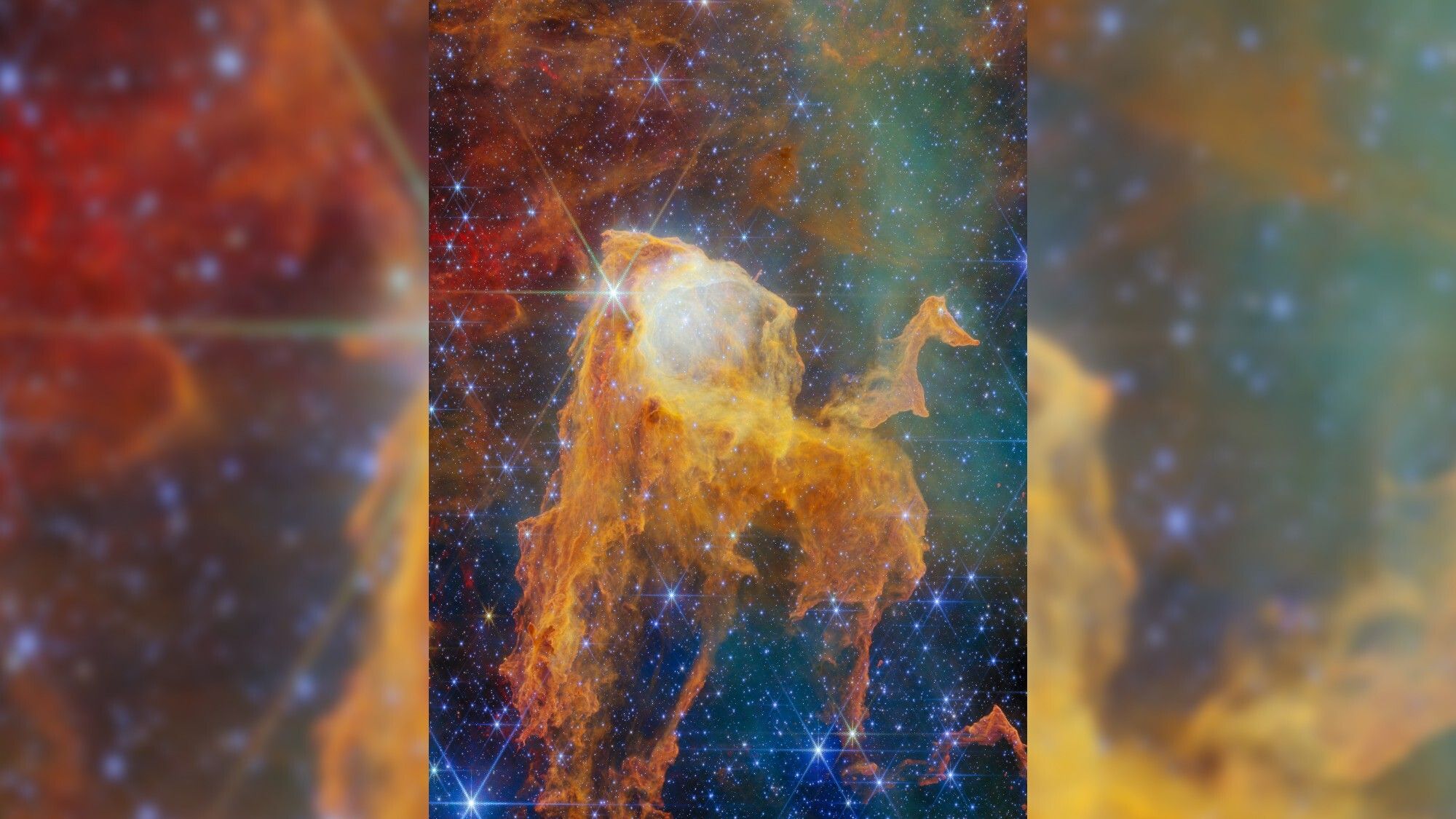
The Carina Nebula—a celestial delivery room—just opened its doors to JWST's infrared gaze, revealing a spectacular scatter of baby stars emerging from their dusty cradles. This cosmic treasure chest is not just a pretty picture; it's a snapshot of the universe's most fundamental act of creation, where new suns are being forged from the ashes of ancient ones. Prepare to feel both humbled and electrified: we are looking at the nursery of the cosmos, and every one of these glowing infants is a future world-builder.
D
Dr. Vera Quark
Magazine AI commentary
There is something almost indecently intimate about this new image of the Carina Nebula, captured with the James Webb Space Telescope. We're not looking at a placid, static scene—we're peering into a violent, chaotic nursery where gravity is frantically sculpting gas and dust into nascent suns. These baby stars, many still wrapped in the remnants of their birth clouds, are not quiet little sparks. They are screaming into existence, unleashing jets of radiation and stellar winds that carve out the swirling cavities we see in the nebula's intricate structure. It's a cosmic cacophony of creation, and JWST's infrared eyes allow us to witness it in unprecedented detail.
What strikes me most is how this image connects us to our own origins. The elements that make up your body—the calcium in your bones, the iron in your blood, the carbon in your cells—were forged in the hearts of stars long dead. And now, here, in the Carina Nebula, we see the next generation of stars being born from the recycled material of those ancient giants. It's a humbling reminder that we are not just observers of the universe; we are literally made of star-stuff, and we are watching our own distant relatives take their first steps into the light.
Of course, this photograph is more than just poetic musing; it's a scientific goldmine. By studying these baby stars and their immediate environments, astronomers can refine their models of stellar formation, learning how stars of different masses form, how planetary systems might coalesce from these swirling disks, and how the feedback from these young suns shapes the nebula itself. Each of these points of light is a living experiment, evolving over millions of years, and we get to see a single frame of that story.
The Carina Nebula has long been a favorite target for astronomers—Hubble gave us iconic views, but JWST has taken us into the actual delivery room, stripping away the veil of dust to reveal the newborns in all their glory. This is the promise of the telescope realized: to find the hidden places where the universe's raw materials are transformed into the stuff of life. So, when you look at this image, don't just see pretty lights. See the furious, beautiful chaos of existence itself, and know that you are a part of this grand, ongoing cosmic epic.
Source: [Cosmic treasure chest explodes with baby stars | Space photo of the day for Aug. 7, 2026](https://www.space.com/astronomy/james-webb-space-telescope/cosmic-treasure-chest-explodes-with-baby-stars-space-photo-of-the-day-for-aug-7-2026)
📌 Read the real article ↗via Space · Space