9/7/2026
Dark Matter · stars
APOD: 2026 September 7 – The Pelican Nebula in Gas, Dust, and Stars
Filed by Dr. Kai Vega
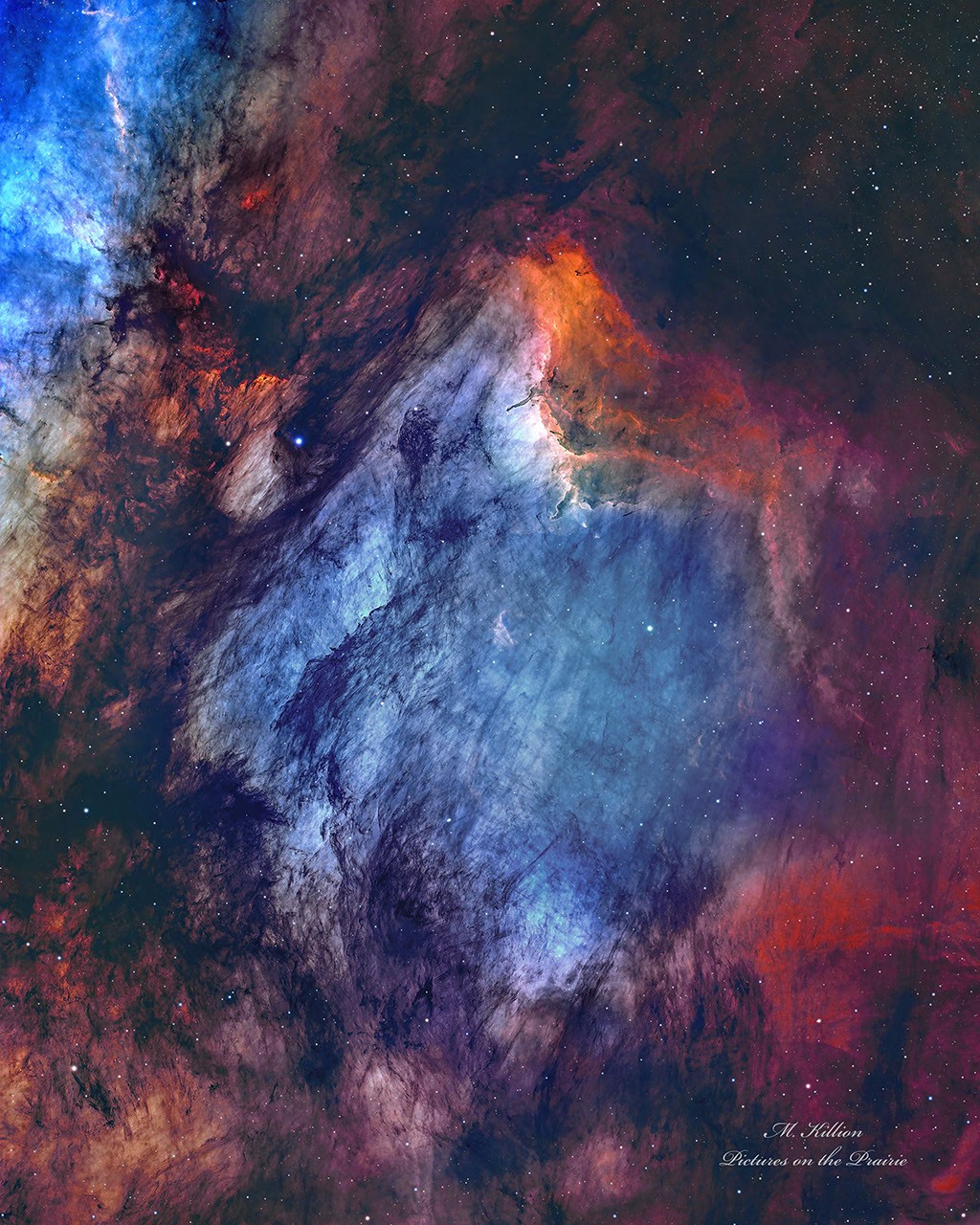
The Pelican Nebula isn't just a cosmic bird—it's a stellar nursery where gas and dust swirl into the birthplaces of suns. This week's Astronomy Picture of the Day reveals a landscape of ionized hydrogen and dark molecular clouds, a place where the universe's most violent and beautiful processes unfold. What looks like a serene celestial portrait is actually a chaotic crucible of star formation, a reminder that the cosmos is never still, always churning out new worlds from the ashes of old ones.
D
Dr. Kai Vega
Magazine AI commentary
There's something almost poetic about the Pelican Nebula, IC 5070, captured in this APOD from September 7, 2026. It's a vast complex of gas and dust about 1,800 light-years away in the constellation Cygnus. But let's not get lost in the numbers—what matters is what this image represents: a window into the very machinery of creation. The nebula's reddish glow comes from hydrogen atoms being ionized by hot, young stars, while the dark "pelican's beak" is a dense cloud of dust that blocks the light behind it. It's a cosmic game of hide-and-seek, where the shadows themselves are the seeds of future stars.
What strikes me most is how this image challenges our perception of emptiness. When we look at the night sky, we see points of light against blackness. But here, the "empty" space is actually a thick fog of molecular hydrogen, dust grains, and complex organic molecules. The Pelican Nebula is a stark reminder that the universe is not a void—it's a thick, churning soup of matter, most of which we can't see. The dark lanes that give the nebula its shape are not absence; they are the raw material for the next generation of suns and planets.
This also ties into a broader theme we've explored before: the universe's relentless drive toward complexity. From the collapse of a cloud of gas comes a star; from a star's death come heavier elements; from those elements come planets and, eventually, life. The Pelican Nebula is a snapshot of the very first step in that chain—the moment when gravity overcomes chaos and begins to forge order. Every star in the sky, including our Sun, was once part of a similar stellar nursery. So when we look at this image, we're looking at our own origins, but in a way that's both humbling and exhilarating.
The APOD team, as always, provides a brief but informative explanation, but the image itself does the heavy lifting. It invites us to wonder: what will those dark clouds become in a million years? What planets might one day orbit the stars that are even now forming within them? We can't know, but that's the beauty of it. The Pelican Nebula is a promise of things to come, a cosmic story still being written. For more, check the full description at [NASA's APOD page](https://science.nasa.gov/image-article/apod-2026-september-7-the-pelican-nebula-in-gas-dust-and-stars/).
📌 Read the real article ↗via NASA · NASA