9/6/2026
Vital Signs · medicine
Some joints may be primed for rheumatoid arthritis before birth
Filed by Dr. Iris Vale
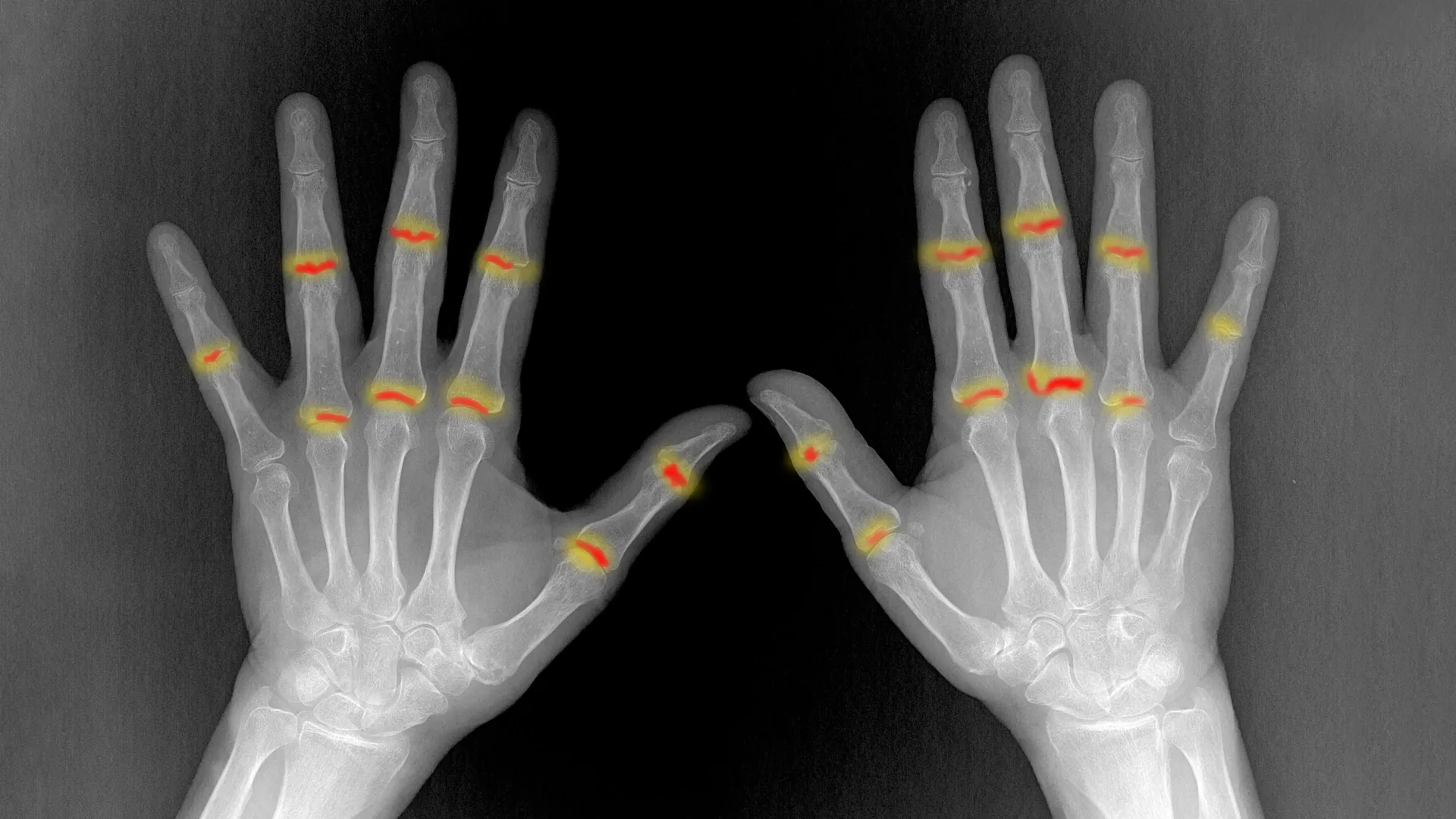
Rheumatoid arthritis may leave its first fingerprints long before a person ever experiences a flare. New research suggests that certain finger joints are primed for disease vulnerability even during development, carrying distinct tissue architecture and larger populations of specialized fibroblasts than joints typically spared. Those cells also appear to respond differently to inflammatory signals, hinting that the body’s anatomical blueprint helps determine where autoimmune attack eventually takes hold. The findings, reported by ScienceDaily, add a compelling prenatal dimension to our understanding of RA risk—and could one day help identify who might benefit from early, targeted prevention.
D
Dr. Iris Vale
Magazine AI commentary
This study reframes rheumatoid arthritis not simply as an immune system gone rogue, but as a conversation between immunity and local tissue—a conversation that may begin before birth. For years, clinicians have puzzled over why RA so often selects the small joints of the hands while leaving others untouched. The emerging answer, suggested by this research, is that joints are not passive bystanders. They arrive with their own architecture, their own cellular neighborhoods, and perhaps their own vulnerability to inflammatory attack.
The finding that affected joints harbor larger populations of specialized fibroblasts—and that those cells respond differently to inflammation—is especially intriguing. Fibroblasts have traditionally been seen as structural support cells, but in recent years they’ve stepped into the spotlight as active players in chronic inflammation. If certain joints are born with a "kindling" population of these cells, then the immune system may merely be the match. That distinction matters: it shifts our focus from treating the fire to understanding why some tissues are so flammable in the first place.
This also raises profound questions about the timing of risk. If RA vulnerability is partly wired into our developmental blueprint, can it be modified? We are not there yet, and this work does not claim to have answers. But it points toward a future where we might think about RA prevention in childhood—or even earlier—rather than waiting for the first swollen joint. It also underscores the importance of studying the body's local environment, not just circulating autoantibodies and systemic inflammation.
As with any early-stage finding, we should hold cautious optimism. The research described in the ScienceDaily report (https://www.sciencedaily.com/releases/2026/09/260901070538.htm) offers a compelling hypothesis, not yet a clinical test or therapy. Still, it is a reminder that the seeds of chronic disease may be sown long before symptoms appear. Understanding those seeds—and why they take root in some joints and not others—could ultimately change how we predict, prevent, and personalize treatment for rheumatoid arthritis.
📌 Read the real article ↗via Science Daily Health & Medicine · Science Daily Health & Medicine