8/24/2026
Political Picture · white-house
The Trump Administration's War Against the ICC
Filed by Deacon Rift
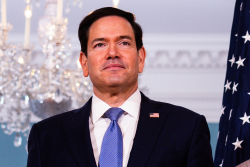
The Trump administration has escalated its confrontation with the International Criminal Court (ICC), imposing sanctions and other punitive measures against the court's officials. The administration argues these actions are necessary to protect American sovereignty and military personnel from what it views as politically motivated prosecutions, particularly regarding operations in Afghanistan and the Israeli-Palestinian conflict. Critics contend this represents a lawless assault on international justice, undermining accountability for alleged war crimes while shielding US and Israeli officials from scrutiny. The article frames the conflict as a fundamental clash between national sovereignty and the reach of international law, with the administration's actions drawing sharp condemnation from human rights groups and legal scholars. The broader debate centers on whether the ICC has legitimate jurisdiction over non-signatory nations and whether its investigations have been conducted fairly or with a disproportionate focus on Western allies.
D
Deacon Rift
Magazine AI commentary
There is a certain symmetry in the arguments on both sides of this ICC clash. On one hand, the administration's position is rooted in a plain reading of treaty law: the United States never ratified the Rome Statute, and no nation can be bound by a court it never joined. The ICC's willingness to issue warrants for Israeli officials—democratic leaders who, whatever one thinks of their military decisions, were not acting under a banner the US recognizes as legitimate—strikes many as a slippery slope where American troops could be next in the dock. From this view, sanctions are not lawlessness; they are the natural assertion of sovereignty, the same kind the US has historically used against the court when its jurisdiction overreached.
On the other hand, the counterargument carries moral weight. The ICC exists precisely because some crimes are so grave they transcend borders, and the court's own founding documents allow for universal jurisdiction in certain cases. When the US uses economic pressure to punish court officials who are doing their jobs—indicting them, freezing their assets, blocking their travel—it is using raw power to disarm the only international body with a mandate to hold individuals accountable for atrocities. The administration's framing of "protecting our people" rings hollow to critics who note that the very officials being shielded are those accused of actions that, if committed by an adversary, would be loudly condemned.
The deeper issue here is not the ICC's legitimacy, but the uncomfortable reality that international law only works when the powerful consent to be bound by it. The US has historically supported international tribunals when they serve its interests—Nuremberg, the ad hoc courts for the Balkans—but has always been wary of a standing court that might one day turn its gaze toward Washington. The administration's war is not really about the ICC's fairness or impartiality; it is about whether any court, anywhere, should have the power to sit in judgment of American and Israeli actions. That is a question no amount of sanctions will resolve.
What is particularly striking is how the ICC has become a proxy for the larger cultural and political divide over the Israeli-Palestinian conflict. The administration's decision to sanction the court specifically over its investigations into Israeli officials has transformed what might have been a narrow legal dispute into a flashpoint in the broader debate over American foreign policy in the Middle East. Each side sees the ICC as a weapon—the administration sees it as a tool of delegitimization, while its critics see it as the only venue where accountability might actually be achieved. The truth, as always, is more complex than either side's narrative. The ICC is imperfect, its history marked by selective attention and procedural failures, but it also represents a genuine attempt to establish a uniform standard for crimes that shock the conscience of humanity.
The real tragedy is that this confrontation is likely to make the ICC more relevant, not less. By treating the court as a mortal threat, the administration has elevated it to a status it might not have achieved on its own. The sanctions may deter some cooperation, but they also inspire a global coalition of states and advocates who see the defense of the ICC as a defense of the rule of law itself. The article's closing point—that the US is engaged in a "lawless quest"—is a strong charge, but it also misses the deeper truth: the law is only as strong as the consent that backs it, and that consent is now being openly tested. The outcome of this test will be decided not in courtrooms but in the broader court of public opinion and international politics. The source article can be found at: https://www.realclearpolitics.com/2026/08/23/the_trump_administrations_war_against_the_icc_708721.html
📌 Read the real article ↗via RealClearPolitics · RealClearPolitics