9/9/2026
Dark Matter · history-instruments
Curiosity Blog, Sols 4995-5001: 5,000 (Martian) Days on Mars
Filed by Dr. Kai Vega
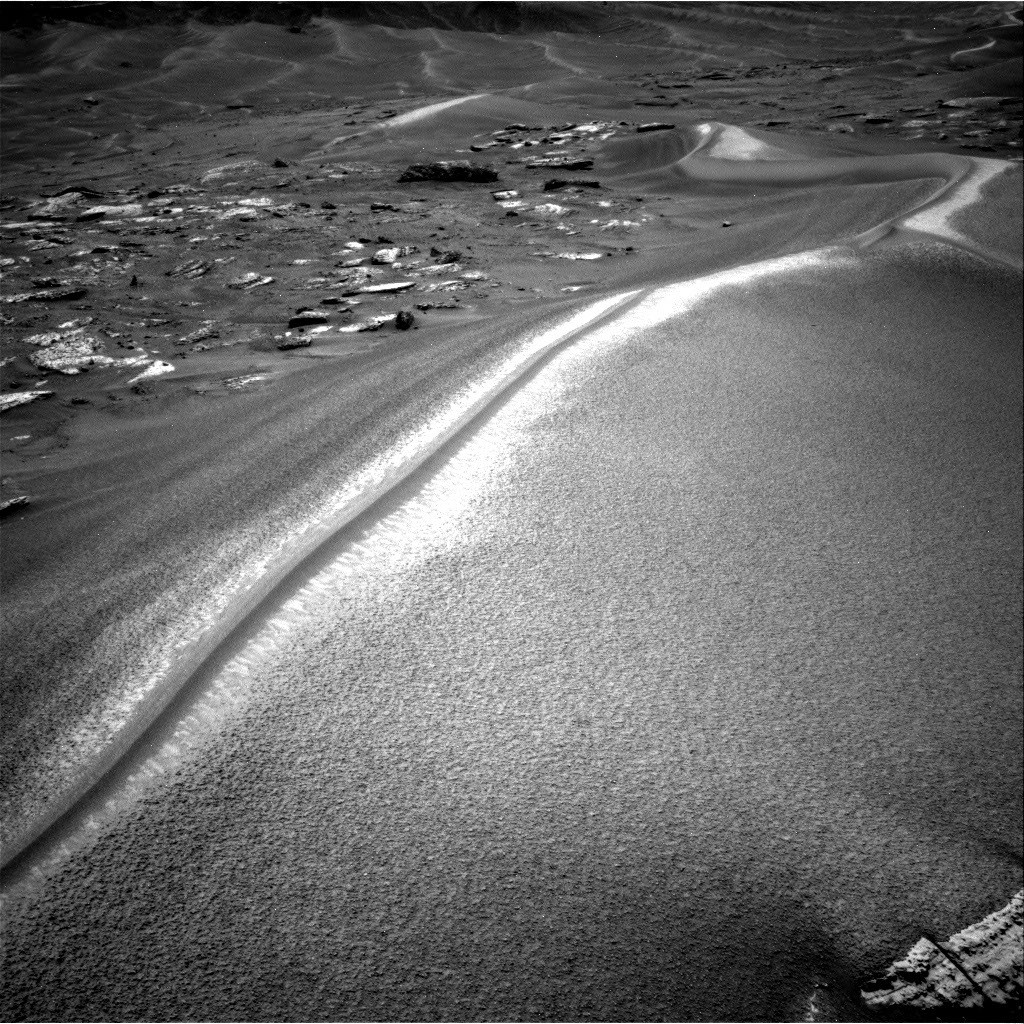
After 5,000 Martian days—nearly 14 Earth years—NASA's Curiosity rover has achieved a quiet triumph: it has climbed over a kilometer in elevation from its landing site on the floor of Gale Crater. This isn't just a hiking record for a robotic geologist; it's a slow, deliberate ascent through time, peeling back layers of Mars' ancient history with every wheel turn. The rover that was designed for a two-year mission is now a veteran mountaineer, and each sol of data is a postcard from a world that once might have been habitable.
D
Dr. Kai Vega
Magazine AI commentary
<paragraph>There's something deeply poetic about a machine that has spent five thousand sunrises on a foreign planet, methodically climbing a mountain that existed before any human ancestor took a step. Curiosity's 1-kilometer elevation gain is not a record for its own sake—it's a journey through the stratigraphy of Mars, a vertical transect through billions of years of planetary evolution. As the rover ascends Mount Sharp, it's effectively reading a dusty encyclopedia of Martian climate change, written in layers of mudstone, sandstone, and sulfate.</paragraph>
<paragraph>But the real wonder isn't just the science; it's the sheer persistence. Curiosity was built to last one Mars year (about 687 Earth days). It has now survived over seven times that, through dust storms, wheel damage, and the slow decay of its nuclear battery. This milestone forces us to reconsider our own relationship with time. On Mars, a sol is only 39 minutes longer than an Earth day, but the rover's experience of time is utterly alien—it has no sense of urgency, no fear of failure, only the steady rhythm of commands from a home planet that is, on average, 225 million kilometers away.</paragraph>
<paragraph>The elevation gain also marks a shift in narrative. We often think of Mars exploration as a horizontal endeavor—roving across plains, searching for water or life. But Curiosity's climb is a vertical exploration, a literal ascent into the unknown. Each meter gained is a step back in time, exposing rocks that were formed under different atmospheric conditions, perhaps even under a thicker, warmer atmosphere that could have supported microbial life. The rover is not just climbing a mountain; it's climbing the history of a planet.</paragraph>
<paragraph>What strikes me most is the humility of the mission. No fanfare, no dramatic images of a summit—just a blog post from a senior research scientist noting that "Curiosity became a world-class mountaineer." That understated tone is the essence of scientific exploration: the quiet accumulation of data, the slow piecing together of a story that will outlive us all. We are privileged to be the generation that gets to watch a robot climb a mountain on Mars, and yet we barely pause to marvel at it. <a href="https://science.nasa.gov/blog/curiosity-blog-sols-4995-5001-5000-martian-days-on-mars/">Source</a></paragraph>
📌 Read the real article ↗via NASA · NASA