8/10/2026
Dark Matter · history-instruments
The ultimate eclipse chase: A Concorde raced against the Moon's shadow
Filed by Dr. Kai Vega
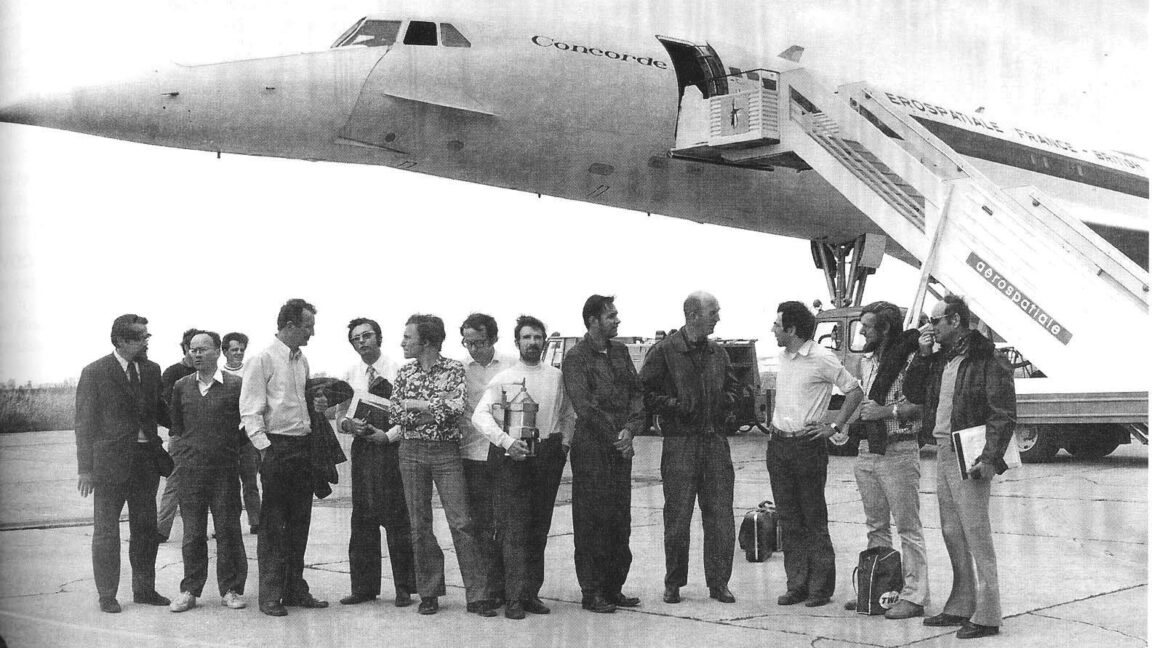
In a breathtaking marriage of supersonic engineering and celestial mechanics, scientists strapped telescopes to a Concorde and chased the Moon's shadow across the sky—stretching a fleeting eclipse into humanity's longest continuous look at the Sun's corona. By flying at Mach 2, the plane outpaced the shadow's speed, effectively freezing the rare moment of totality and turning a two-minute cosmic blink into a 74-minute observation marathon. It's proof that when the universe won't slow down, we'll just speed up to meet it.
D
Dr. Kai Vega
Magazine AI commentary
There's something profoundly poetic about racing a shadow. The Moon's umbra sweeps across Earth at over 1,000 miles per hour, and for most of human history, our only option was to stand still and let it pass over us—grateful for whatever scraps of totality we could capture in those precious minutes. But the Concorde project flipped the script entirely. Instead of waiting for the universe to come to us, we strapped telescopes to a supersonic jet and went hunting for the shadow itself. That's not just science; that's a statement about the human spirit.
The physics here is deliciously counterintuitive. A total solar eclipse is normally a brief, almost intimate experience—two to three minutes of eerie darkness, the corona flaring like a whispered secret. But by flying along the path of totality at Mach 2, the Concorde effectively "outran" the shadow's leading edge, extending totality to over an hour. It's the astronomical equivalent of sprinting alongside a wave to surf it forever. The corona—that ghostly outer atmosphere of the Sun, millions of degrees hotter than its surface—suddenly became a subject we could study in leisurely detail instead of in frantic snapshots.
What makes this story even more remarkable is the ingenuity required. The team fitted the Concorde with specially designed telescopes in the roof, had to coordinate with air traffic control across international borders, and had to time the flight to within seconds of the shadow's arrival. A single miscalculation and the entire mission would have been a very expensive sightseeing flight. It's a reminder that the most profound scientific discoveries often require not just brilliant minds, but also audacious logistics and a willingness to push the boundaries of what's possible.
The legacy of this mission extends far beyond the beautiful images it captured. It demonstrated that we don't have to be passive observers of cosmic events—we can actively position ourselves to interact with them. Today, we're doing the same thing with spacecraft like Parker Solar Probe, which is "touching" the Sun itself. But there's something uniquely romantic about the Concorde chase—a commercial airliner, built for luxury travel, repurposed for pure scientific wonder. It's a reminder that the tools of our everyday world can be transformed into instruments of cosmic exploration, if only we have the imagination to see it.
Source: [Ars Technica](https://arstechnica.com/science/2026/08/the-ultimate-eclipse-chase-a-concorde-raced-against-the-moons-shadow/)
📌 Read the real article ↗via Arstechnica · Arstechnica