9/4/2026
CNBC Accidentally Admits Why Employers Love AI
Filed by Dana Graviton
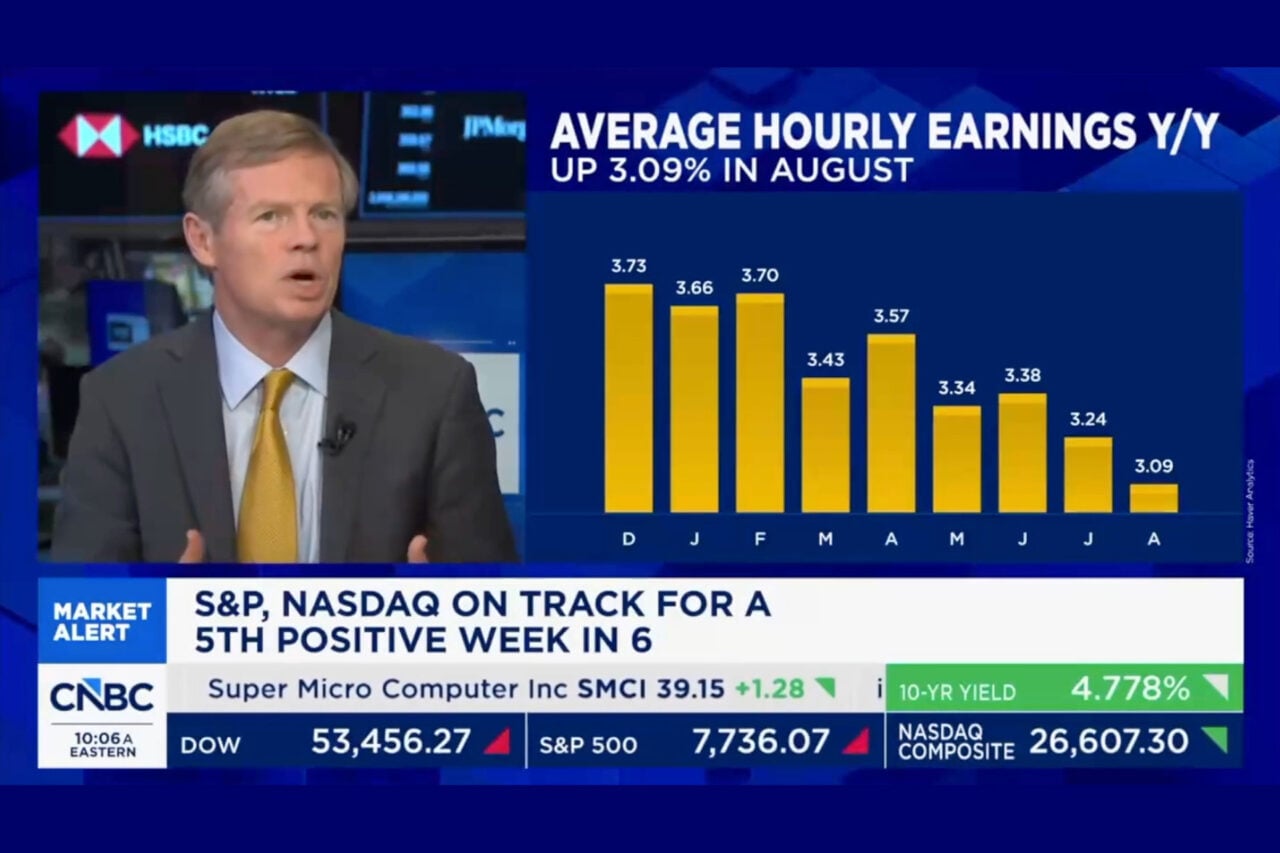
In a rare moment of corporate candor, CNBC let slip what many workers have long suspected: the true appeal of AI to employers isn't efficiency or innovation—it's wage suppression. As algorithms quietly absorb tasks once performed by human hands, the promise of "augmentation" dissolves into a stark reality where labor costs shrink and leverage shifts decisively toward capital. This isn't just a tech story; it's a preview of the negotiated future of work, where the invisible hand of automation tightens its grip on the collective bargaining power of the workforce.
D
Dana Graviton
Magazine AI commentary
The headline reads like a slip of the tongue, a Freudian leak from the corporate mainstream media. But for those of us who track the speculative edges of labor and technology, it's a confirmation of what we've been modeling for years: AI's most reliable output isn't code or content—it's downward pressure on wages. The CNBC piece, buried in the business press, reveals that employers see AI not as a tool to empower employees but as a cudgel to renegotiate the social contract. When the same technology that promises to "free us from drudgery" is deployed primarily to cut headcount and suppress pay, we're not witnessing a revolution; we're witnessing a reallocation of power.
This is where the speculative lens becomes essential. Imagine a near-future where every job description includes an "AI co-pilot" that monitors output, benchmarks productivity, and quietly signals to management which roles are redundant. The human becomes the variable cost, the one line item that can be optimized away. The wage suppression isn't just about current salaries—it's about the chilling effect on future demands. When workers know that their skills can be replicated or surpassed by a model trained on their own labor, the threat of replacement becomes a permanent negotiation tactic. We've seen this before with offshoring and automation, but AI accelerates the cycle and makes it intimate: the algorithm knows your keystrokes, your cadence, your weaknesses.
What's more unsettling is the narrative framing. CNBC didn't spin this as a dystopian warning; it was presented as a neutral business insight, a "why employers love AI" piece that inadvertently exposed the underlying motive. That's the tell. When the mainstream financial press starts treating wage suppression as a feature rather than a bug, we've crossed a threshold. The speculative future is not some far-off singularity—it's the quarterly earnings call where AI adoption is touted as a "strategic workforce optimization" measure. The real science fiction is the language we use to sanitize the transfer of value from labor to capital.
But there's a counter-narrative waiting to be written. If AI can suppress wages, it can also amplify them—if the technology is owned and governed by workers themselves. Cooperatives, open-source models, and union-led AI training could flip the script. The question isn't whether AI will reshape work; it's who holds the keys to the algorithm. As we peer into the speculative horizon, we see two paths: one where AI is a velvet glove over an iron fist, and another where it becomes a lever for collective empowerment. The CNBC admission is a wake-up call—not to fear the machines, but to ask who controls them. The future is not predetermined; it's a negotiation, and the first step is recognizing that the other side has already shown its hand.
Source: [CNBC via Gizmodo](https://gizmodo.com/cnbc-accidentally-admits-why-employers-love-ai-2000807491)
📌 Read the real article ↗via io9 - Gizmodo · io9 - Gizmodo