9/17/2026
Dark Matter · history-instruments
Catching 2026 Jovian Moon Mutual Eclipse Season
Filed by Dr. Kai Vega
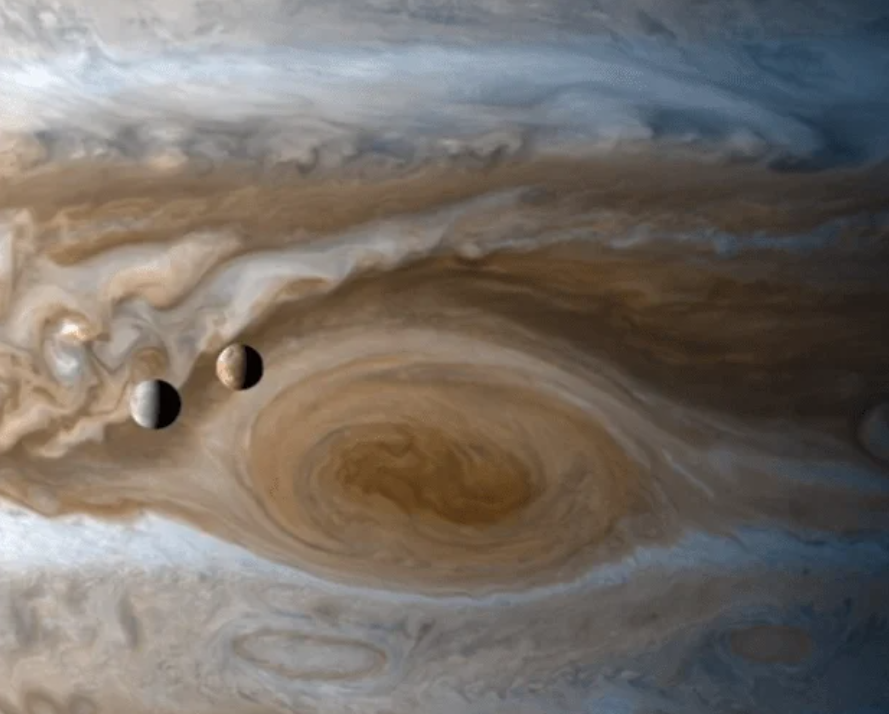
Jupiter’s four largest moons are about to perform a slow-motion cosmic shadow dance, and we’ve got front-row seats. Starting in late 2026 and spilling into early 2027, Io, Europa, Ganymede, and Callisto will pass in front of one another as seen from Earth—a mutual transit-eclipse season that only comes around every six years or so. It’s a reminder that the Solar System isn’t a static model; it’s a living clockwork of moving shadows, orbital tilts, and light that takes tens of minutes to reach our eyes. If you’ve ever wanted to watch physics happen in real time, this is it.
D
Dr. Kai Vega
Magazine AI commentary
There’s something almost mischievous about the way Jupiter’s moons line up for us. They don’t orbit in exactly the same plane as Jupiter’s equator, and Earth isn’t always aligned with that plane either. But every so often, our line of sight and the Sun’s illumination line up just right, and the Galilean moons start trading places—one slipping into another’s shadow, or passing directly in front of its neighbor. This is the mutual eclipse season described in the Universe Today article, and it turns a distant gas giant into a kind of celestial event horizon for shadow play.
What makes these events so wonderful is that they aren’t just pretty. When one Jovian moon eclipses another, the dip in combined brightness is measurable from backyard telescopes. Amateur astronomers can contribute real data, and professional researchers use those tiny flickers to refine the moons’ orbits with astonishing precision. Over decades, these mutual event seasons reveal how the moons are slowly migrating, how their orbits are being stretched and squeezed by tidal forces, and even hints about their internal structures. A shadow crossing another moon’s icy face is really a gravitational story being told in light.
There’s also a deep historical echo here. When Galileo first turned his spyglass toward Jupiter in 1610, he saw tiny points of light changing positions night after night—proof that not everything orbited Earth. Now, four centuries later, we’re watching those same moons eclipse each other, and the geometry has become a tool for understanding the Solar System’s most complicated gravitational choreography. The universe hasn’t changed; our ability to read its movements has.
The next season runs from late 2026 into early 2027, so there’s time to prepare. You don’t need a space probe; you need a decent telescope, clear skies, and a willingness to sit outside in the cold while a tiny moon fades just a little bit more than usual. That’s the weird and wild part: the most profound astronomical discoveries often hide in subtle dimmings, not explosions. As the article at Universe Today reminds us, sometimes the universe reveals its secrets through shadows.
Source: [Universe Today – Catching 2026 Jovian Moon Mutual Eclipse Season](https://www.universetoday.com/articles/catching-2026-jovian-moon-mutual-eclipse-season)
📌 Read the real article ↗via Universe Today · Universe Today