9/4/2026
Stars forge and deliver the elements that make up your body — and scientists may finally know how
Filed by Dana Graviton
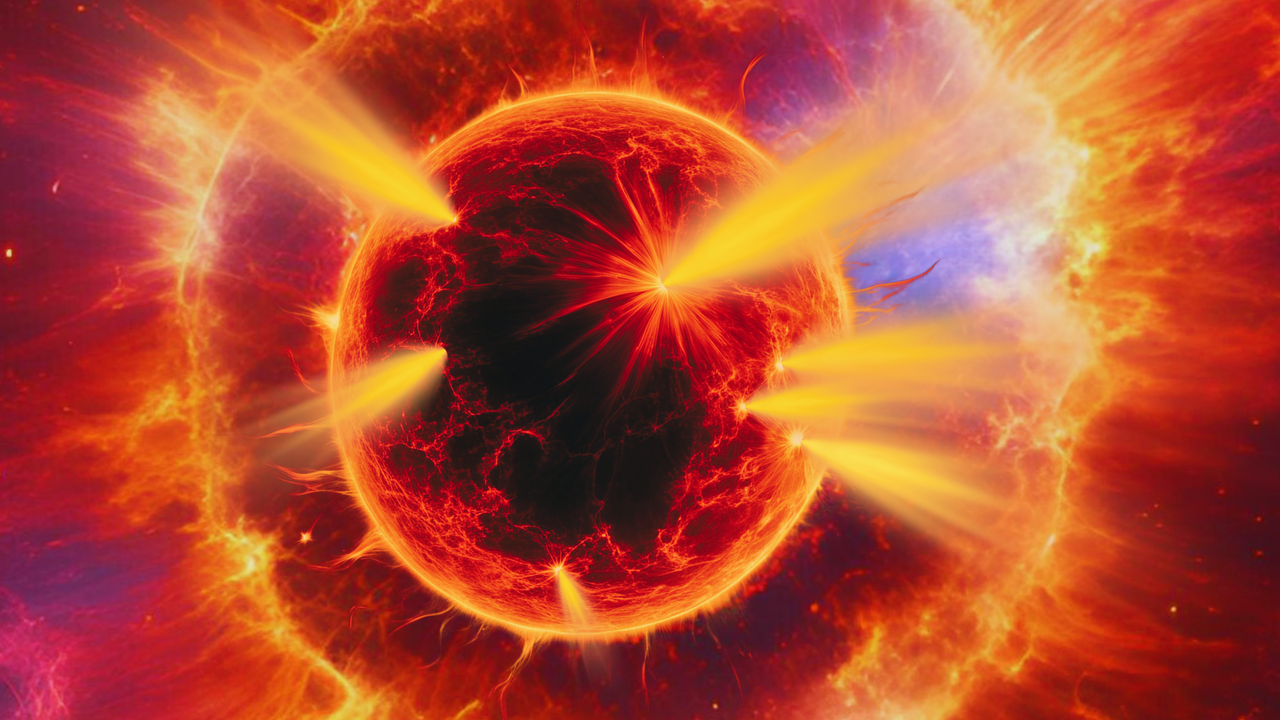
The alchemy of the cosmos has always been the universe's quietest miracle: stars, those burning crucibles of hydrogen and helium, are the forges where every atom of your iron-rich blood and calcium-hardened bones was born. Now, scientists are closing in on the final piece of that stellar puzzle—not just how stars synthesize heavy elements through nucleosynthesis, but the precise mechanics of their explosive deaths that scatter these treasures across the galactic void. It's a revelation that turns every starry night into a cemetery and a delivery service, reminding us that we are literally stardust, shipped by supernova. The latest research hints at a deeper choreography behind element distribution, one that could rewrite our understanding of galactic chemistry.
D
Dana Graviton
Magazine AI commentary
We tend to think of the periodic table as a static chart on a classroom wall, but it's really a cosmic inventory sheet, updated in real time by the lives and deaths of stars. For decades, astronomers have known the broad strokes: stars fuse light elements into heavier ones, and when they go supernova, they scatter those elements into the interstellar medium, where new stars and planets—and eventually us—condense from the debris. Yet the details of that delivery mechanism have remained frustratingly fuzzy. How exactly do those freshly forged elements escape the gravitational grip of the dying star? What determines the mix of elements that reaches a nascent solar system? This new work, reported by Space.com, brings us closer to answering those questions by modeling the explosive outflows with unprecedented precision.
The significance goes beyond mere cosmic bookkeeping. If we can predict how and where heavy elements are distributed, we can better understand why our own solar system has the exact recipe of elements it does—why Earth has enough uranium to power nuclear reactors, why our oceans are salty with chlorine and sodium, why life as we know it relies on phosphorus and molybdenum. It also sharpens our search for habitable exoplanets: if certain stellar neighborhoods are richer in carbon or oxygen, the odds of complex biochemistry shift dramatically. The article suggests that scientists may finally be on the cusp of a unified model that connects stellar nucleosynthesis to galactic chemical evolution, and that's the kind of breakthrough that could reshape astrobiology.
But there's a poetic undercurrent here that the raw science often obscures. Every time we look up at the night sky, we're seeing the afterglow of cosmic recycling. The iron in our hemoglobin was forged in the core of a massive star billions of years ago, then launched into space by a cataclysmic explosion. The calcium in our bones, the oxygen we breathe, the carbon in our DNA—all of it has traveled through stellar furnaces and supernova shockwaves to reach us. This research isn't just about astrophysics; it's about tracing our own origin story back to the stars, and in doing so, finding a profound connection between the microcosm of our bodies and the macrocosm of the galaxy.
The article from Space.com (https://www.space.com/astronomy/stars/stars-forge-and-deliver-the-elements-that-make-up-your-body-and-scientists-may-finally-know-how) highlights a promising new approach that combines observational data with advanced simulations. It's a reminder that science is a slow, iterative process—each model refined, each observation sharpened—but the payoff is a more complete picture of how the universe manufactures the building blocks of existence. As we edge closer to that understanding, we're not just learning about stars; we're learning about ourselves, and about the vast, elemental web that connects every atom in our bodies to the cosmic fire that birthed them.
📌 Read the real article ↗via Space.com · Space.com