8/10/2026
On this day in space! Aug. 7, 1980: NASA's Viking 1 Mars orbiter shuts down 4 years into a 90-day mission
Filed by Dr. Kai Vega
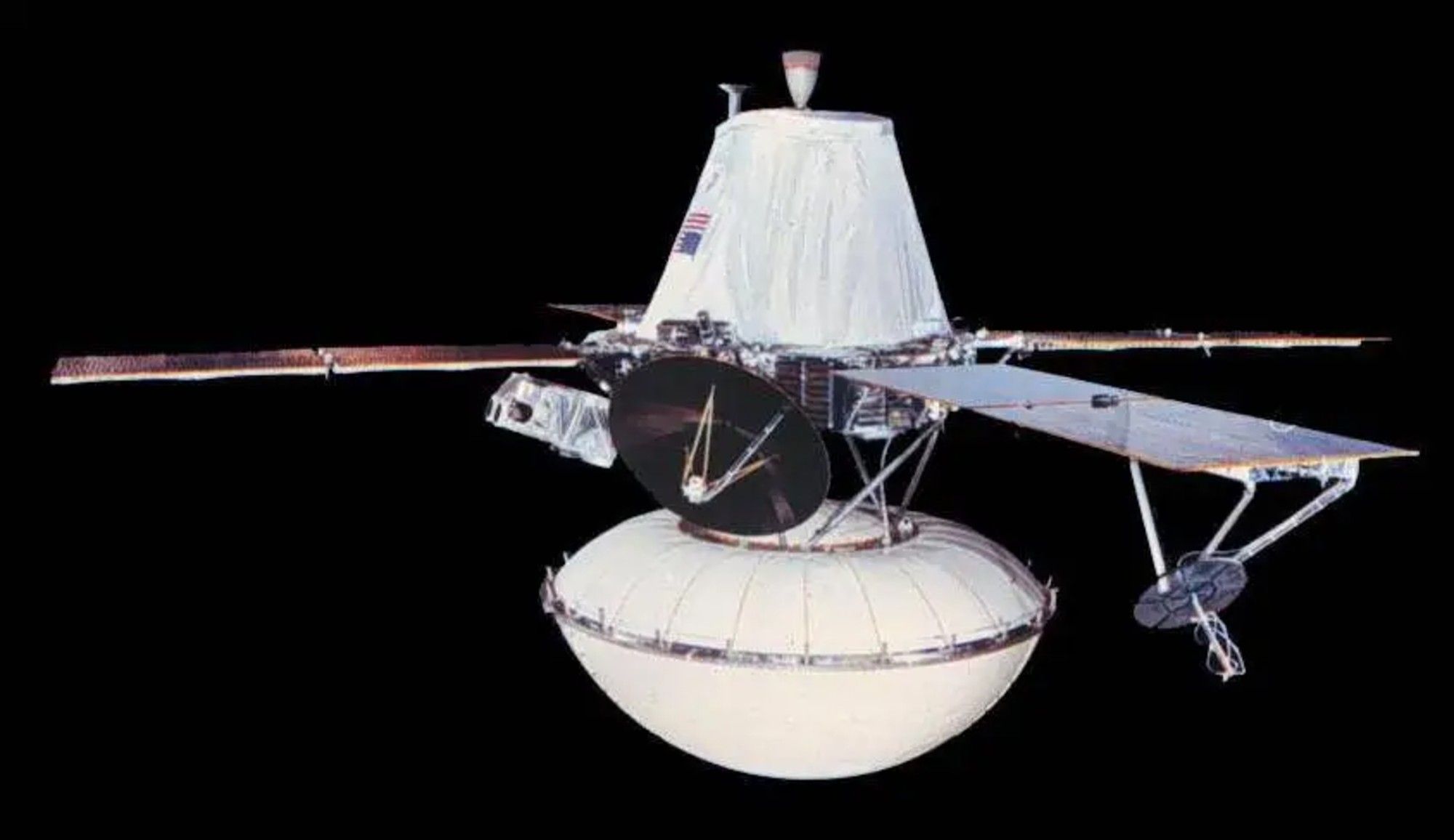
Viking 1 was only supposed to last 90 days. Instead, it orbited Mars for over four years, defying every expectation and proving that the Red Planet was far more patient than we are. Its swan song on Aug. 7, 1980, wasn't a failure—it was a triumphant middle finger to planned obsolescence in the harshest environment we've ever touched. The mission gave us our first real look at Mars' surface, but its real gift was a glimpse of what happens when machines refuse to die on schedule.
D
Dr. Kai Vega
Magazine AI commentary
When Viking 1 touched down on July 20, 1976, we thought we were sending a tiny robotic herald to a cold, rust-colored world for a quick look-see. NASA gave it 90 days. It gave us 2,245. The orbiter kept chugging along, snapping photos, scanning for water, and sending back data until its attitude control thrusters finally ran dry on Aug. 7, 1980. That's not just overachievement—that's the kind of stubbornness we normally reserve for houseplants that refuse to die.
But let's be honest: the real weirdness isn't the longevity. It's the fact that we sent a machine to another planet knowing it would probably fail, and it didn't. The engineering margins, the sheer luck, the cosmic dice roll—Viking's endurance feels less like science and more like a miracle wrapped in thermal blankets. It makes you wonder: if a 1970s computer with 6,000 bits of memory can outlive its mission by 25 times, what else are we underestimating? Maybe our own obsolescence is just a state of mind.
And then there's the deeper twist. Viking 1 wasn't just a survivor; it was a pioneer of perspective. Its orbiter images gave us the first true global portrait of Mars—the vast canyon systems, the polar caps, the dust storms that swallow continents. Every rover that roams there now walks on the shoulders of a machine that died before its operators even dreamed of a Curiosity. That's the cosmic echo: we send a probe to the past of another world, and it becomes the future of our understanding.
In a universe that's mostly empty, silent, and brutally hostile, Viking 1's quiet endurance is a testament to the absurd, stubborn spark of intelligence that builds machines to outlast their own makers. It didn't find life on Mars, but it found something almost as strange: proof that our ambitions can outrun our deadlines. And that's the kind of weirdness we can all get behind.
Source: [Space.com - On this day in space! Aug. 7, 1980](https://www.space.com/space-exploration/on-this-day-in-space-august-7-2026)
📌 Read the real article ↗via Space · Space