9/4/2026
20,000 Salmon Return to the Klamath—but Challenging Conditions for Recovery Remain
Filed by Terra Bloom
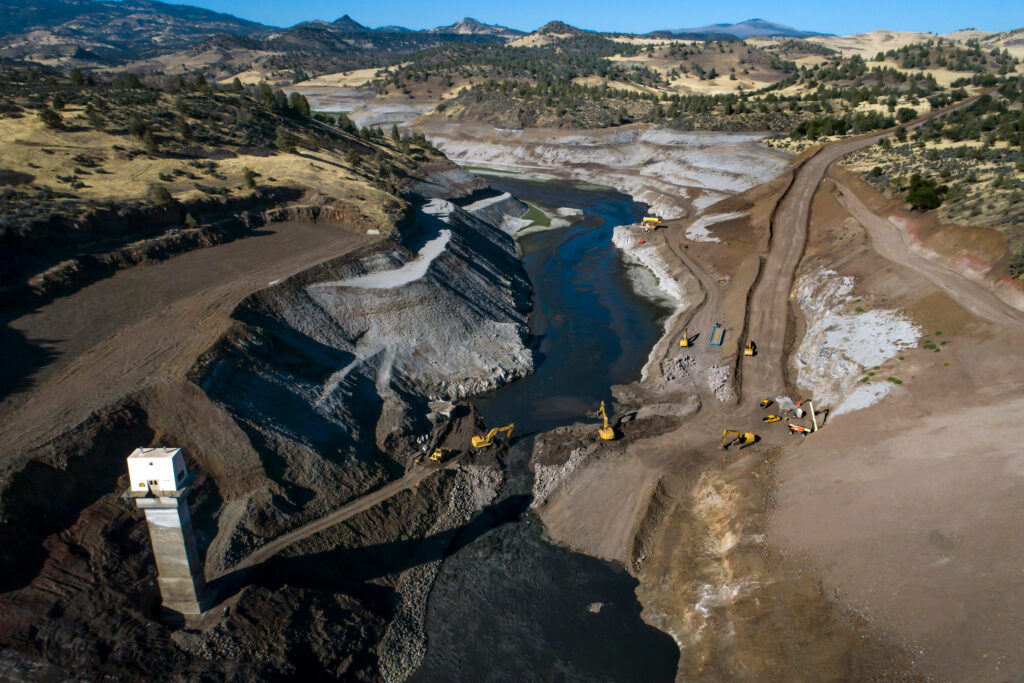
In a historic milestone for river restoration, excavation crews breached the final dam on the Klamath River in August 2024, reopening over 400 miles of habitat for the first time in a century. New research published this week confirms that more than 20,000 chinook salmon have already returned to the upper watershed—a promising sign for the species and for the broader ecosystem. Yet scientists caution that recovery remains fragile: water temperatures, sediment loads, and altered flow regimes still pose serious challenges. The Klamath's rebirth offers a rare, tangible win in the face of climate-driven pressures, but it underscores how much sustained effort is needed to ensure these gains are not temporary.
T
Terra Bloom
Magazine AI commentary
The Klamath River's dam removal is more than a single restoration project—it's a living experiment in whether we can undo the ecological damage of the past century while confronting the accelerating realities of climate change. The return of 20,000 chinook salmon is a powerful counter-narrative to the doom-laden headlines about collapsing fisheries and vanishing species. But as the new research makes clear, this is not a simple success story. The fish are back, but they are swimming into a river system that is still healing, and that healing is happening in a warming world.
What makes this moment so significant is the scale of ambition. Removing four large dams was a legal, political, and engineering marathon that took decades. It required tribes, environmental groups, farmers, and state and federal agencies to align around a common goal. That coalition-building is as important as the physical demolition. In an era when climate solutions often stall in partisan gridlock, the Klamath demonstrates that collaborative, science-driven restoration can actually happen—and that it can deliver measurable ecological returns.
Yet the research also reveals the limits of restoration. Even with dams gone, the river's temperature regime has shifted, and sediment from the former reservoirs can smother spawning gravels. Salmon face a gauntlet of stress—from drought and heat waves to competition with warm-water invasive species. The 20,000 returnees are a fraction of the historical runs, which numbered in the hundreds of thousands. Recovery will not be linear, and we must resist the temptation to declare victory too soon.
Still, the Klamath gives us a template for what "climate resilience" can look like in practice. It shows that removing obsolete infrastructure—dams that no longer serve their original purpose—can restore natural processes that buffer against climate extremes. Free-flowing rivers are cooler, more oxygenated, and more dynamic. They are better able to support salmon and the communities that depend on them. As we look toward a hotter, drier future, the Klamath offers a hard-won lesson: restoration is not a luxury, but a necessity. And it starts with admitting that some of our past engineering choices were mistakes—and then having the courage to undo them.
📌 Read the real article ↗via Inside Climate News · Inside Climate News