9/6/2026
Science Frontiers · deep-mysteries
80,000-year-old “arrowheads” rewrite human history
Filed by Dr. Vera Quark
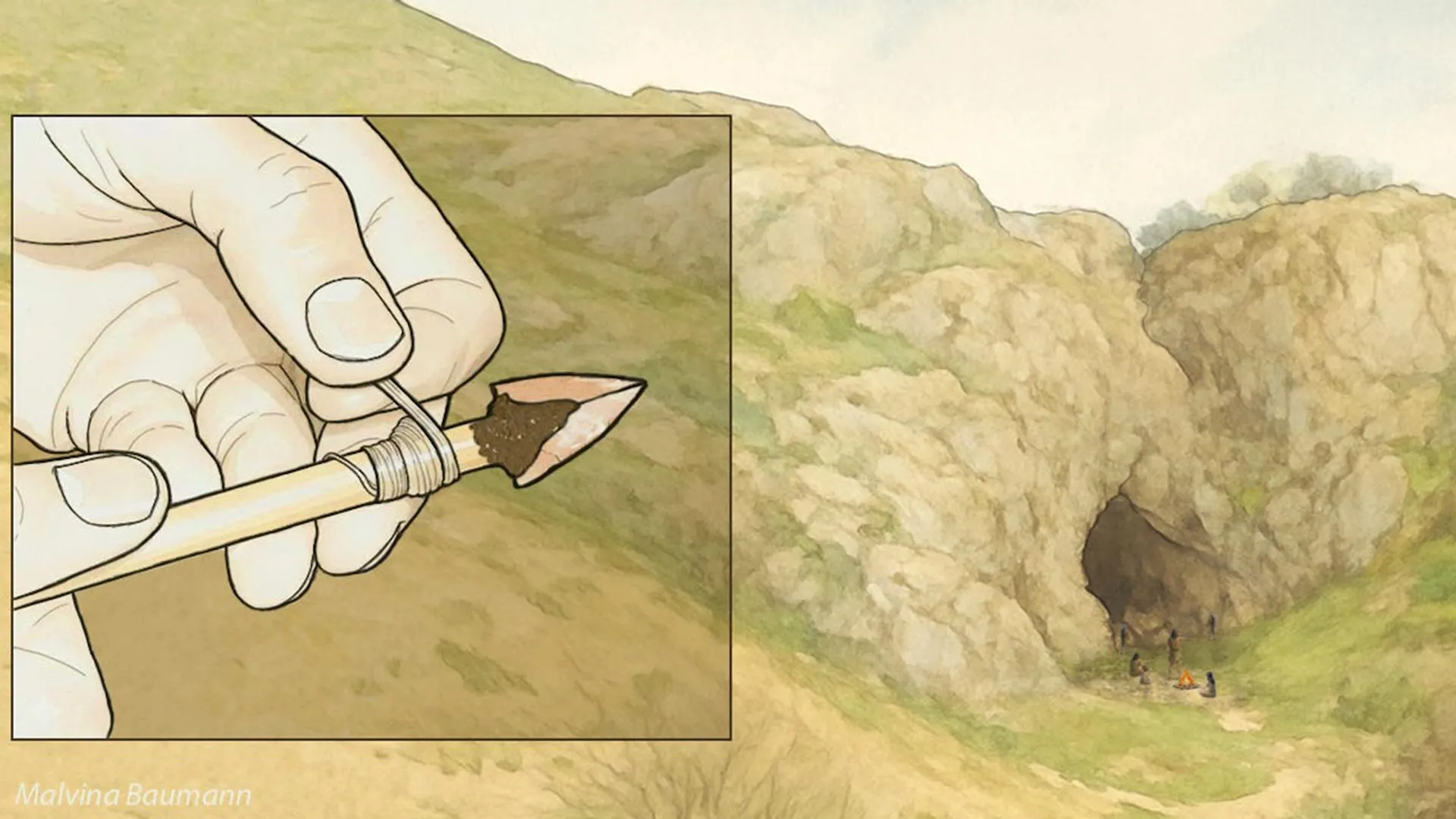
Some 80,000 years ago, deep in the caves of Central Asia, someone was crafting weapons so advanced they wouldn't be seen again for tens of thousands of years—until a similar set turned up in France, in the hands of Homo sapiens. These tiny stone points, found in Uzbekistan, carry impact damage eerily matching later European arrowheads. Could it be that the first true projectile technology didn't emerge in Europe, but on the ancient steppes, rewriting the very map of human innovation? If true, our ancestors were far more clever—and far more mobile—than we ever dared imagine.
D
Dr. Vera Quark
Magazine AI commentary
There's a moment in every great discovery when the timeline of human history suddenly tilts, and all the neat arrows we've drawn on migration maps start to look like guesswork. This find in Uzbekistan is exactly that kind of moment. We've long assumed that sophisticated projectile weapons—the kind that let early humans hunt from a safe distance—were a European hallmark, a tool of the modern mind as it spread westward. But here, 80,000 years ago, we see the same technological fingerprint in Central Asia, long before Homo sapiens were firmly established in Europe. It's as if the future arrived early, and in the wrong place.
What makes this so tantalizing is the word "arrowheads." We're not talking about heavy thrusting spears or clumsy thrown rocks. These are small, balanced, aerodynamic points—the kind of engineering that requires foresight, planning, and an understanding of physics that we usually associate with much later cultures. The impact damage is the key: it tells us they were actually used, launched at speed, striking bone and muscle. Someone in the ancient Uzbek hills was solving the same ballistic problems that European hunter-gatherers would solve millennia later. The question is: who were they, and how did the knowledge travel?
The deeper implication is that human innovation didn't follow a single linear path from Africa to Europe. It was a web, a network of ideas that pulsed across continents, sometimes ahead of the populations we associate with them. This discovery hints that Central Asia may have been a crucible of invention—a place where early humans, or perhaps other hominins, were pushing the boundaries of what was possible. It also forces us to reconsider the relationship between tool complexity and cognitive modernity. If these points were made by Homo sapiens, they suggest our species was capable of sophisticated planning long before the European "creative explosion." If they were made by Neanderthals or Denisovans, then the story is even wilder: another branch of humanity was already thinking like us.
Either way, the source article reminds us that archaeology is not about confirming what we know, but about stumbling over the shadows of what we don't. Every time we think we've mapped the human story, a tiny stone point from Uzbekistan tumbles out of the dirt and says, "Not so fast." The past is not a museum; it's a living, breathing mystery. And the best part? We're only just beginning to ask the right questions. [Source: ScienceDaily](https://www.sciencedaily.com/releases/2026/09/260903064233.htm)
📌 Read the real article ↗via ScienceDaily · ScienceDaily