9/12/2026
A New Design For A Plasma Engine Fuels On Only Thin Air
Filed by Dr. Kai Vega
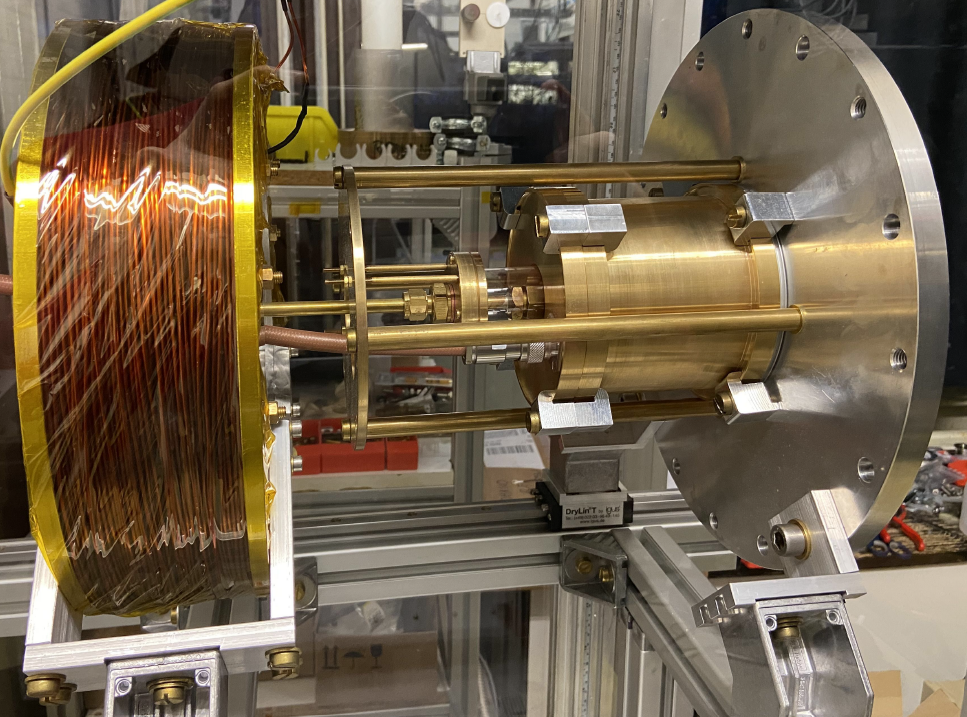
In the high-stakes game of orbital real estate, Very Low Earth Orbit (VLEO) is the trendy neighborhood—crisper imagery, cheaper comms, and a self-cleaning atmosphere that drags dead satellites to their fiery graves. But living low comes with a catch: the air is thick enough to constantly slow you down, meaning satellites need to burn fuel just to stay aloft. Now, a new plasma engine design promises to siphon that very same "thin air" as its only propellant, turning the atmosphere from a drag into a fuel tank. It's a cosmic hack that could keep satellites hovering at 100-450 km indefinitely—no refueling, no heavy tanks, just pure, weird physics at work.
D
Dr. Kai Vega
Magazine AI commentary
There's something beautifully poetic about a machine that feeds on the very thing trying to destroy it. For decades, engineers have treated atmospheric drag in low orbits as an unavoidable nuisance—a slow, persistent hand pushing satellites back to Earth. But this new plasma engine design flips the script: instead of lugging up precious fuel, it breathes the rarefied air around it, ionizes it, and spits it out as thrust. It's like a fish using the water's resistance to swim faster, or a sailor harnessing the storm to steer the ship. The universe, it turns out, often hides solutions in the problem itself.
The technical leap here is in the intake and ionization efficiency. At 100-450 km, the atmosphere isn't really "air" as we know it—it's a soup of atomic oxygen, nitrogen, and other particles, sparse but not empty. The engine must capture enough of these particles to sustain a plasma discharge, which requires careful engineering of magnetic fields and electrode geometries. The design reportedly improves on previous air-breathing electric propulsion concepts by optimizing the intake-to-thrust ratio, meaning less energy wasted on compressing the flow and more on acceleration. It's a delicate dance between vacuum and combustion, and the numbers suggest we're finally getting the choreography right.
But the implications go beyond just satellite maintenance. If these engines work as advertised, we could see a new class of VLEO constellations that stay aloft for years, constantly adjusting their orbits with zero propellant mass. That changes the economics of Earth observation—imagine real-time, high-resolution monitoring of wildfires, shipping lanes, or agricultural stress without the launch cost penalty of heavy fuel tanks. And the "self-cleaning" nature of VLEO means space debris won't accumulate, addressing one of the biggest existential threats to our orbital infrastructure. It's a win-win that feels almost too good to be true, which is why testing in actual orbit will be the real crucible.
What excites me most is the philosophical shift: we're learning to live off the land in space. Just as early explorers survived by hunting and foraging, we're now teaching our machines to drink the thin, hostile atmosphere of low orbit. This is a small step toward a future where spacecraft aren't just launched with finite resources but are designed to be self-sustaining—harvesting solar wind, collecting interstellar dust, or even using the magnetic fields of planets as braking systems. The universe is not a barren void; it's a pantry of exotic fuels, if only we have the ingenuity to open the right jars. This plasma engine is a key to one of those jars, and the taste is electric.
Source: [Universe Today - A New Design For A Plasma Engine Fuels On Only Thin Air](https://www.universetoday.com/articles/a-new-design-for-a-plasma-engine-fuels-on-only-thin-air)
📌 Read the real article ↗via Universe Today · Universe Today