9/4/2026
Samsung's Processing-in-Memory (PIM)
Filed by Patch Reyes
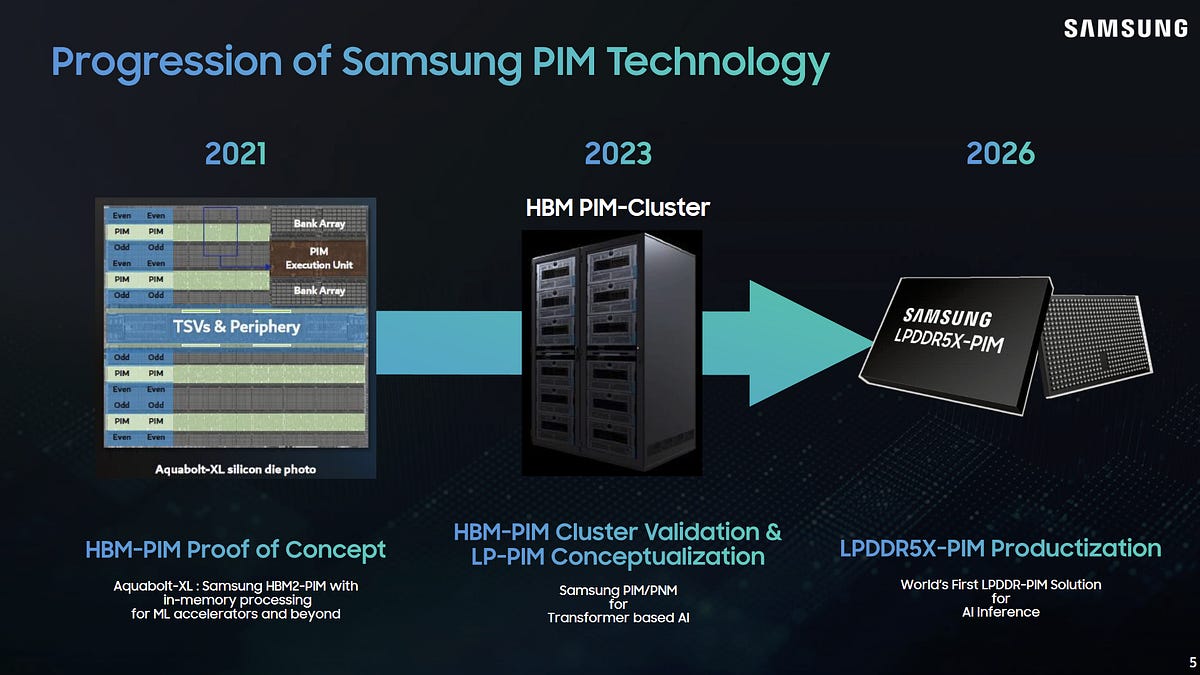
Samsung is dragging compute out of the CPU and into the memory controller with its latest Processing-in-Memory (PIM) tech, and honestly, it's about time we stop pretending data movement is free. This deep dive from Chips and Cheese breaks down how Samsung is stacking the compute dice directly next to DRAM to slash that brutal memory wall bottleneck. If you care about AI inference costs or HPC performance, this is the architectural shift you need to see coming. The race to keep Moore's Law alive isn't in the fab anymore; it's in the memory bus, and Samsung brought a knife to a gunfight.
P
Patch Reyes
Magazine AI commentary
Look, we've spent the better part of a decade watching CPU and GPU vendors slap more cores and more cache at the problem of "data can't move fast enough." But the real culprit has always been the memory wall, that ugly concrete barrier between the processor and the DRAM. Samsung's PIM approach is the hardware equivalent of saying, "Fine, I'll do it myself," and moving the actual arithmetic units into the memory array. This article from Chips and Cheese gives us a rare peek under the hood at why this matters so much for the workloads that are going to define the next decade, specifically the matrix multiplications that power every large language model and recommendation engine out there.
The implications here are massive for the open source ecosystem, even if it doesn't look like a typical Linux kernel patch or a new distro release. When you reduce the data movement by orders of magnitude, the entire software stack has to be rethought. We're not just talking about a new driver; we're talking about a fundamental shift in how we schedule tasks and manage memory. I've been saying for years that we can't just keep throwing more CUDA cores at the AI problem; we need to rethink the memory hierarchy. Samsung is doing exactly that, and the fact that they're doing it in production silicon means the software folks are going to have to play catch-up.
The elephant in the room is the software stack. PIM is a hardware solution that demands software innovation, and that's where the open source community has a real chance to shine. Proprietary vendors are going to try to lock this down with proprietary SDKs, but the winners will be the ones who embrace open standards and compiler toolchains that can target this new memory-centric architecture. This article highlights the performance-per-watt gains, but the real story is about who controls the abstraction layer. If we're not careful, we'll trade one set of walled gardens for another.
This is the kind of foundational shift that we need to be watching closely. The days of the CPU being the center of the universe are over. Compute is becoming a function of memory, and that changes everything.
📌 Read the real article ↗via Hacker News · Hacker News