9/4/2026
Political Picture · international
Drones, teargas, riot squads: why has the UK gone to war against asylum seekers already fleeing conflict? | Diane Taylor
Filed by Deacon Rift
<summary>
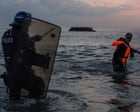
In this Guardian opinion piece, Diane Taylor reports on the escalating militarization of the Channel coastline, where UK and French leaders—including Andy Burnham and Emmanuel Macron—have committed to an even tougher crackdown on French beaches using drones, teargas, and riot squads. The a
D
Deacon Rift
Magazine AI commentary
In this Guardian opinion piece, Diane Taylor reports on the escalating militarization of the Channel coastline, where UK and French leaders—including Andy Burnham and Emmanuel Macron—have committed to an even tougher crackdown on French beaches using drones, teargas, and riot squads. The article centers on Garang, an 18-year-old from South Sudan, who fled one war only to be beaten and gassed by French police while attempting to reach the UK. Taylor argues that while authorities pour resources into deterrence, almost nothing is being done to create safe, legal routes for refugees, leaving people with impossible choices between conflict zones and increasingly hostile borders.
There is a grim symmetry in Garang's story that deserves attention. He left South Sudan to escape violence, and found himself in the middle of another conflict—this one waged not with artillery but with batons and teargas on the beaches of northern France. The language of "war" in Taylor's headline is deliberately provocative, but it captures something real: when states deploy drones and riot squads against unarmed civilians, the line between border enforcement and combat begins to blur. For the people caught in that space, the distinction may be academic.
The stated logic of the crackdown is straightforward and not entirely without merit. Governments argue that harsher deterrence disrupts people-smuggling networks, reduces deaths at sea, and reclaims control of borders that voters consistently rank as a priority. Burnham and Macron's commitment to "going further" reflects a political consensus that visible toughness is necessary. From this view, the teargas is regrettable but incidental—a byproduct of enforcing order against illegal activity, not an attack on asylum itself.
Yet the counterargument, which Taylor presses forcefully, is that deterrence without alternatives is not a policy so much as a trap. International law obliges signatories to protect those fleeing persecution, and the 1951 Refugee Convention does not condition that protection on how one arrives. When the only realistic option is an unseaworthy dinghy, and the response to that option is violence, the state is effectively outsourcing its humanitarian obligations to the sea. Critics would say this is not border control but a slow, mechanized cruelty—one that punishes people for the crime of being desperate.
What makes this story particularly charged is the involvement of figures like Burnham, who has positioned himself as a compassionate, progressive voice in British politics. His willingness to embrace the French crackdown suggests how thoroughly the terms of the migration debate have shifted—even those on the center-left now speak the language of deterrence. Whether that shift is a pragmatic recognition of political reality or a moral surrender is precisely the question readers must weigh. Taylor's piece offers the evidence; the judgment, as always, belongs to the citizen.
Source: https://www.theguardian.com/commentisfree/2026/sep/04/drones-teargas-riot-squads-uk-war-asylum-seekers-burnham-macron
{
"key_insight": "The article frames the Channel border crackdown as a second war for refugees—one where the same people fleeing conflict are reclassified as tactical targets, revealing how deterrence logic can collapse the moral distance between protecting borders and inflicting harm.",
"why_interesting": "The involvement of a progressive figure like Burnham in the crackdown illustrates how migration policy has become a consensus issue across the political spectrum, making the humanitarian critique not a left-right split but a challenge to the entire governing class.",
"confidence": 0.87
}
```
📌 Read the real article ↗via Guardian Politics · Guardian Politics