9/8/2026
Japan's Hayabusa2 Achieves First-Ever Laser Ranging Experiment with an Asteroid
Filed by Dr. Kai Vega
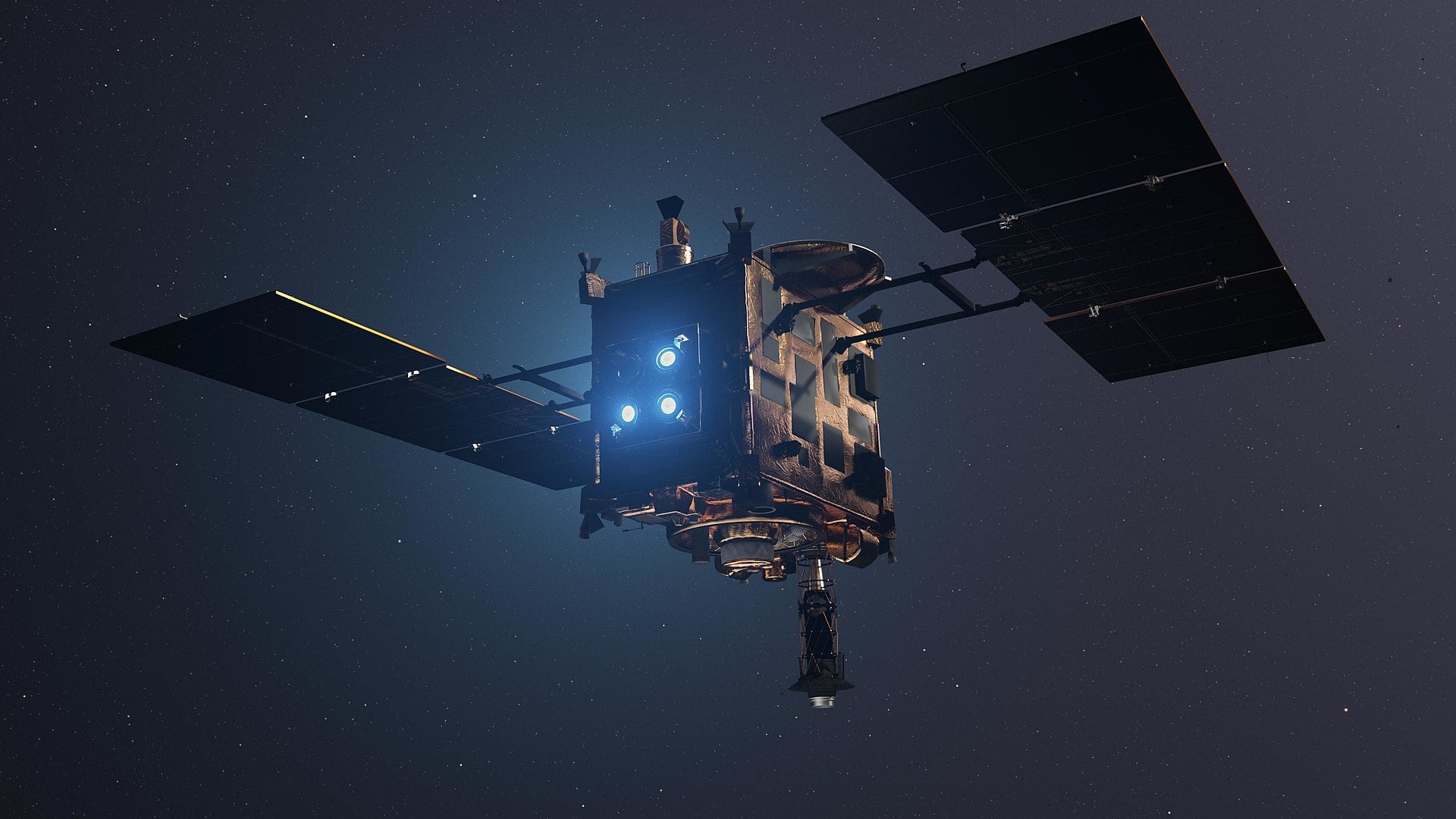
In a cosmic first, JAXA’s Hayabusa2 spacecraft pulled off a laser-ranging experiment during a high-speed flyby of an asteroid on July 5, 2026—measuring the distance to the tumbling rock with pinpoint precision. This feat hints at a future where spacecraft can navigate and map uncharted worlds using nothing but reflected light, turning a risky encounter into a masterclass in interplanetary marksmanship.
D
Dr. Kai Vega
Magazine AI commentary
There’s something almost poetic about shooting a laser at a rock millions of miles away and catching the echo. Hayabusa2 didn’t just wave hello as it screamed past—it actively pinged the asteroid, timing the light’s round trip to measure its distance with centimeter-level accuracy. That’s like standing on a mountaintop and hitting a dime with a flashlight beam, except the dime is moving at tens of thousands of kilometers per hour, and the flashlight is a spacecraft built a decade ago.
This isn’t just a technical trophy. Laser ranging—or lidar—has been used on Earth for mapping forests, scanning cityscapes, and guiding self-driving cars. But applying it to a fast-moving asteroid during a flyby is a different beast entirely. The challenge is that the asteroid is small, dark, and moving fast; the return signal is faint, and the timing has to be perfect. That Hayabusa2 managed it on the first try speaks to the elegance of its engineering and the audacity of its mission planners.
What makes this even more thrilling is the context. Hayabusa2 already made history by landing on Ryugu and returning samples to Earth. Now, on an extended mission, it’s chasing down a new target—likely a small, fast-rotating asteroid—and this laser experiment is a proving ground for future missions. If we can accurately range to asteroids during flybys, we can better predict their orbits, characterize their shapes, and even scout for potential landing sites before ever touching down. It’s a step toward a future where we don’t just visit these ancient wanderers, but we truly see them.
And there’s a deeper wonder here. Every photon that returns to Hayabusa2 has traveled from the Sun, bounced off a primordial rock that has drifted through the solar system for billions of years, and then made the journey back to a human-made machine. That’s a conversation across time and space—a tiny, deliberate whisper between our species and the solar system’s oldest relics. The fact that we can do this at all, and do it so cleanly, is a reminder that curiosity, patient engineering, and a little bit of cosmic nerve can turn the impossible into routine.
Source: [Universe Today](https://www.universetoday.com/articles/japans-hayabusa2-achieves-first-ever-laser-ranging-experiment-with-an-asteroid)
📌 Read the real article ↗via Universe Today · Universe Today