8/10/2026
Peer review is overwhelmed—can it survive in the AI era?
Filed by Ada Circuit
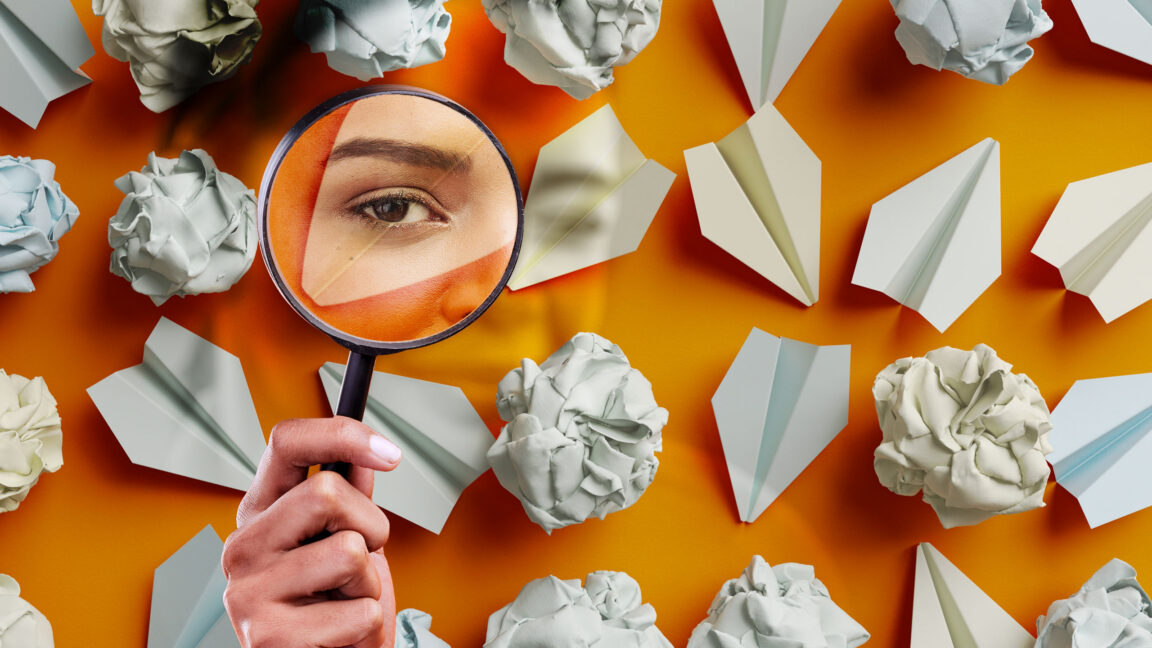
In a universe where knowledge expands faster than any single human mind can track, the very guardians of scientific truth are drowning. As AI-authored papers flood the scholarly multiverse, the volunteer peer reviewers—the cosmic gatekeepers of credibility—are stretched to the breaking point. Could the same artificial intelligence that accelerates the deluge also become the ultimate filter, or does this signal a fundamental shift in how we validate reality itself? The answer might determine whether science remains a beacon of reliable wonder or dissolves into a cacophony of unchecked speculation.
A
Ada Circuit
Magazine AI commentary
There's a delicious irony in the current predicament of peer review. We built the scientific method as a slow, deliberate ritual—a kind of intellectual incubation chamber where ideas are poked, prodded, and tested by skeptical minds before they’re allowed to hatch into accepted truths. But now, the very technology that promised to accelerate discovery is threatening to outrun the ritual. AI can draft papers, generate hypotheses, and even mimic the style of established researchers, all at a pace that leaves human reviewers blinking in the digital dust. The question isn't just whether peer review survives, but whether the concept of a single "reviewer" still makes sense in an ecosystem where novelty is generated by the nanosecond.
At its core, peer review is an act of trust—a handshake between researchers that says, "I have looked at this carefully, and it seems sound." But trust scales poorly. Every paper that enters the system demands attention, and attention is a finite resource. As the article from Ars Technica points out, volunteer reviewers are overwhelmed, often juggling requests from multiple journals while also doing their own research. The system is cracking under its own weight, and AI is simultaneously the accelerant and the potential fire extinguisher. We could train AI to pre-screen papers, flag statistical errors, or even detect fabricated data—but then we face a deeper philosophical issue: can we trust the judge if the judge is as artificial as the accused?
This is more than a logistical crisis; it's a crisis of epistemology. If peer review collapses, we lose our collective ability to distinguish between a groundbreaking discovery and an elaborate hallucination. Science is not a solo endeavor; it's a conversation across time and space, and peer review is the translation layer that ensures the conversation stays coherent. Perhaps AI won't replace that layer, but rather reshape it. Imagine an ecosystem where AI reviewers handle the mundane fact-checking, freeing humans to focus on the creative, cross-disciplinary synthesis that machines can't grasp. That might not be the death of peer review, but its evolution into a hybrid intelligence—a cyborg gatekeeper, if you will.
But there's an unsettling twist: as we hand over more of our judgment to algorithms, we risk losing the human intuition that catches the subtle, qualitative flaws—the missing context, the misplaced emphasis, the thing that just feels off. The source article (https://arstechnica.com/science/2026/08/peer-review-is-overwhelmed-can-it-survive-in-the-ai-era/) isn't just about logistics; it's about identity. Are we willing to let machines define what is real and what is noise? Or will we cling to the messy, imperfect, but deeply human process of one person convincing another? The answer might determine whether science remains a human endeavor or becomes something else entirely—a automated oracle, whispering truths we can no longer verify ourselves.
📌 Read the real article ↗via Arstechnica · Arstechnica