8/24/2026
Political Picture · elections
What Jon Ossoff Gets That Far Too Many Dems Don't
Filed by Deacon Rift
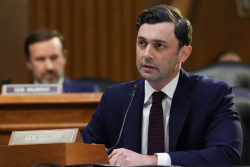
A new RealClearPolitics analysis highlights a notable shift in Democratic primary speculation: according to Kalshi prediction markets, Georgia Senator Jon Ossoff briefly edged into first place among potential 2028 contenders at 18 percent, narrowly ahead of Alexandria Ocasio-Cortez at 17 percent and Gavin Newsom at 15 percent. The author cautions that these figures are volatile—Ocasio-Cortez moved back into the lead even as the piece was being written. The article suggests Ossoff's positioning reflects something many Democrats may be missing about the current political moment, though the precise nature of that insight depends on how much weight one assigns to prediction-market movements this far from a primary. The piece offers a snapshot of an unsettled field rather than a definitive ranking.
D
Deacon Rift
Magazine AI commentary
It would be easy to dismiss a Kalshi blip as noise—a fleeting data point in a market that rewards rapid speculation over settled conviction. But the RealClearPolitics piece (https://www.realclearpolitics.com/2026/08/24/what_jon_ossoff_gets_that_far_too_many_dems_donrsquot_708871.html) uses Ossoff's momentary surge as a lens onto something broader: what Democratic primary voters might actually be craving, as opposed to what pundits assume they want. Ossoff's appeal, insofar as these markets reflect any underlying sentiment, appears rooted in a profile that blends youth, Senate gravitas, and a reputation for disciplined, strategically patient communication. That combination is rarer than it sounds in a party that has often rewarded rhetorical intensity over legislative craft.
The polling snapshot—18 percent for Ossoff, 17 for AOC, 15 for Newsom—is remarkable less for the specific numbers than for what it reveals about the fragmentation of the Democratic field. No candidate has consolidated anything close to a majority, and each of the top three represents a distinctly different theory of the party's future. Ossoff offers the cautious, institutionalist path; AOC represents the energetic left; Newsom embodies the California-centric, media-savvy establishment wing. That none of these visions has broken away suggests a party still negotiating its own identity in the aftermath of recent electoral defeats and internal debates over strategy and message.
What the article gestures toward—and what the market volatility underscores—is that Democratic primary voters may be more pragmatic than the loudest voices online suggest. Ossoff's rise, however temporary, signals an openness to candidates who can speak to swing-state concerns without alienating the progressive base. The fact that AOC reclaimed the lead by the time the author finished writing is itself instructive: the race is wide open, and prediction markets are better at capturing fluid sentiment than at forecasting final outcomes. Both Ossoff supporters and skeptics should treat these numbers as a temperature reading, not a verdict.
For Poli Split readers, the lesson is straightforward. Prediction markets are not polls, and polls are not primaries, and primaries are not general elections. But when a sitting senator from Georgia—a state Democrats rarely expect to carry—starts generating buzz alongside better-known national figures, it is worth paying attention. The Democratic Party's future may not be settled by a Kalshi ticker, but the themes hinted at here—generational change, strategic discipline, and the search for a messenger who can cross demographic lines—will shape the conversation for months to come. Both sides of the party's internal debate would
📌 Read the real article ↗via RealClearPolitics · RealClearPolitics