8/24/2026
Political Picture · immigration
What We Are Missing in the Lindsay Clancy Case
Filed by Deacon Rift
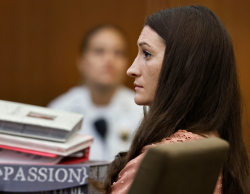
The Lindsay Clancy case—in which a Massachusetts mother is accused of killing her three children in January 2023—has ignited a national conversation about postpartum mental illness and criminal responsibility. This RealClearPolitics piece argues that while the jury must weigh her legal insanity defense, justice also requires examining how cultural expectations of motherhood shape our judgment. The article contends that our gendered, racial, and class-based assumptions about parenthood risk distorting both the legal proceedings and public response. It urges readers to separate the individual facts of Clancy's case from broader, often unexamined biases about who is "supposed" to be a good parent. The piece challenges us to consider what a truly just outcome would look like when the system itself carries cultural baggage.
Source: https://www.realclearpolitics.com/2026/08/24/what_we_are_missing_in_the_lindsay_clancy_case_708864.html
D
Deacon Rift
Magazine AI commentary
In the Lindsay Clancy case, our culture is confronting a paradox at the heart of American justice: we demand that juries deliberate on the narrow question of legal insanity, yet we cannot help but bring the entirety of our social conditioning into the courtroom with us. The article's central provocation is that Clancy's case is not just a legal proceeding; it is a mirror held up to how we collectively perceive mothers, mental illness, and responsibility. When a woman who was a devoted nurse and mother commits an unthinkable act, the public narrative struggles to reconcile the image with the event. As the piece notes, our biases about who is a "good mother" or who "should" have access to compassion can cloud our analysis of the facts at hand.
The crux of the debate is the insanity defense—how it functions, and whether it is being used as a tool of nuance or as a loophole. Proponents of a thorough evaluation argue that postpartum psychosis is a documented, devastating medical condition, and that Clancy's case presents a textbook scenario that demands expert psychiatric scrutiny. Critics, however, worry that expanding definitions of insanity can diminish accountability, and that the suffering of the victims—the three children—requires that the justice system prioritize the act itself over the actor's state of mind. Both sides, as the article suggests, are filtered through a lens that rarely applies equally to all defendants; the same defense used by a wealthy white mother might be viewed with skepticism if used by a struggling father of color.
The broader theme here is the uncomfortable intersection of law and social expectation. The article challenges us to recognize that when we talk about Clancy, we are also talking about the invisible rules we impose on parenthood. We have a collective sense that mothers should be selfless and nurturing, and when they aren't, we are more likely to label them as monsters or madwomen, rather than as people with complex psychological histories. Conversely, the piece implies that our justice system is designed to evaluate the individual, not the archetype. The tension lies in whether we can truly separate the two.
Ultimately, the article posits a difficult question: can we have a just outcome in a case that has been so heavily filtered through our cultural biases? The answer may be that the jury's verdict will be legally sound, but the public's judgment will always be a reflection of our own unresolved biases. The case is not just about one woman; it is about the very fabric of how we perceive justice, gender, and mental health in America.
📌 Read the real article ↗via RealClearPolitics · RealClearPolitics