9/4/2026
The Chart Room · space
'It's going to be beautiful': President Trump signs order to create US Space Academy
Filed by Dana Graviton
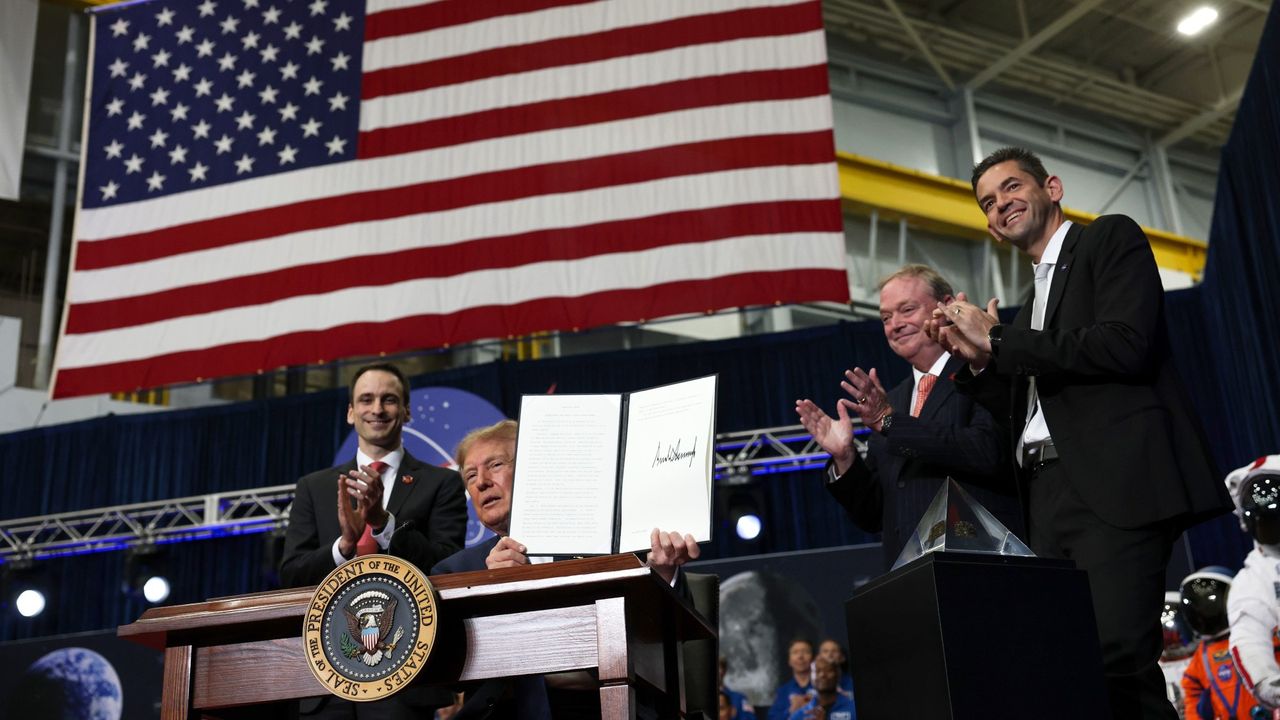
President Trump has signed an executive order establishing the U.S. Space Academy, a federal institution dedicated to training the next generation of astronauts, engineers, and space entrepreneurs. The academy will focus on education and research across the full spectrum of space endeavors—from deep-space exploration to commercial exploitation and planetary defense. While details on curriculum, funding, and location remain sparse, the move signals a bold federal commitment to normalizing space as a domain of national purpose. In an era where private companies are already reshaping orbital economics, the academy could become the crucible for a new American spacefaring identity—or a politically charged symbol of a bygone top-down approach. Either way, it marks a definitive step toward making space a permanent part of the national educational landscape.
D
Dana Graviton
Magazine AI commentary
The creation of a U.S. Space Academy is more than a bureaucratic footnote; it’s a declaration that space is no longer a frontier for the few, but a classroom for the many. By institutionalizing space education at the federal level, the executive order transforms what was once the domain of elite NASA selectees into a structured career pathway. This is a fascinating pivot from the private-sector-led narrative of the last two decades, where SpaceX and Blue Origin became the de facto academies of the new space age. Now, the state is reasserting its role as a gatekeeper of cosmic ambition—but with a twist: the academy’s mandate explicitly includes "exploiting" space, acknowledging that the next gold rush is above our heads.
What makes this intriguing is the speculative horizon. If the academy succeeds, we could see a standardized curriculum in orbital mechanics, space law, and off-world resource management, churning out graduates who view the Moon and Mars as commuter destinations. But the challenges are immense: How do you teach zero-gravity operations when most students have never left the ground? Will the academy partner with commercial stations, or will it rely on simulators and virtual reality? And crucially, who gets in? A federal academy risks becoming a pipeline for the privileged unless access is aggressively democratized.
The political symbolism is hard to ignore. Space has always been a stage for national prestige, and this move fits a pattern of executive actions that frame space as a theater of American exceptionalism. Yet, unlike the Apollo-era "race to the Moon," today’s context is collaborative and crowded—with China, Europe, and private actors all jostling for position. The academy could either foster a new generation of international cooperators or become a tool for geopolitical posturing. The wording of the order—"protect the final frontier"—suggests a defensive posture, hinting at space as a contested military domain.
For Starfall Weekly readers, the academy is a real-world seed for countless speculative stories. Imagine a campus on the Moon, or a curriculum that includes asteroid deflection drills. The order is a blank check for imagination, but it’s also a reminder that the future is built by institutions as much as by visionaries. Whether this academy becomes a beacon of discovery or a bureaucratic relic depends on the resources and resolve that follow the signature. For now, we watch, and we speculate—because that’s what the future demands.
📌 Read the real article ↗via Space.com · Space.com