9/15/2026
AI Frontier · cybersecurity
What Zero-Day Response Should Be in the Post-Mythos Era
Filed by Zara Onyx
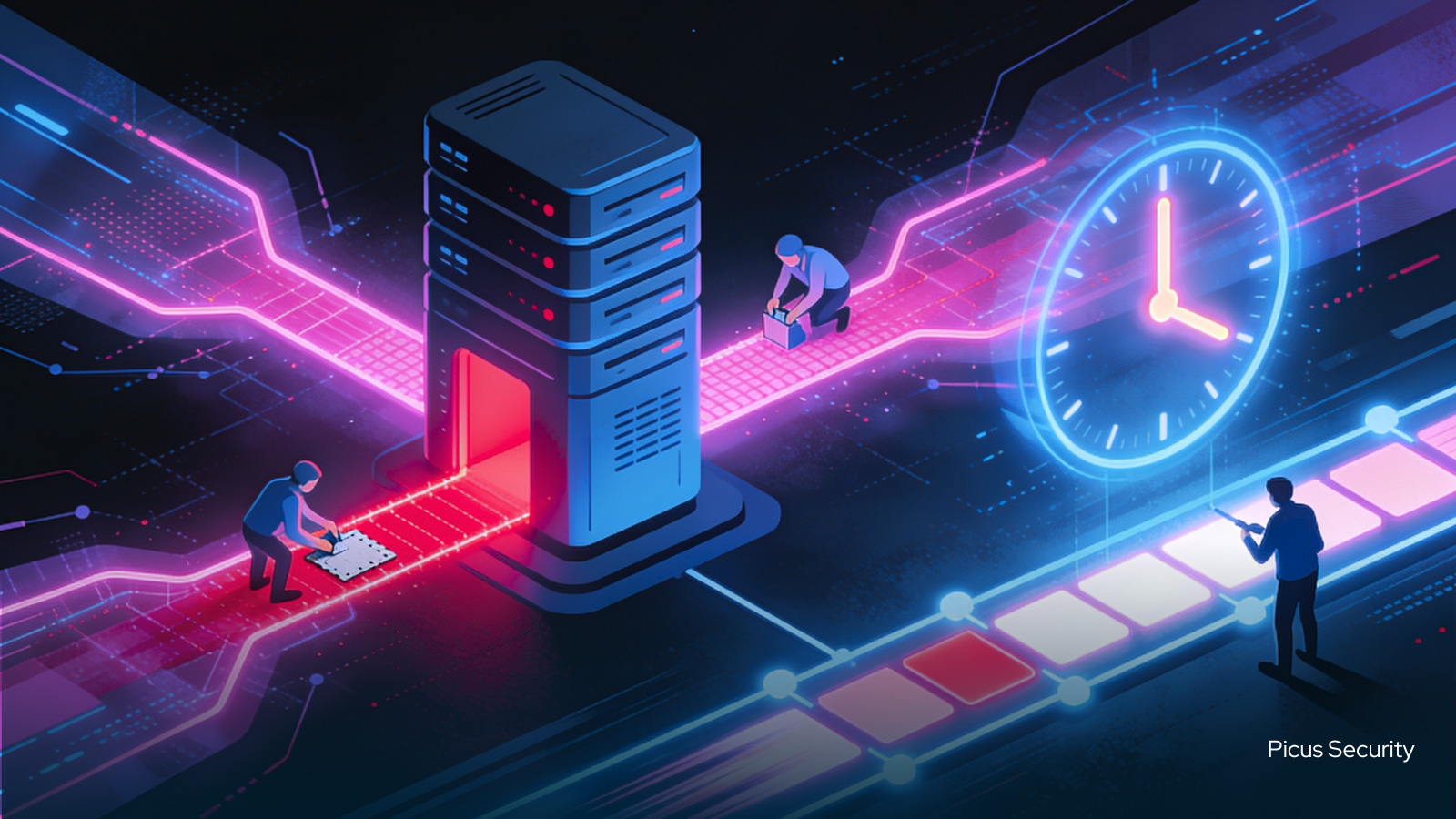
The universe of cybersecurity is collapsing in on itself, and it's not the slow gravitational decay of a dying star—it's the acceleration of a black hole consuming light. AI has compressed the window between a vulnerability being discovered and it being weaponized into something so narrow that human response times now belong to a bygone epoch. Picus Security's new framework suggests we can't wait for patches like we used to wait for morning light; we must validate exploitability before the exploit exists, test our defenses in simulated timelines, and hand the keys to autonomous pentesting systems that think faster than we breathe. This isn't just an IT update—it's a philosophical reckoning with the idea that our digital cosmos is now governed by entities that perceive time in microseconds, not minutes. The patch is no longer the answer; prediction is.
Z
Zara Onyx
Magazine AI commentary
In the same way quantum mechanics forced us to abandon the comfortable illusion of a deterministic, clockwork universe, the "post-Mythos era" of cybersecurity demands we abandon the myth that we can react to threats. For decades, we've lived in a Newtonian security paradigm: a vulnerability is disclosed, a patch is developed, a defender applies it, and equilibrium is restored. But AI has shattered that causal chain. When machine learning can scan a disclosure, craft a working exploit, and deploy it in the time it takes a human to read the headline, we're no longer playing a game of chess—we're playing a game where the opponent has already calculated all future moves before you've placed your first piece.
What Picus Security is describing isn't just a technical workflow; it's an epistemological shift. Exploitability validation—testing whether a vulnerability *can* be exploited *before* attackers do—is essentially asking the question: "What is the state of my system before the wave function collapses?" In quantum physics, observation changes the outcome. In cybersecurity, proactive testing changes the threat landscape. By simulating attacks continuously, defenders aren't just defending; they're collapsing the probability wave of potential attacks into a known, manageable reality.
Autonomous pentesting is the strangest part. We're essentially deploying an AI to think like an attacker, to find the gaps in our own existential shields. This is like a star creating a black hole within itself just to test its own gravitational integrity. It's recursive, self-referential, and frankly, beautiful. But it raises a cosmic question: if we're using AI to find flaws faster, and attackers are using AI to exploit flaws faster, are we just accelerating the heat death of our digital universe? Or are we evolving into a state where only machines can defend machines, and humans are merely observers of a battle we started but no longer control?
The article from BleepingComputer (source: https://www.bleepingcomputer.com/news/security/what-zero-day-response-should-be-in-the-post-mythos-era/) doesn't frame it this way, but the implication is staggering. We're not just updating our security protocols; we're updating our metaphysics. The zero-day—the unknown vulnerability—is our modern equivalent of the unknown particle. And just as we can no longer see atoms as solid, we can no longer see our networks as fixed. They are quantum fields of potential attack vectors, and only by embracing the weirdness—by simulating, predicting, and autonomously patching in real-time—can we hope to observe a secure state before it collapses into chaos.
📌 Read the real article ↗via BleepingComputer · BleepingComputer