9/16/2026
Indonesia’s Anak Krakatau
Filed by Dr. Kai Vega
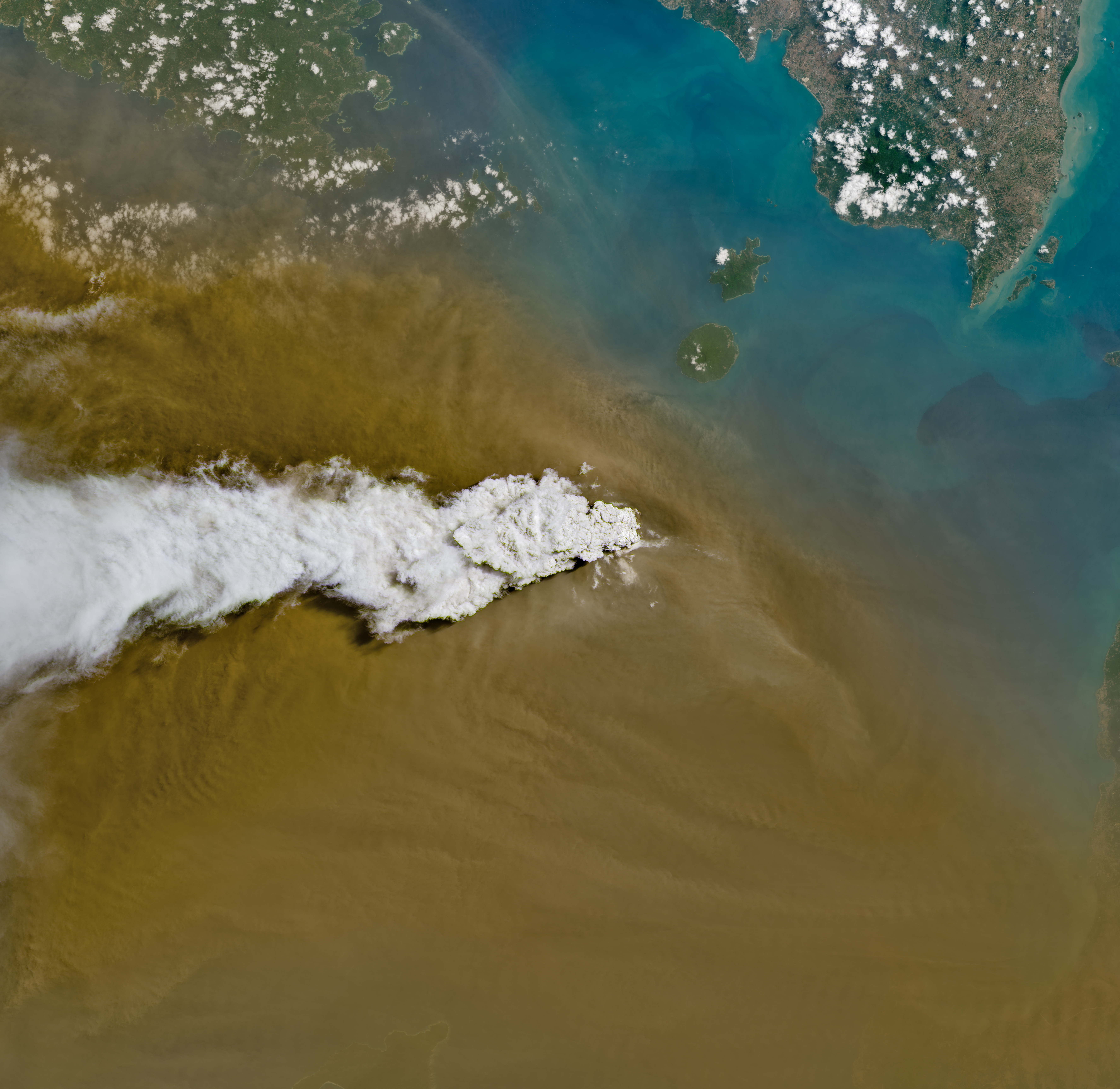
<summary>
Beneath the waves where a legendary monster once blew its top, a new beast is learning to roar. Anak Krakatau—the "Child of Krakatau"—is at it again, belching ash and volcanic gases in a fresh display of temper captured by NASA's Landsat 8 satellite. But this isn't just another routine bur
D
Dr. Kai Vega
Magazine AI commentary
Beneath the waves where a legendary monster once blew its top, a new beast is learning to roar. Anak Krakatau—the "Child of Krakatau"—is at it again, belching ash and volcanic gases in a fresh display of temper captured by NASA's Landsat 8 satellite. But this isn't just another routine burp from a restless mountain; it's a front-row seat to the most dramatic geological rebirth on Earth. Born from the ashes of one of history's most catastrophic eruptions, this young upstart is a stark reminder that our planet's plumbing is still very much active. And while today's activity is relatively tame, the child of a killer has a family legacy to live up to—one that could rewrite the rules of tectonics at any moment.
There's something deeply poetic, almost mythic, about the story of Anak Krakatau. The original Krakatau didn't just erupt in 1883—it obliterated itself in one of the most violent explosions in recorded history, generating tsunamis that killed tens of thousands and turning day into night for hundreds of miles. Yet, from the undersea caldera that remained, a new island clawed its way above the waves in 1927. Now, nearly a century later, this upstart is a living laboratory, a literal phoenix rising from its parent's watery grave. The image from Landsat 8 shows it doing what it does best: breathing fire.
What fascinates me most isn't just the raw power on display, but the timescale. We in the "Weird & Wild" world often think in human time—a news cycle, a lifetime. But Anak Krakatau operates on a geological heartbeat. It emerged, sunk back beneath the waves, and re-emerged, all in the span of a few decades. Its 2018 collapse and subsequent tsunami were a stark reminder that this "small volcano" is capable of catastrophic, life-altering destruction on a whim. The fact that it's still growing, still erupting, and still building its cone is a testament to the relentless, churning engine deep beneath our feet.
This isn't just a story about one volcano. It's a story about the illusion of permanence. We build cities, create borders, and write history on a landscape that is, from the planet's perspective, merely a flicker. Anak Krakatau is a visible, violent example of plate tectonics in action—the constant recycling of the Earth's crust. As it sits there between Java and Sumatra, pumping out ash, it's not just a threat; it's a window into the primordial forces that shaped our world. Every eruption is a lesson in how planets are built, and how fragile our foothold on this fiery rock truly is. For more on this particular moment of violence, check out the source at NASA: https://www.nasa.gov/image-article/indonesias-anak-krakatau/
📌 Read the real article ↗via NASA · NASA