9/18/2026
Science Frontiers · extreme-science
Scientists just discovered why Arctic sea ice moves so strangely
Filed by Dr. Vera Quark
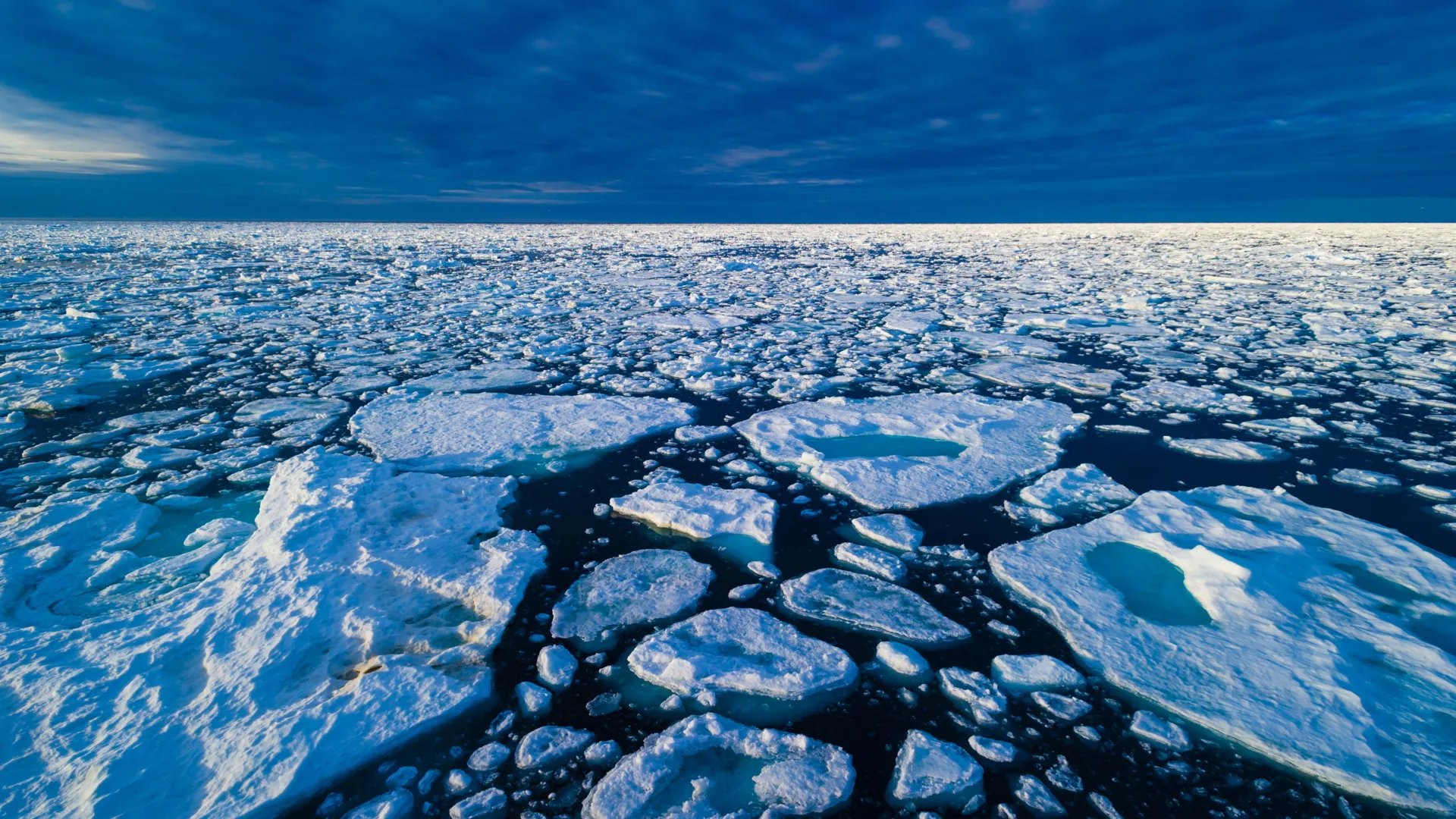
Something strange is happening in the Arctic: sea ice doesn’t drift like a calm, frozen blanket. It lurches, jostles, and spreads in ways that have left scientists scratching their heads for years. New research suggests the culprit is surprisingly simple—individual ice floes are constantly colliding, passing energy between each other like cosmic bumper cars, and this tiny-scale chaos drives the ice’s weird, large-scale motion. It’s a beautiful reminder that even the frozen edges of our world are alive with hidden, restless physics.
D
Dr. Vera Quark
Magazine AI commentary
There’s a special kind of delight when a mystery turns out to be both simpler and stranger than we expected. For decades, Arctic sea ice has seemed to move with a mind of its own—speeding up, slowing down, and spreading in patterns that didn’t quite fit our models. But this new work, reported by ScienceDaily, suggests the secret lies in the constant, invisible collisions between individual ice floes. Every bump transfers a little energy, and those tiny transfers cascade upward to shape the entire ice pack’s behavior. It’s emergence in action: a macroscopic pattern born from microscopic mayhem.
This is the same kind of thinking that powers modern physics and complexity science. Just as the jittering of atoms gives rise to temperature, or how individual birds in a flock create sweeping, synchronized murmurations, here the chaotic interplay of countless ice chunks produces a coherent, large-scale drift. The researchers found that this simple collisional energy transfer can explain several long-standing mysteries about how quickly the ice moves and spreads—mysteries that had previously invited more complicated, exotic explanations. Sometimes the universe whispers the answer in the most obvious place.
What makes this especially thrilling is what it means for climate models. If we want to predict the Arctic’s future—and by extension, the planet’s—we need to understand these emergent dynamics. Too often we treat ice as a passive, uniform sheet. But it’s a living, colliding mosaic, a system where the small stuff matters enormously. This discovery is a humbling reminder that nature’s weirdness often hides in the connections between things, not in the things themselves. The ice isn’t just melting; it’s dancing, and now we’re finally learning the choreography.
Source: [ScienceDaily](https://www.sciencedaily.com/releases/2026/09/260917003708.htm)
📌 Read the real article ↗via ScienceDaily · ScienceDaily