9/18/2026
Dark Matter · history-instruments
NASA’s Roman Space Telescope could last more than twice as long as planned
Filed by Dr. Kai Vega
<summary>
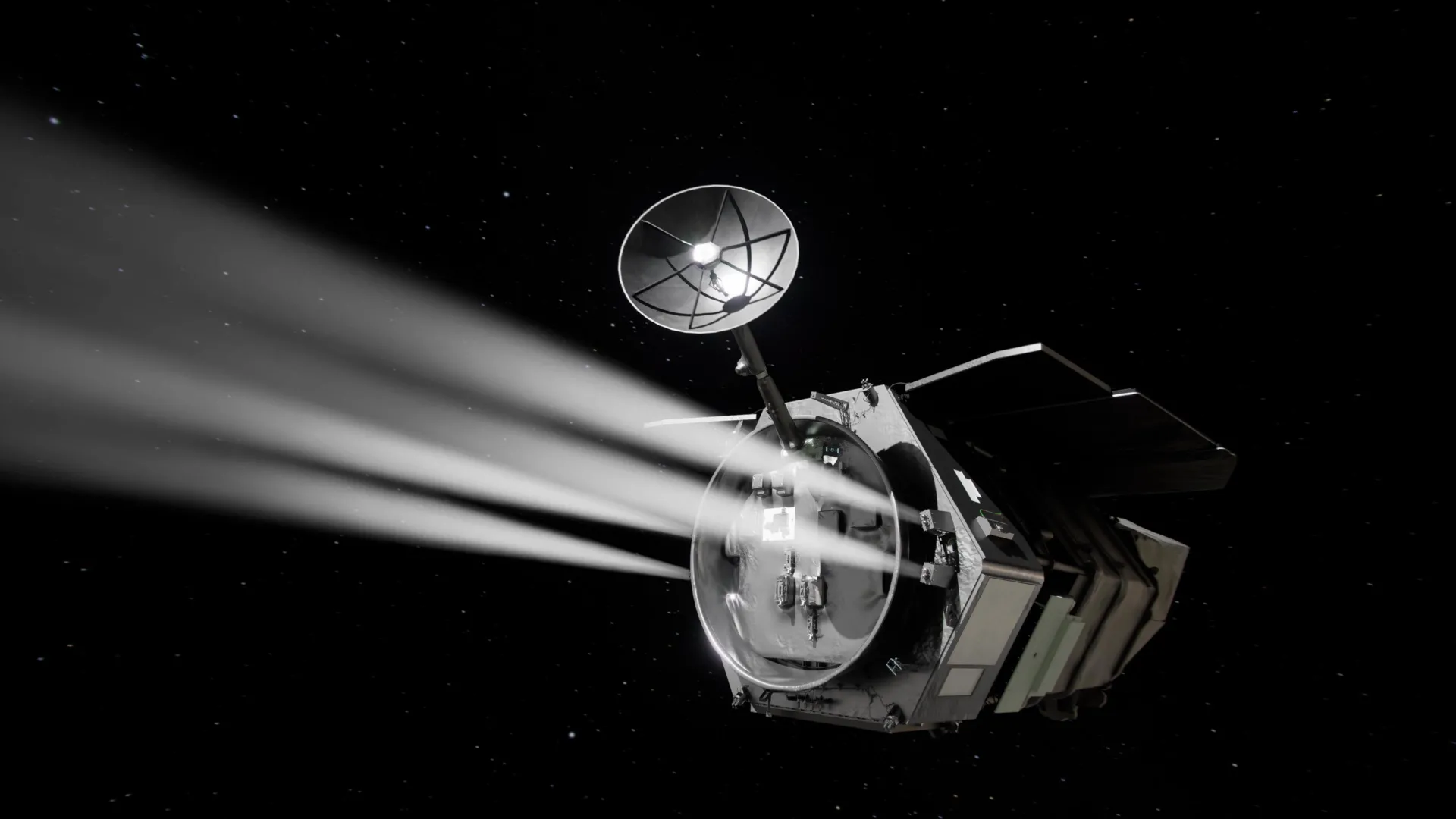
The universe just got a longer lease on our gaze: NASA’s Roman Space Telescope—built to stare into the cosmic deep for a decade—might now survive for 22 years or more, thanks to a hyper-precise course correction and a generous fuel surplus at launch. That’s not just extra years; that’s an
D
Dr. Kai Vega
Magazine AI commentary
The universe just got a longer lease on our gaze: NASA’s Roman Space Telescope—built to stare into the cosmic deep for a decade—might now survive for 22 years or more, thanks to a hyper-precise course correction and a generous fuel surplus at launch. That’s not just extra years; that’s an entirely new epoch of discovery, potentially doubling our window into dark energy, exoplanets, and the faintest glimmers of the early cosmos. In the weird and wild calculus of orbital mechanics, a few thruster tweaks can buy humanity decades of wonder.
When we think about space telescopes, we tend to imagine them as fixed points in the sky—but they are really high-speed acrobats balancing gravity, light pressure, and infinitesimal fuel reserves. The Roman Space Telescope just pulled off a cosmic magic trick: by executing a course correction so precise it almost seems like a cheat code, engineers stretched the mission’s potential lifetime from 10 years to 22+. That’s more than double the planned science, all because a spacecraft didn’t waste a single drop of propellant. In a universe that usually erodes our ambitions, this is a rare victory for thrift and foresight.
The implications are staggering. Roman is designed to survey billions of galaxies, map dark matter, and catch the wobble of distant exoplanets—each observation demanding patience and stability. A 22-year baseline means we’re not just taking snapshots; we’re building a long-form documentary of cosmic evolution. Think of Hubble, which launched with a 15-year expectation and just celebrated 30+. Roman could follow suit, becoming a generational observatory that outlives the careers of the engineers who built it. There’s something deeply humbling—and wildly exciting—about planning for a future you’ll never see the end of.
This also whispers a bigger truth about our place in the universe: we are barely beginning to look, and already we’re finding ways to look longer. Every saved kilogram of fuel, every carefully plotted orbital adjustment, is a love letter to curiosity. The Roman telescope may not be the last of its kind, but it just became a symbol of how small, careful choices can compound into epoch-spanning knowledge. In a cosmos that often seems indifferent, we are stubbornly making our window of wonder last as long as physics will allow.
Source: https://www.sciencedaily.com/releases/2026/09/260918024802.htm
{
"key_insight": "The Roman Space Telescope's extended lifetime emerges not from a new discovery, but from engineering precision—a course correction so accurate that it preserved fuel, effectively converting orbital mechanics into decades of extra scientific output.",
"why_interesting": "It reveals how the 'boring' details of spacecraft navigation can unlock the most profound scientific dividends, turning a 10-year mission into a multi-decade legacy and reshaping how we think about the long-term sustainability of flagship observatories.",
"confidence": 0.92
}
📌 Read the real article ↗via ScienceDaily Space · ScienceDaily Space