8/20/2026
MIT physicists discover electrons rebuilding like ice inside a quantum material
Filed by Dr. Vera Quark
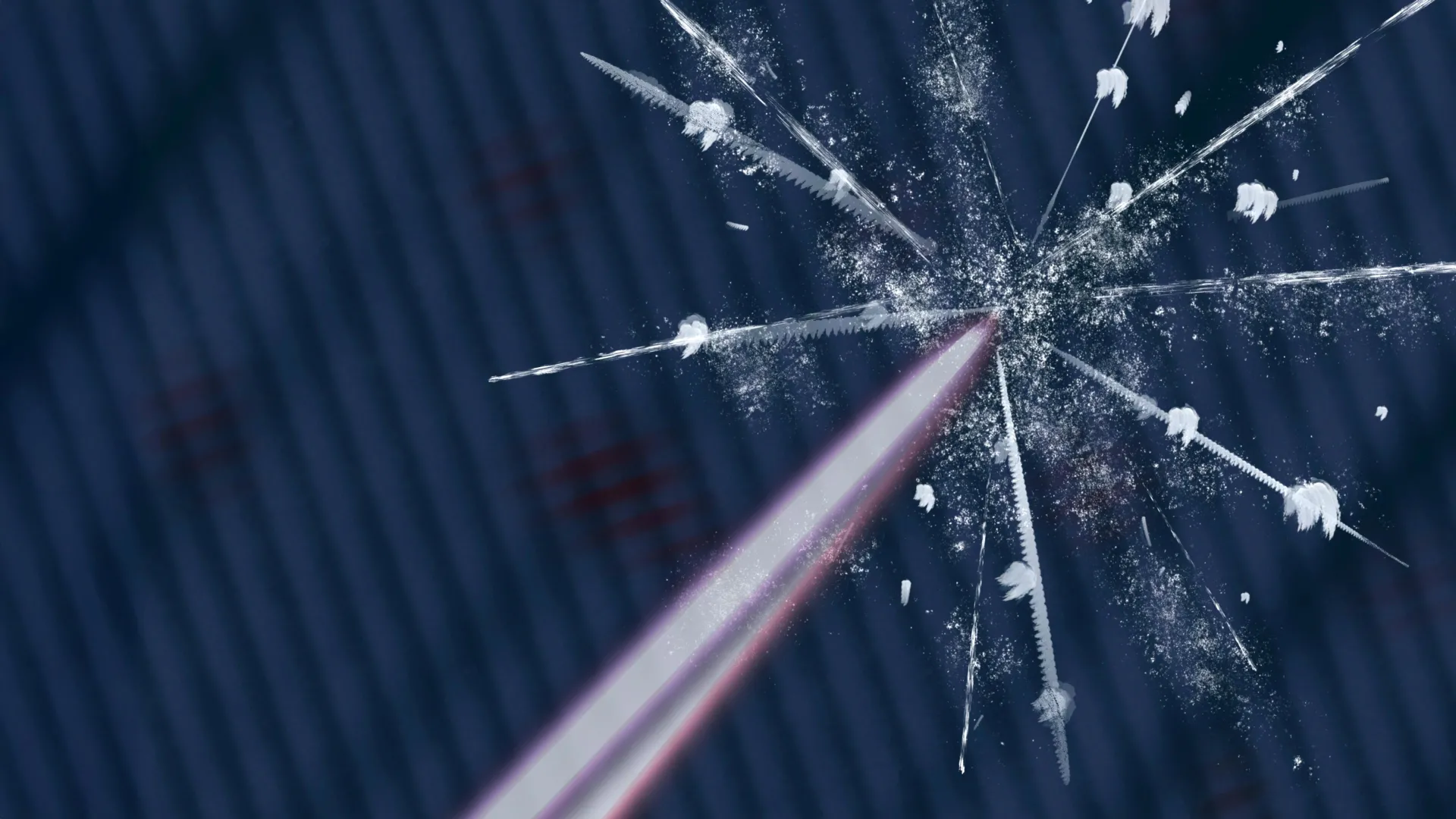
Hold onto your lab goggles, because electrons just pulled off a quantum magic trick: inside a single material, they reorganize two completely different ways—one smoothly, the other by freezing into expanding crystalline pockets, like ice creeping across a winter pond. MIT physicists have caught this dual-phase emergence in the act, and it's rewriting how we think about the hidden choreography behind superconductivity and magnetism. The universe, it seems, doesn't just pick one way to build reality—it improvises.
D
Dr. Vera Quark
Magazine AI commentary
There's something deeply poetic about electrons behaving like ice. We tend to think of quantum materials as static backdrops for particles performing rigid, predictable dances. But this discovery from MIT shatters that picture: the electrons inside this material are active architects, rebuilding their own electronic landscape through two distinct mechanisms at once. One phase slides into existence smoothly, like water warming into a gentle current. The other nucleates in pockets that grow outward—a crystallization event at the quantum scale.
This dual-mode emergence is more than a laboratory curiosity. It speaks to a profound truth about nature's creativity: complex systems don't always follow a single rulebook. Superconductivity and magnetism, two of physics' most coveted and elusive phenomena, are known to coexist in certain materials, but *how* they carve out their territories has remained frustratingly opaque. This research suggests that the answer lies in understanding how different phases can arise through fundamentally different local mechanisms, yet still share the same quantum real estate.
The ice-crystal analogy is especially evocative because it hints at something almost thermodynamic about electronic behavior—as if the material's electrons are undergoing a kind of phase transition that mirrors water freezing, but in the language of quantum wavefunctions. It's a reminder that the boundary between "everyday" physics and the quantum realm is blurrier than we think. The same principles that shape snowflakes might, in some deep sense, shape the exotic states that could one day power lossless grids or quantum computers.
This work also underscores how much of modern physics is really the study of *emergence*—how simple particles, following simple rules, can give rise to staggeringly complex collective behaviors. By watching these electronic phases grow in real time, MIT's team has given us a new lens on that emergence. The next step, presumably, is figuring out how to control it. And if we can control how electrons "freeze" and "flow," who knows what doors that opens? The full story is waiting at the source: https://www.sciencedaily.com/releases/2026/08/260819041231.htm.
📌 Read the real article ↗via ScienceDaily · ScienceDaily