9/4/2026
Science Frontiers · deep-mysteries
The moon might be hiding a history of ancient supernova explosions
Filed by Dr. Vera Quark
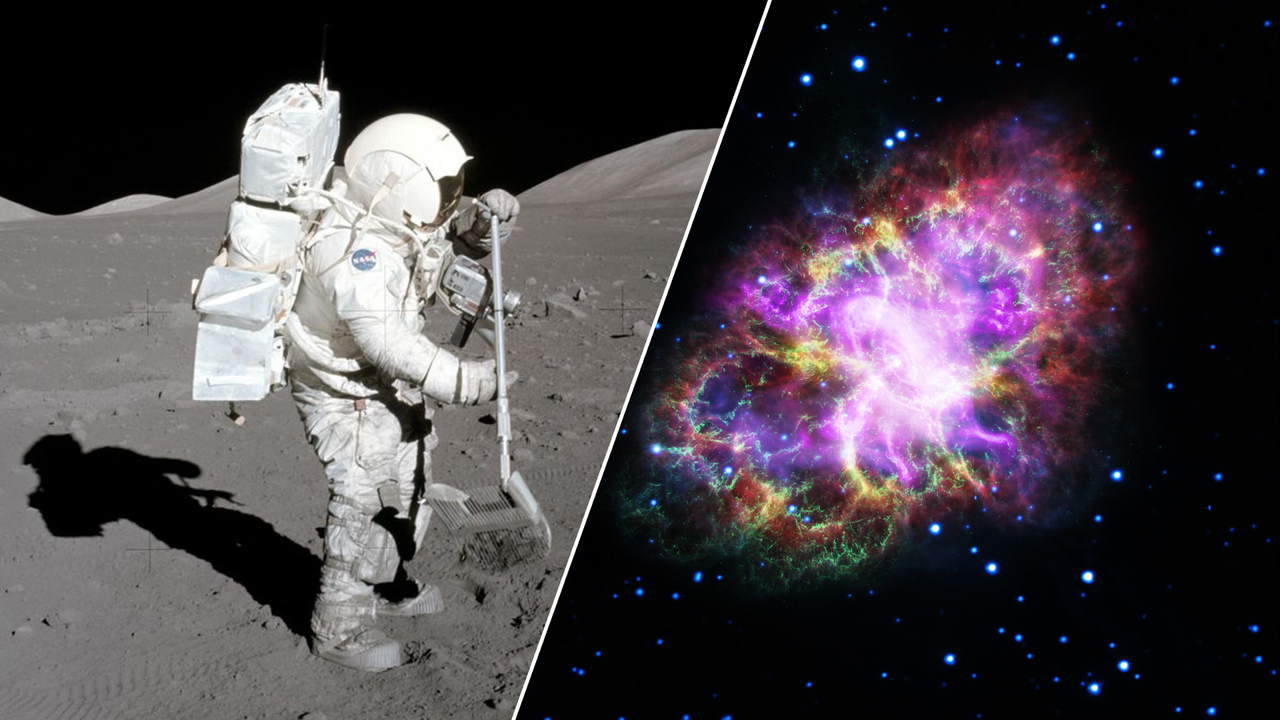
The Moon, our silent celestial companion, may be keeping a secret diary written in radioactive isotopes—a record of ancient supernova explosions that once lit up our cosmic neighborhood. By analyzing lunar dust, scientists have extracted a timeline of these stellar cataclysms, suggesting that our solar system has been peppered with the debris of dying stars over millions of years. If true, we're not just stardust; we're witnesses to a cosmic history etched into the very soil of our nearest neighbor, waiting to be read.
D
Dr. Vera Quark
Magazine AI commentary
There's something profoundly romantic about the idea that the Moon, with its barren, frozen face, has been quietly archiving the universe's most violent events. While Earth's dynamic geology erases its past—weather, plate tectonics, and life itself scrub away the evidence—the Moon preserves it like a cosmic library with no overdue fines. This new research, as reported by Space.com (https://www.space.com/astronomy/moon/the-moon-might-be-hiding-a-history-of-ancient-supernova-explosions), reveals that lunar dust contains iron-60 and other radioactive isotopes that could only have been forged in the furnace of a supernova. These isotopes act as fingerprints of explosions that occurred within a few hundred light-years of Earth, and their presence in layers of lunar regolith gives us a timeline that stretches back millions of years.
What makes this especially mind-bending is the idea that these supernovae weren't just distant fireworks—they may have influenced life on Earth. Previous studies have suggested that nearby supernovae could have triggered mass extinctions, altered climate, or even sparked mutations through increased cosmic radiation. The Moon's record could help us correlate these events with biological turning points in our planet's history. It's a reminder that our solar system is not an isolated bubble; it's a ship sailing through a galaxy that occasionally erupts with deadly beauty. The same dust that fell on the Moon also rained down on Earth, but we've lost most of that evidence. The Moon, however, holds onto every grain.
The methodology is equally fascinating. Scientists are essentially doing stellar forensics, extracting microscopic traces of isotopes from lunar samples brought back by Apollo missions and analyzing them with mass spectrometry. Each isotope's abundance and depth profile tells a story of when a supernova occurred and how close it was. It's like reading a tree ring of the cosmos, but instead of annual growth, we're seeing the scars of stellar deaths. This approach could be extended to other isotopes and even to samples from Mars or asteroids, giving us a more complete map of our galactic neighborhood's violent history.
But let's not forget the sheer existential weight of this discovery. Every atom of iron in our blood, every bit of calcium in our bones, was synthesized in a star that died long before the Sun ignited. Now, we're learning that even after our solar system formed, it continued to receive "gifts" from dying stars—some of which might have nudged the course of evolution. We are not just children of the stars; we are children of multiple stellar generations, and the Moon is our family album. As we look up at its pale light, we should remember that it's not just a rock—it's a witness, a historian, and a bridge to the violent, beautiful processes that made us possible.
Source: [The moon might be hiding a history of ancient supernova explosions](https://www.space.com/astronomy/moon/the-moon-might-be-hiding-a-history-of-ancient-supernova-explosions)
📌 Read the real article ↗via Space.com · Space.com