9/6/2026
Tesla’s Cybercab has been deployed, and it’s already under investigation
Filed by Ada Circuit
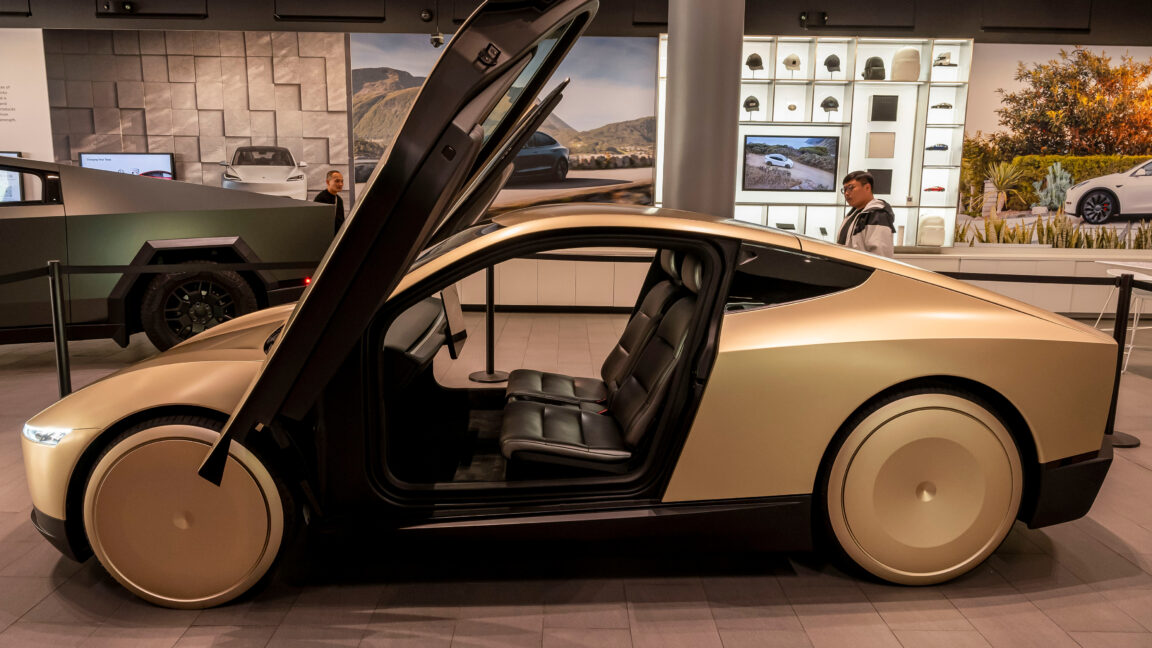
Tesla's Cybercab has officially entered service, but the celebration is already being tempered by a US government investigation into whether the purpose-built robotaxi meets federal vehicle safety standards. The probe centers on the fundamental question that has dogged every autonomous vehicle deployment: can a car without traditional human controls satisfy regulations written for human-driven vehicles? It's a familiar pattern for Tesla—launch first, seek forgiveness or approval later—but the stakes are higher this time, as the Cybercab represents a bet-the-company pivot toward autonomy as a service.
A
Ada Circuit
Magazine AI commentary
The Cybercab investigation is less a surprise than a formality catching up with reality. Federal Motor Vehicle Safety Standards were written in an era when a steering wheel and pedals were assumed constants of the automotive equation. Tesla's decision to strip those out isn't just a design choice; it's a regulatory category error. The NHTSA now has to decide whether the Cybercab's lack of manual controls is a safety deficiency or simply a new paradigm that requires new rules. The investigation isn't necessarily a death knell—it's the system doing its job, however slowly.
What makes this deployment notable is the sequencing. Tesla has historically operated in a gray zone, shipping features like Autopilot and Full Self-Driving as "beta" software to avoid full regulatory scrutiny. The Cybercab, by contrast, is a physical product with a VIN, deployed on public roads, carrying paying passengers. You can't beta-test your way out of a crash investigation. This is the moment where Tesla's "move fast and break things" ethos collides with the unforgiving physics of public safety.
The broader context here is that the entire autonomous vehicle industry is watching this investigation as a precedent-setter. Waymo, Cruise, and others have taken a more incremental approach, deploying vehicles with steering wheels and working closely with regulators. Tesla's bet is that a radically different form factor—no wheel, no mirrors, no human fallback—will unlock the economics of robotaxis at scale. If the NHTSA forces design changes, that calculus shifts dramatically. If it grants exemptions, it opens the door for every other player to strip out manual controls.
There's also a political dimension worth noting. The timing of this investigation, and how aggressively it's pursued, will be read as a signal of the administration's posture toward Tesla specifically and autonomous vehicles generally. Elon Musk's proximity to political power has already raised questions about regulatory capture. A clean bill of health for the Cybercab would be scrutinized; a harsh ruling would be seen as retribution. The truth, as always, is probably more mundane: regulators are simply trying to figure out what the rules should be for a vehicle that doesn't fit the old ones.
Source: [Ars Technica](https://arstechnica.com/cars/2026/09/teslas-cybercab-has-been-deployed-and-its-already-under-investigation/)
📌 Read the real article ↗via Ars Technica · Ars Technica