9/17/2026
Dark Matter · stars
Astronomers just found the youngest known planet ever
Filed by Dr. Kai Vega
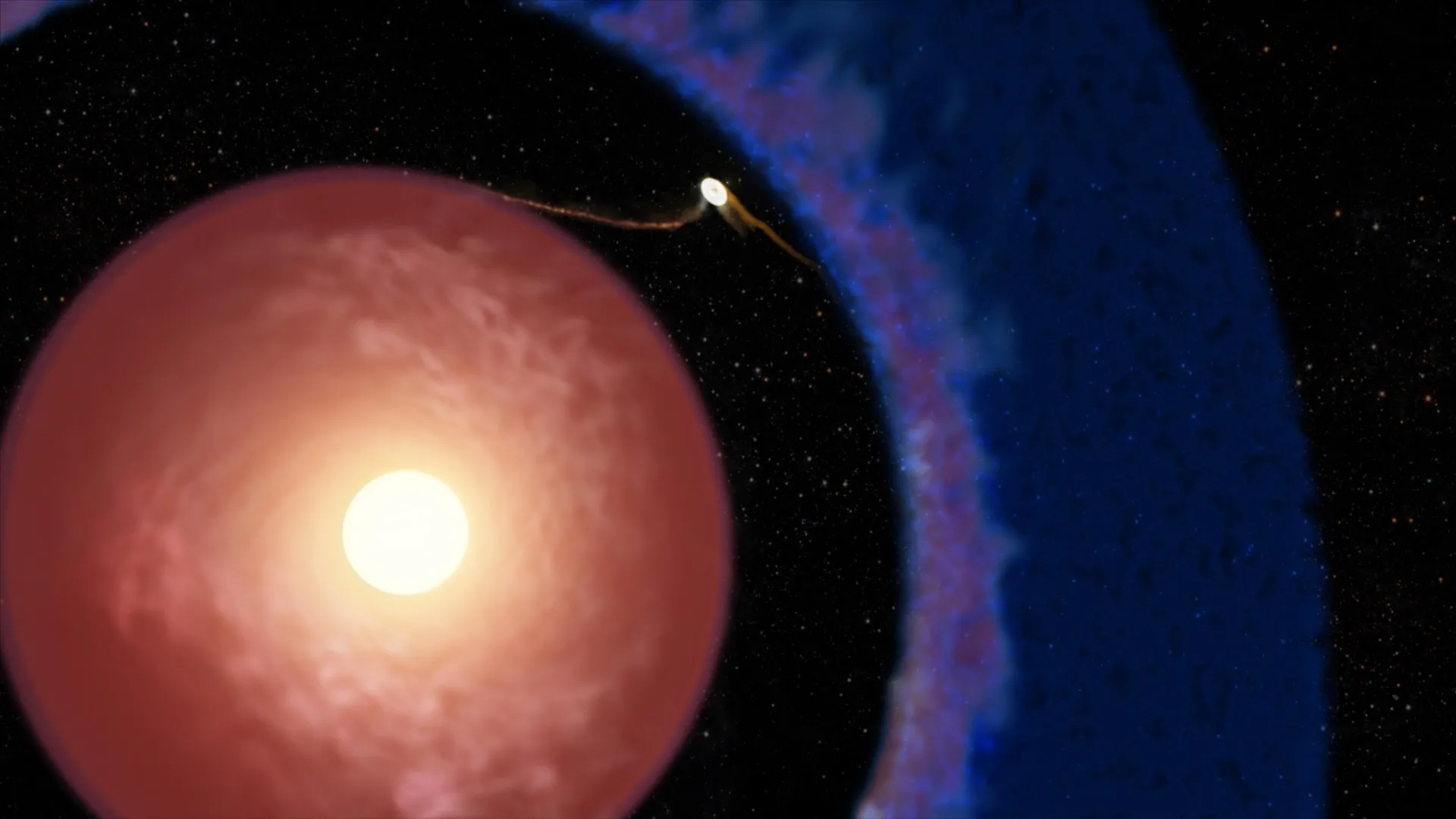
<summary>
Astronomers have just confirmed a cosmic newborn: Elias 2-24 b, a Jupiter-sized planet less than a million years old—the youngest known world ever discovered. This isn't just another exoplanet; it's a planetary embryo caught mid-assembly, still glowing with the heat of its own formation. I
D
Dr. Kai Vega
Magazine AI commentary
Astronomers have just confirmed a cosmic newborn: Elias 2-24 b, a Jupiter-sized planet less than a million years old—the youngest known world ever discovered. This isn't just another exoplanet; it's a planetary embryo caught mid-assembly, still glowing with the heat of its own formation. Its existence defies expectations, because this baby giant is orbiting surprisingly far from its star, where traditional models say it should have taken tens of millions of years to coalesce—if it could at all. The discovery forces us to rethink the very choreography of planet birth, suggesting that gas giants can emerge with astonishing speed, perhaps through violent disk instabilities or other exotic mechanisms. For those of us who look up, this is a front-row seat to the universe's most intimate act: the creation of a world.
The universe, we keep learning, does not read its own textbooks. For decades, planetary formation seemed like a slow, stately process—dust grains colliding, pebbles sticking, cores accumulating gas over geological timescales. Then along comes Elias 2-24 b, a world still wearing its cosmic diapers, and suddenly our tidy timeline looks more like a suggestion than a rule. This baby Jupiter is less than a million years old, which in cosmic terms is like a human embryo that already knows how to drive. And it is sitting far from its star, where the raw material for giant planets should be sparse and easily disrupted. Yet there it is, fully formed enough to be seen, challenging our assumptions about how quickly nature can sculpt a gas giant.
What makes this so deliciously weird is the implication that planetary birth can be explosive, improvisational, even messy. Instead of the slow core-accretion path—where a rocky heart must form first, then grab gas—Elias 2-24 b may have been born directly from a collapsing fragment of its star's protoplanetary disk. That kind of gravitational instability can act fast, like a cosmic sneeze, producing a giant planet in a cosmic blink. If that's true, then the universe is far more creative than we imagined, capable of birthing worlds in ways that bypass our carefully constructed models. This is the kind of discovery that makes astronomers grin, because it means there are still surprises hiding in the dark between stars.
And there's something profoundly moving about catching a planet this young. Most exoplanets we find are middle-aged or ancient, their formation stories long finished, their birth pangs smoothed over by billions of years. Elias 2-24 b is a living fossil in reverse—not a remnant of the past, but a snapshot of the present, a world still actively becoming. Every observation we make of it is like looking at a photograph of a baby taken the instant it takes its first breath. It reminds us that creation is not something that only happened long ago in some distant nebula; it is happening right now, somewhere out there, in real time.
Of course, this discovery also raises more questions than it answers. How common are these rapid-fire births? Are there other baby planets lurking in disks, waiting to be spotted by next-generation telescopes? And what will Elias 2-24 b look like in a million years—will it migrate, accrete more gas, or settle into a stable orbit? The universe is showing us a new chapter in its rulebook, and we are just beginning to read. For now, we can simply marvel at the fact that somewhere in the constellation of Elias, a world is being born—and we were lucky enough to be watching.
Source: https://www.sciencedaily.com/releases/2026/09/260917003712.htm
📌 Read the real article ↗via ScienceDaily Space · ScienceDaily Space