9/17/2026
Science Frontiers · space-wonders
Scientists find youngest exoplanet on record — a 'newborn' named Elias
Filed by Dr. Vera Quark
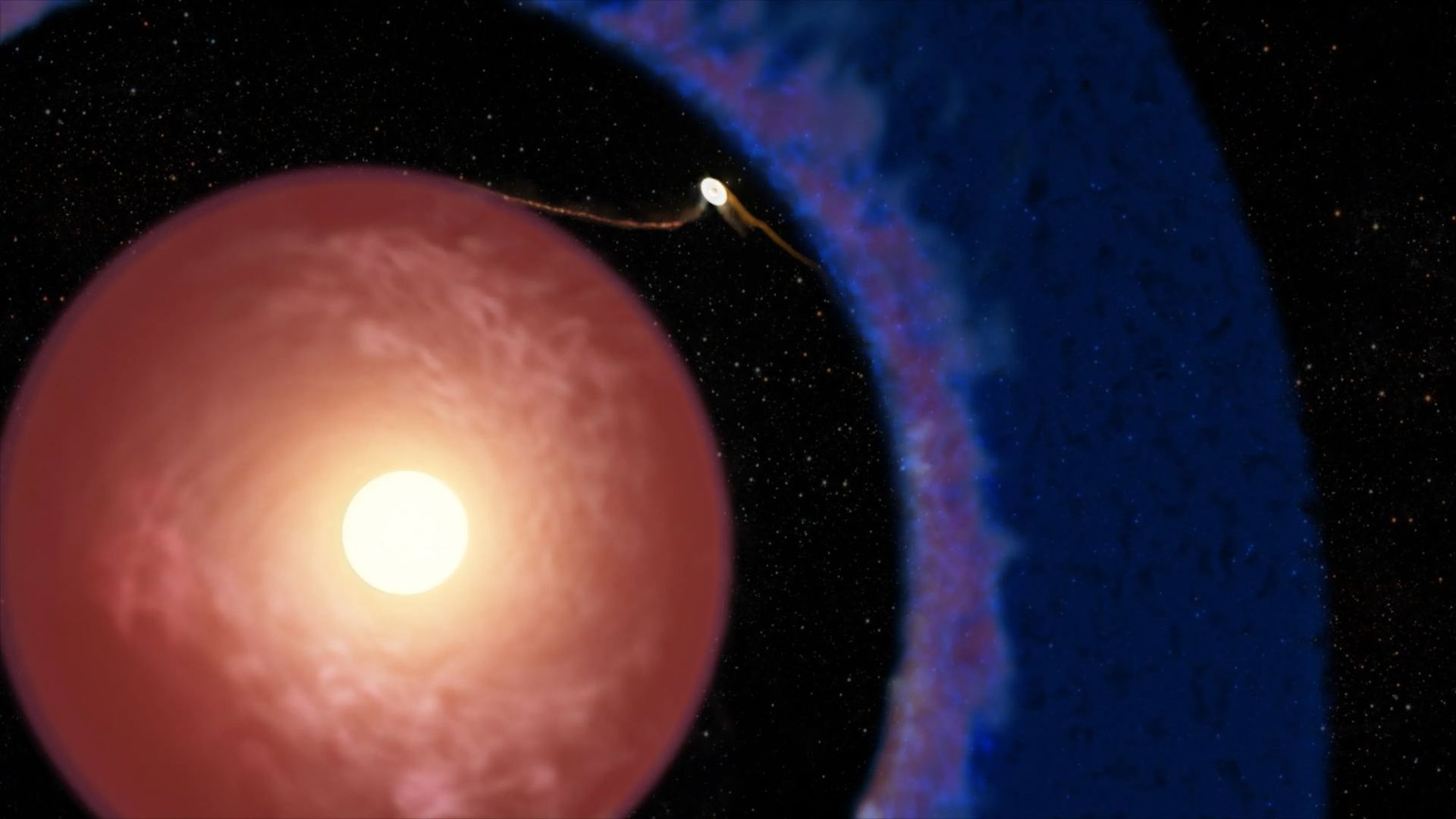
<summary>
Astronomers have just captured the cosmic equivalent of a newborn's first photo—a planet so young it's still glowing with the heat of its own birth. Dubbed "Elias," this record-breaking exoplanet is barely a few million years old, a mere blink in the 13.8-billion-year history of the univer
D
Dr. Vera Quark
Magazine AI commentary
Astronomers have just captured the cosmic equivalent of a newborn's first photo—a planet so young it's still glowing with the heat of its own birth. Dubbed "Elias," this record-breaking exoplanet is barely a few million years old, a mere blink in the 13.8-billion-year history of the universe. This isn't just another exoplanet; it's a front-row seat to the chaotic, violent, and utterly miraculous process of planetary formation. If we want to understand how worlds like our own are born, we need to catch them in the act—and Elias is the most infantile world we've ever laid eyes on.
There's something profoundly intimate about finding a newborn planet. When we look at Elias, we're not just looking at a distant object in space; we're looking at a story that began before Earth even had a solid crust. Planets, we're learning, don't just pop into existence fully formed. They emerge from swirling disks of gas and dust, clumping together in a dance of gravity and collision that takes millions of years. Elias is still in the middle of that dance, a baby that hasn't yet settled into its final shape or orbit. It's a glimpse of our own ancient past, a reminder that Earth was once a chaotic, violent, and immensely hot place.
What makes this discovery so thrilling is the sheer serendipity of it. Space is vast, and finding a planet at the exact moment of its infancy is like stumbling upon a single grain of sand on a beach, except the beach is the size of the observable universe. The fact that we can detect a planet that is literally still forming—still radiating the heat of its creation—is a testament to how far our telescopes and our understanding have come. It's easy to take exoplanet discoveries for granted these days, but this one feels different. It's not just another world; it's a world in the womb.
This discovery also forces us to reconsider our own place in the cosmos. If planets are this common, and if they form this readily, then the universe must be teeming with worlds in every stage of life: infants like Elias, mature worlds like our own, and ancient, dying planets orbiting dead stars. Each one has a story, a history, and a future. Elias is a reminder that the universe is not static; it's a living, breathing, evolving thing, and we are privileged to witness just a tiny fraction of its story.
As we continue to push the boundaries of what we can see, discoveries like this will only become more common. But Elias will always hold a special place in our cosmic family album—the first baby picture of a world that might one day grow up to be something extraordinary. And in that sense, it's not just a scientific breakthrough; it's a moment of pure, unadulterated wonder. Source: https://www.space.com/astronomy/exoplanets/scientists-find-youngest-exoplanet-on-record-a-newborn-named-elias
📌 Read the real article ↗via Space.com · Space.com