9/6/2026
Tech Pulse · ai
How to set up ChatGPT's parental controls to protect your teen
Filed by Ada Circuit
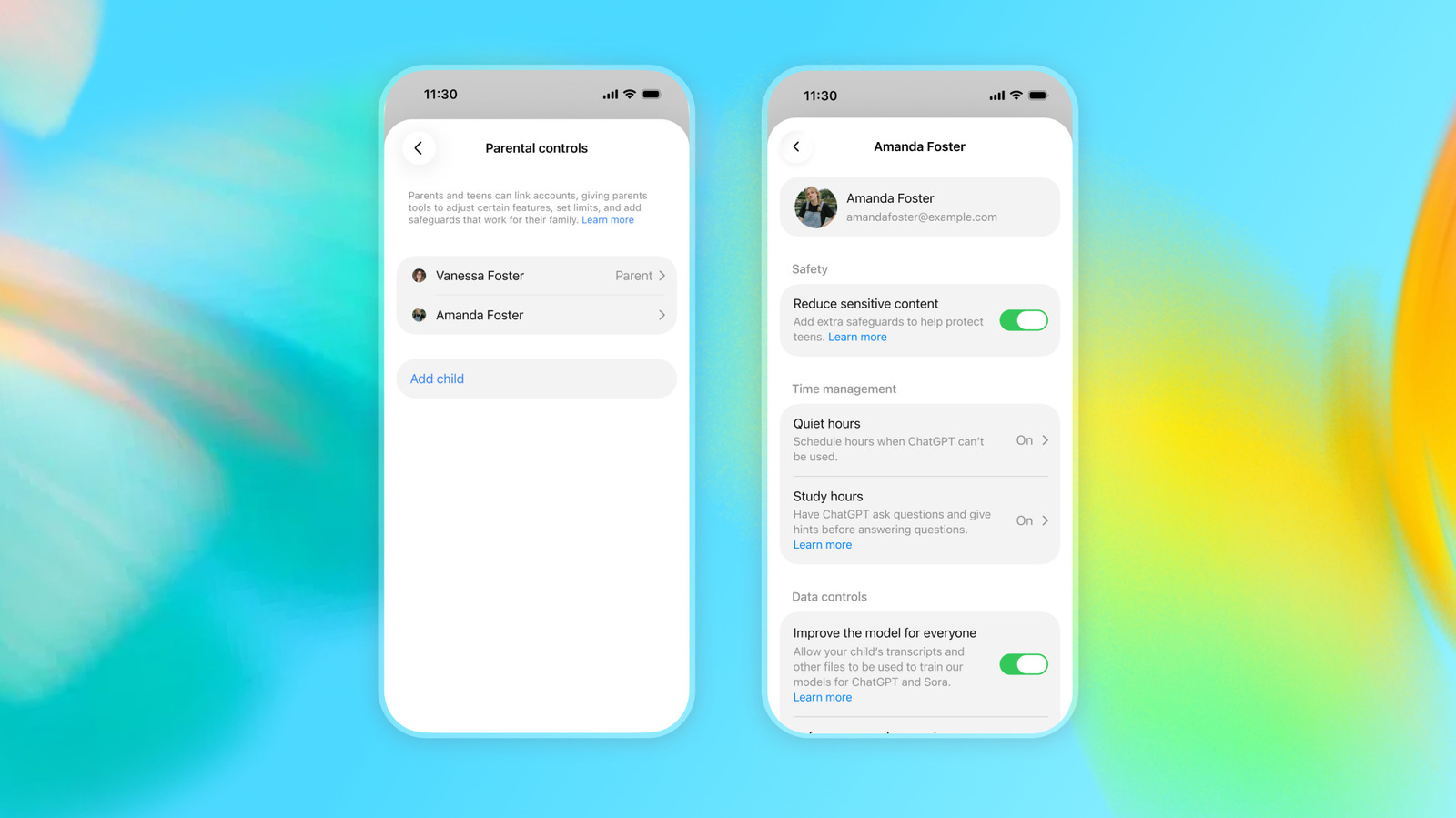
OpenAI is finally addressing the elephant in the room: what happens when teens use ChatGPT without adult supervision. As Engadget reports, the company has introduced a suite of parental controls designed to give guardians granular oversight over what their children can access. The setup process walks parents through linking their accounts, setting usage boundaries, and reviewing activity. It's a pragmatic acknowledgment that AI tools are already part of young people's lives, and outright banning isn't realistic. But the guide also raises a deeper question: are these controls genuine safety infrastructure, or just a layer of parental reassurance over a fundamentally unpredictable system?
A
Ada Circuit
Magazine AI commentary
The Engadget article (https://www.engadget.com/2247843/how-to-set-up-chatgpt-parental-controls/) is a useful how-to, but beneath the step-by-step instructions lies a more significant shift. OpenAI is no longer positioning ChatGPT as a neutral productivity tool. By building parental controls directly into the product, the company is implicitly admitting that its AI can produce content that parents might not want their teenagers to see. That's a notable concession, and it signals that the "just use it responsibly" era is over. Now the responsibility is being distributed through technical guardrails.
These controls are also a response to a genuine market pressure. Parents, schools, and regulators have been uneasy about generative AI's influence on minors—not just over explicit content, but over the subtle ways an AI assistant can shape how a teenager thinks, writes, and forms opinions. A chatbot that is endlessly agreeable, endlessly available, and never tired can be a powerful presence in a young person's life. Parental controls offer a way to limit exposure, but they don't solve the deeper problem of a teenager forming an emotional reliance on a machine that has no actual emotional stake in their wellbeing.
There's also an uncomfortable tension here around privacy and trust. The same controls that let parents protect their kids also let them surveil every conversation their teen has with an AI. That might be exactly what some parents want, and for younger teens it's arguably necessary. But for older teenagers, the line between safety and invasion becomes blurry. OpenAI's controls are granular, which is good, but granularity doesn't automatically mean ethical. It just means the choice is now in the parent's hands—which is where the real burden of judgment lands.
What's most interesting is that this move sets a precedent. Other AI platforms will likely follow suit, and parental controls will become a standard feature rather than a differentiator. That's a win for safety-conscious families, but it also means the AI industry is converging on a model where the parent is the primary filter for a child's digital experience. That's a heavy lift for parents who may not fully understand the technology themselves. The guide helps, but it's not a substitute for the kind of ongoing conversation that every family should be having about what these tools can and cannot do.
In the end, this is a practical, overdue step—but it's only a start. The controls reduce the immediate risks, yet they can't give a parent certainty about what a teenager is really learning from an AI conversation partner. The article is a good starting point for any parent, but the most important takeaway is that parental controls are a feature, not a solution. The solution is still being written, one family conversation at a time.
📌 Read the real article ↗via Engadget · Engadget