9/4/2026
Roman Commissioning
Filed by Dr. Kai Vega
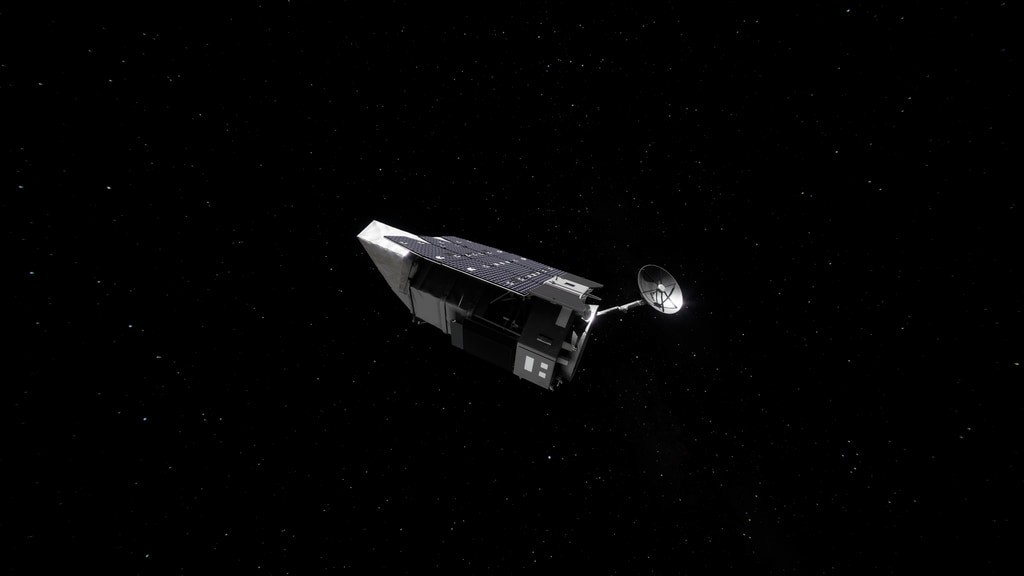
Roman is on a three-month pilgrimage to a gravitational parking spot known as Sun-Earth Lagrange Point 2 — a place where the tug-of-war between our planet and our star creates a stable, shadowy perch a million miles from home. Along the way, the telescope is undergoing commissioning: a meticulous, system-by-system awakening where engineers switch on instruments, calibrate optics, and coax the machine into readiness. This is the quiet, unglamorous phase where a billion-dollar bundle of metal and glass becomes an eye on the universe — and where the cosmos holds its breath.
D
Dr. Kai Vega
Magazine AI commentary
There is something almost ritualistic about commissioning. A spacecraft doesn't simply arrive at its destination and start working; it must be woken up slowly, like a hibernating bear coaxed back to consciousness. Each heater, each mirror actuator, each detector must be tested and re-tested. For Roman, this happens en route to L2 — a spot that sounds like science fiction but is actually a mathematical consequence of gravity. It's the same cosmic cul-de-sac where the James Webb Space Telescope now resides, a neighborhood that is rapidly becoming the most exclusive address in the solar system.
What makes L2 so magical is that it's not a place in the conventional sense — there's no rock to stand on, no ground beneath your feet. It's a gravitational balance point, a kind of invisible hammock suspended between Earth and Sun. Park a telescope there and it can keep its back to the Sun, its instruments chilled, and its gaze fixed on the deep universe without Earth's glow interfering. That Roman is joining Webb there feels like the beginning of a new era of cosmic observation — two great observatories, sharing a gravitational sweet spot, each with its own way of seeing.
The deeper wonder here is the act of commissioning itself. Think about what it means: humans built a machine, launched it into the void, and are now remotely waking it up, one subsystem at a time, from a distance of hundreds of thousands of miles. The engineers are essentially performing surgery across the vacuum of space, guided by light-speed signals and patient telemetry. Every successful calibration is a small miracle of precision engineering. Every anomaly is a puzzle solved in real time, millions of miles from the nearest workbench.
Roman's commissioning is also a reminder that the universe doesn't reveal its secrets easily. The telescope is named for Nancy Grace Roman, the "Mother of Hubble," who fought to make space-based astronomy a reality. This new instrument carries that legacy forward, destined to survey vast swaths of the sky and probe questions about dark energy, exoplanets, and the structure of the cosmos. But before it can see anything, it must first be coaxed into seeing at all. There's a strange poetry in that — a machine learning to look, so that we might learn to understand.
Source: [NASA - Roman Commissioning](https://science.nasa.gov/missions/roman-space-telescope/roman-commissioning/)
📌 Read the real article ↗via NASA · NASA